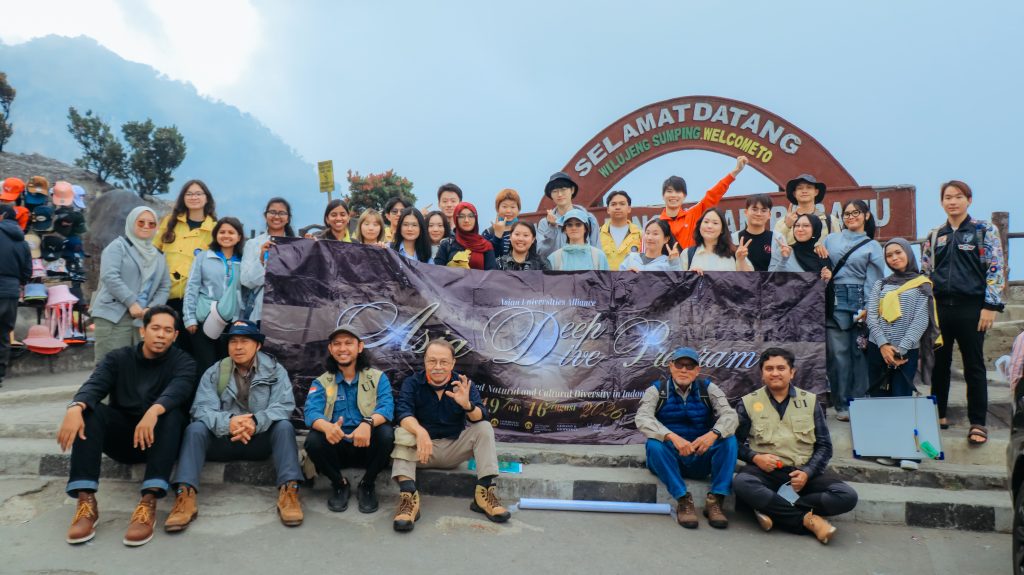
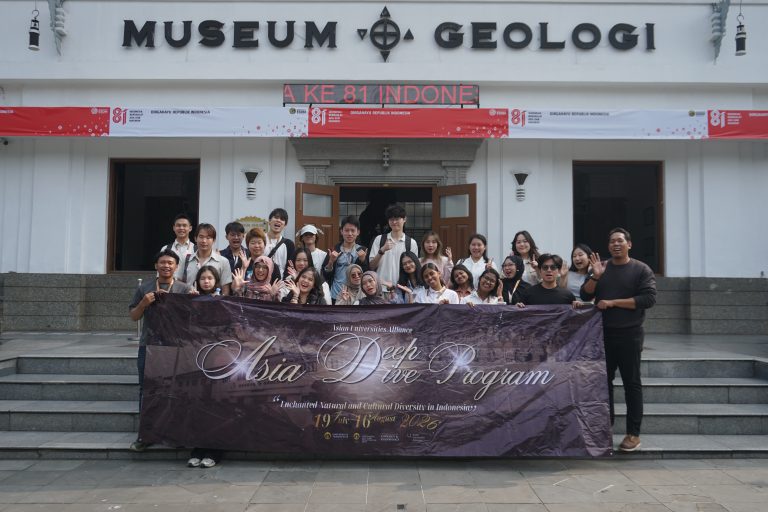
Depok, September 2, 2026 — A total of 20 students from eight universities that are members of the Asian Universities Alliance (AUA) participated in the AUA Asia Deep Dive Program (ADDP) 2026, organized by the Faculty of Mathematics and Natural Sciences, Universitas Indonesia (FMIPA UI). The participants came from South Korea, Japan, Myanmar, China, Singapore, Sri Lanka, Thailand, and Indonesia.
The ADDP 2026 program was conducted in two stages: online learning from July 20–24, 2026, followed by an in-person program from August 9–16, 2026, in Depok, Bogor, and Bandung. The program combined academic learning with explorations of Indonesian science, history, and culture.
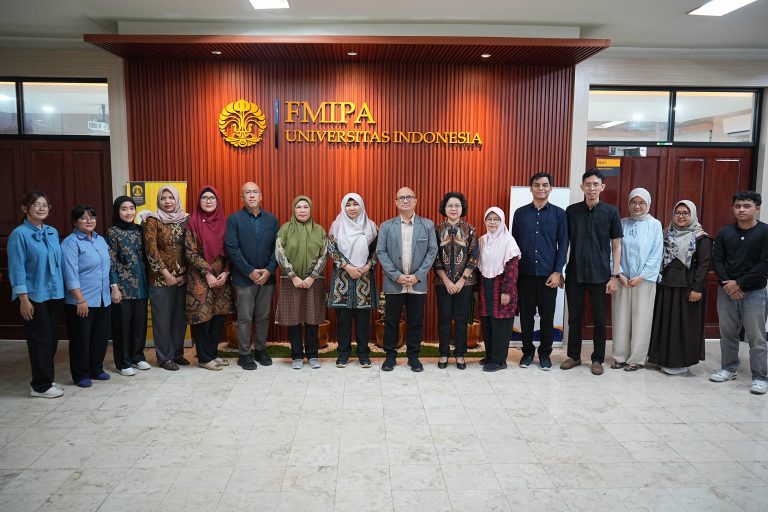
Representing the leadership of FMIPA UI, Zico Alaia Akbar Junior, Manager of the Research Ecosystem and Impactful Science Downstreaming, said that FMIPA UI is open to hosting AUA activities and encouraged participants to make the most of the opportunity to explore various knowledge and experiences during their time in Indonesia.
“FMIPA UI is very pleased to welcome this AUA program. Please make the most of your time during the program, especially when you have the opportunity to engage directly in field activities. Explore as much as possible, because field experiences provide a different perspective from classroom learning,” said Zico.
During the online stage, participants attended a series of lectures delivered by lecturers and academics from Universitas Indonesia. The topics covered not only geology and geophysics but also biology and biodiversity, as well as the relationship between humans, the environment, and culture.
The Biology and Biodiversity session was delivered by Dr. rer. nat. Yasman, S.Si., M.Sc., while the Ethnobiology session was delivered by Dr. Dra. Ratna Yuniati, M.Si. Participants also learned about geoscience, tectonics and volcanoes, seismology, as well as Indonesian culture and history.
The teaching team involved in the program included Iskandarsyah, M.Si., Dr. Reza Syahputra, S.T., M.Si., Siti Fatimah, M.Sc., Anne Meylani Magdalena Sirait, S.Si., M.Si., Ph.D., and Dr. Chaidir Ashari, M.Hum. The lecturers are from the Geology Study Program and Geophysics Study Program at FMIPA UI.
The diversity of topics provided participants with an opportunity to learn about Indonesia from various academic perspectives. They not only explored the characteristics of Indonesia’s natural environment and ecosystems but also examined their connections with society and culture.
Following the online learning stage, participants continued the program through in-person activities in Depok, Bogor, and Bandung from August 9–16, 2026. The field activities provided an opportunity for participants to connect the academic materials they had learned with real-world conditions they encountered firsthand.
One of the sites visited was the Bogor Botanical Gardens. There, participants were introduced to Indonesia’s rich biodiversity and learned about the importance of conservation and botanical research. They also visited Bosscha Observatory to learn about the development of astronomical research and science education in Indonesia.
The topics of tectonics, volcanoes, and seismology were explored further through a visit to the Lembang Fault in the Gunung Batu area. Participants observed geological conditions firsthand and learned about geological dynamics and fault activity that have shaped the surrounding landscape.
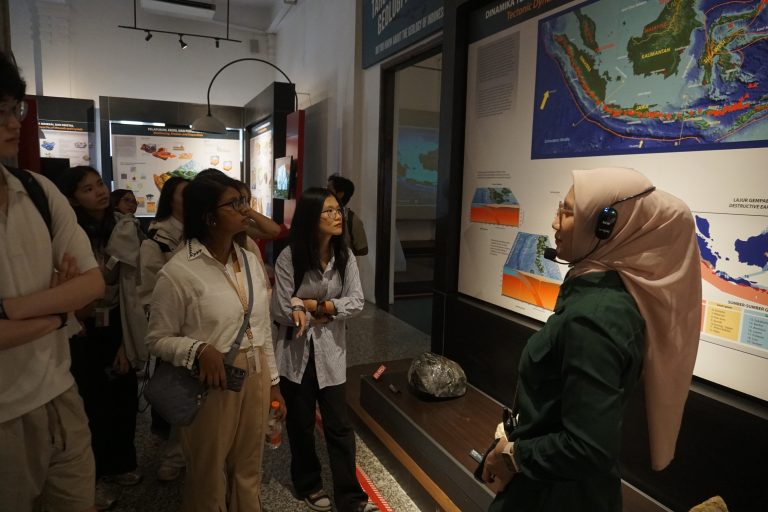
In addition to science-related topics, ADDP 2026 introduced participants to Indonesian history through visits to the Geological Museum and the Museum of the Asian-African Conference. The Geological Museum provided insights into geological history, natural resources, and the development of earth sciences in Indonesia. Meanwhile, the Museum of the Asian-African Conference introduced participants to the history of relations among Asian and African countries and Indonesia’s role in fostering regional cooperation.
The cultural aspect of the program was introduced through a visit to Saung Angklung Udjo. Participants learned about angklung as part of Sundanese cultural heritage while also enjoying a traditional arts performance. The experience was complemented by an introduction to local cuisine as part of the participants’ exploration of the daily life and culture of Indonesian communities.
The combination of interdisciplinary learning, field activities, cultural experiences, and interactions among students from eight countries made ADDP 2026 a learning experience that extended beyond the classroom. The program also brought together students from diverse backgrounds, providing them with opportunities to build networks and gain a deeper understanding of diversity across Asia.
The organization of ADDP 2026 was part of the Asian Universities Alliance’s efforts to strengthen academic exchange and cross-cultural understanding among its member universities. Interactions among students throughout the program also opened opportunities for academic collaboration and contributed to building networks among the younger generation across Asia.