Depok, September 1, 2026 — The Faculty of Mathematics and Natural Sciences (FMIPA), Universitas Indonesia (UI), is promoting the economic empowerment of homemakers through the development of healthy beverages based on herbs and fermentation. The program was implemented by the Department of Biology, FMIPA UI, through a community service initiative in Kedung Waringin Urban Village, Tanah Sareal District, Bogor City.
Titled “Enhancing the Creative Economic Capacity of Homemakers through Innovation in Herbal- and Fermentation-Based Healthy Beverages,” the activity was held at the Al Hikmah Mosque Hall on Saturday (July 25, 2026). A total of 39 participants, comprising homemakers, Posyandu cadres, and members of the Al Hikmah Mosque majelis taklim (Islamic study group), took part in the training.
Kedung Waringin Urban Village was selected because the characteristics of its community align with the program’s target group, particularly in terms of improving knowledge and skills in processing herbal ingredients into beverage products. In addition, its relatively close proximity to UI provides opportunities for the program to be sustained through mentoring or community service activities in subsequent years.
The program was initiated in response to growing public interest in healthy lifestyles, as well as the considerable potential for empowering homemakers in Kedung Waringin. The community service team from the Department of Biology, FMIPA UI, introduced an innovative combination of kombucha and herbal beverages that can be prepared using ingredients that are readily available in the surrounding environment.
Dr. Ratna Yuniati, the program coordinator, said the training was designed not only to enhance participants’ knowledge of healthy beverages but also to provide practical skills that could be applied independently.
“We hope that participants will not only understand the benefits of herbal- and fermentation-based beverages but also be able to prepare them independently at home. By utilizing ingredients that are readily available, these skills are expected to develop into business opportunities that can generate additional household income,” said Dr. Ratna.
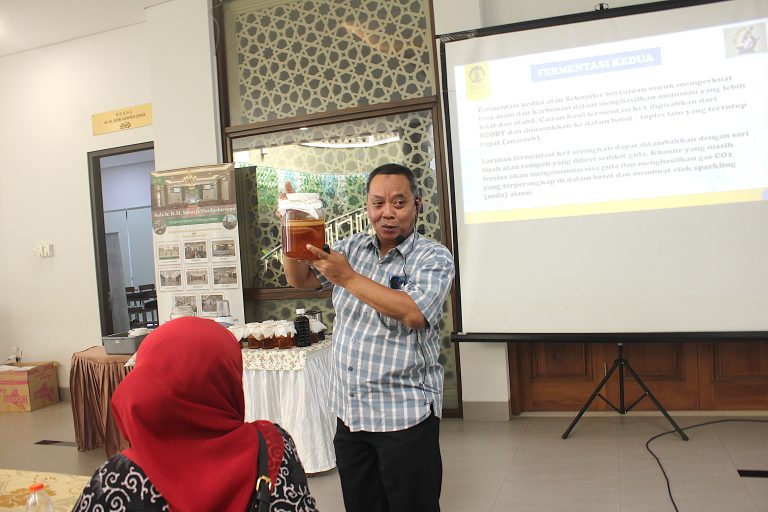
During the training, Drs. Iman Santoso, M.Phil., as the resource person, provided an overview of the concept of healthy beverages, the use of herbal plants, kombucha-making techniques, and opportunities to develop these products into value-added beverages.
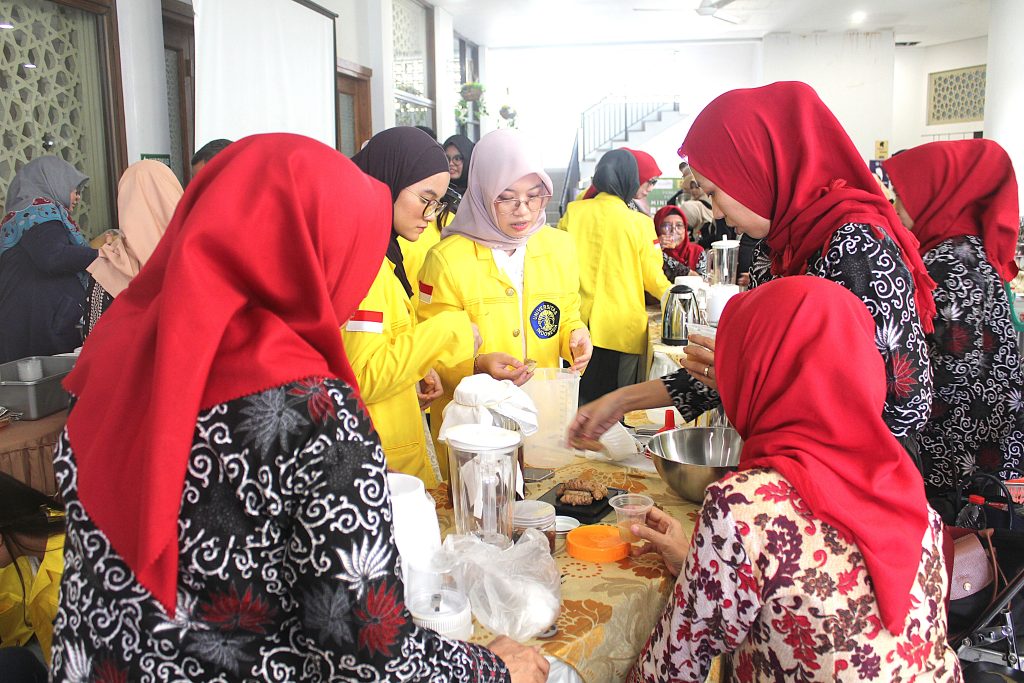
Participants received not only theoretical instruction but also hands-on training in preparing kombucha and natural herbal beverages. The stages covered ranged from ingredient preparation to the fermentation process.
Iman said that the combination of kombucha and herbal ingredients offers flexibility for development according to the needs and preferences of the community. Ingredients such as ginger, turmeric, and tamarind can be combined with kombucha, while the types of tea and sweeteners used can also be adjusted.
“The combination of kombucha and herbal ingredients can easily be adapted to the needs and preferences of the community. Various herbal plants, such as ginger, turmeric, and tamarind, can be combined with kombucha, as can different types of tea and sweeteners. Therefore, this product has the potential to be developed as both a healthy beverage and a home-based business product,” said Drs. Iman.
One of the participants, Harti, said that the training provided her with practical skills in preparing kombucha while also opening up opportunities to develop the beverage as a business product.
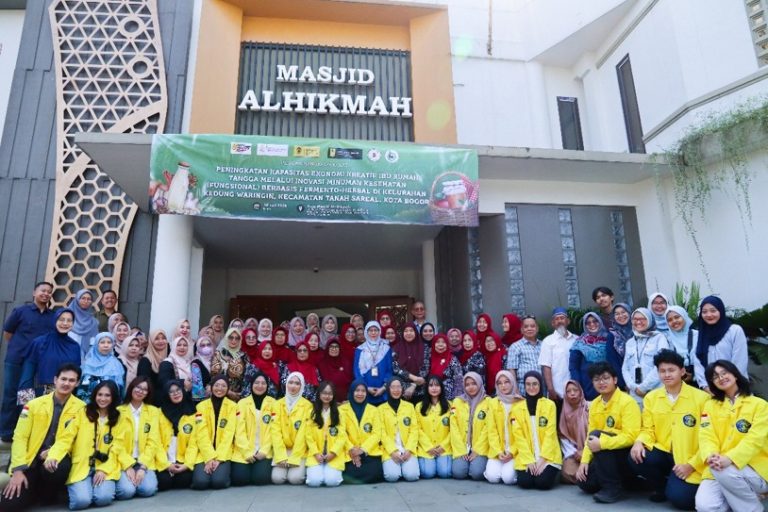
“This training provided me with new skills, particularly in preparing and processing kombucha. In addition to being able to make it for my family’s needs, I also see an opportunity to develop this beverage into a business that could generate additional income,” said Harti.
Another participant, Ade, said the training gave her a better understanding of the kombucha-making process and how to develop its flavor. She had previously become familiar with kombucha through her child but did not know how to make it or adjust the recipe.
“Until now, I only knew about kombucha because my child often brought it home, but I had never made it myself. After participating in this training, I learned how it is made and found out that the recipe can be adjusted to suit individual preferences. Now, I feel more confident about trying to make and create my own variations,” said Ade.
The activity was carried out by a community service team comprising faculty members, administrative staff, and students from the Department of Biology, FMIPA UI. The faculty team consisted of Dr. Ratna Yuniati, Tety Maryenti, Ph.D., Dr. Oriza Savitri Ariantie, Dr. Upi Chairun Nisa, Dr. rer. nat. Yasman, M.Sc., Dr. Windri Handayani, Dr. Retno Lestari, and Niarsi Merry Hemelda, Ph.D.
The program was part of the Department of Biology, FMIPA UI’s community service activities and was funded by the Directorate of Community Service and Innovation (DPIS) UI through the 2026 Competitive Community Service Grant.
Through this activity, the Department of Biology, FMIPA UI, seeks to apply scientific knowledge and skills to address community needs while creating opportunities to utilize local resources as products with economic value. The proximity of Kedung Waringin to UI was also a consideration in exploring opportunities to sustain the program in the coming years.