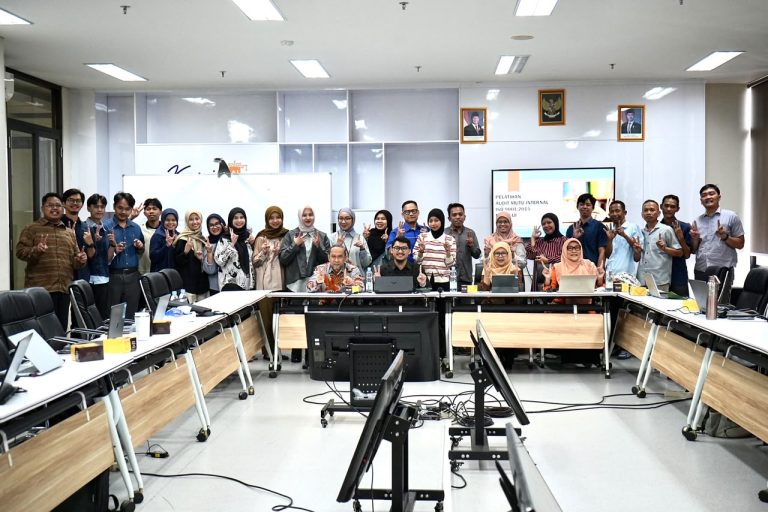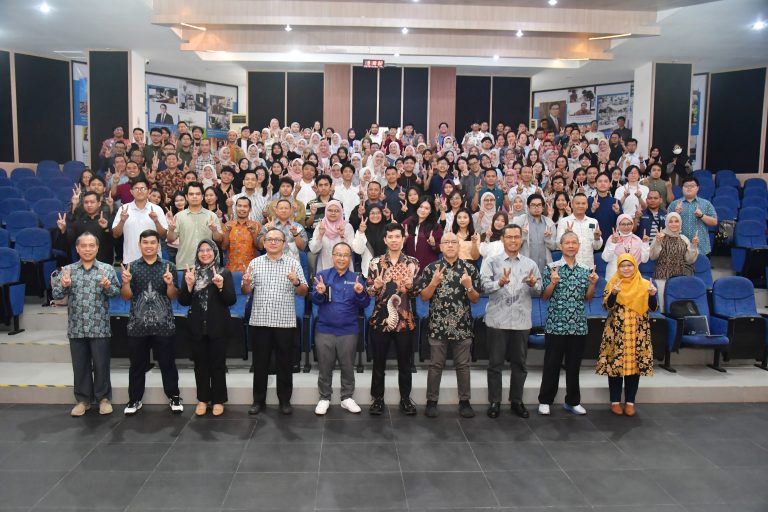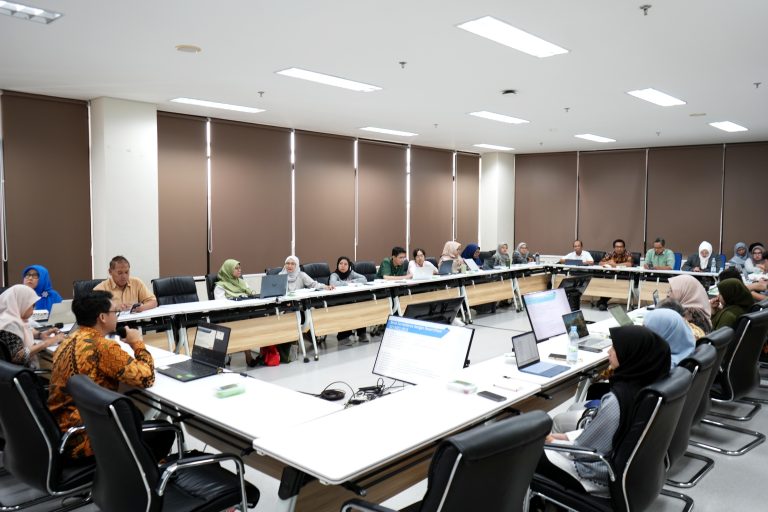
On Saturday (27/11/2021), a team of students from the Department of Geography, Faculty of Mathematics and Natural Sciences, University of Indonesia, led by Syahda Arquette Sedana, was present in person in Ciputri Village, Cianjur Regency, West Java, to assist the local community in dealing with the flood disaster in the area.
The presence of Syahda and a team consisting of 10 fellow students in Ciputri Village is a form of contribution from the student team from the Department of Geography, FMIPA UI through the Community Service Program with the support of the Directorate of Student Affairs, University of Indonesia.
Under the guidance of Dr. Hafid Setiadi, M.T., a lecturer, the team provided outreach and education to residents about the importance of awareness and flood prevention efforts in their village. One approach is the use of biopore infiltration holes (LRB).
“Through this program, we provide outreach and education to participants about the importance of safety awareness for residents in disaster-affected areas and the use of biopore infiltration pits. The team encourages residents to actively maintain the biopore infiltration pits (LRB) to ensure their continued function,” Syahda told the FMIPA UI Public Relations team.
The activity was opened with remarks by Dr. Hafid Setiadi, M.T., the team’s supervisor. In his remarks, Dr. Hafid stated, “This community service activity is entirely an initiative of UI Geography students to contribute to solving environmental problems. However, this activity only covers a small portion of the environmental and social problems faced by the community. It will not immediately provide a solution. Therefore, there is a very strong hope for its continuation and expansion, especially through the support of enthusiasm and togetherness of the government and the community of Ciputri Village.”
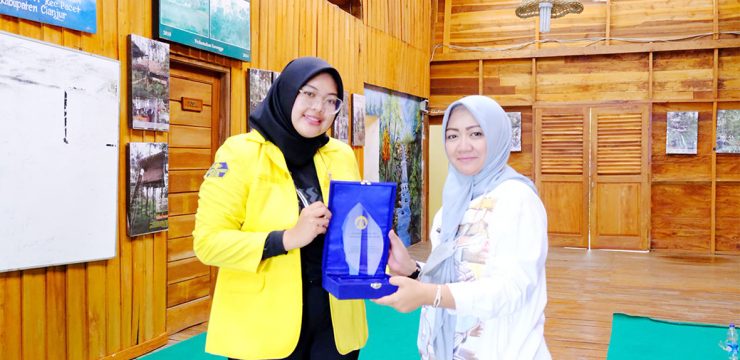
Nia Novi Hertini, S.Ap., the Head of Ciputri Village, warmly welcomed the presence and goodwill of the UI FMIPA team. She appreciated the team’s initiative as a contribution to her community.
“Thank you very much to the UI students who have carried out community service by planting biopores as a flood prevention measure. Hopefully, this program can be sustainable and act as a stimulus for the community to be able to utilize biopores in their lives,” said Nia.
The community service team leader then presented a brief presentation on biopore infiltration holes (BIPs). He explained the importance of BIPs in minimizing flooding and their direct benefits to the community.
“The benefits of biopore infiltration holes (LRB) include increasing rainwater absorption into the soil, thereby reducing waterlogging and the risk of flooding caused by overflow. Another benefit is that they can be used as a disposal site for regular organic waste, where the organic waste will be decomposed by soil biota, producing compost for agricultural crops,” Syahda explained to the participants.
Escorted by village security officers, namely BABINSA and BHABINKAMTIBMAS, the team and participants went directly to the field to carry out the practice of making biopore infiltration holes (LRB).
Biopore infiltration holes were constructed in three locations: RW 05, RW 09, and Villa Gardenia. The biopore infiltration holes were constructed in collaboration with the village community under the supervision and direction of students and lecturers from the UI Geography Department.
Meanwhile, the construction of biopore infiltration holes at Villa Gardenia was carried out independently by the village community based on the biopore module provided by the UI Geography Department.
From the results of observations in the field, the team assessed that residents in Ciputri Village actually already have a sense of concern for the environment by making biopore infiltration holes (LRB), but it is necessary to strengthen this by maintaining the biopore infiltration holes (LRB) in order to create a sustainable program.
Dudin, Head of RW 9, expressed his enthusiasm for participating in this activity. He hopes that the program presented by the FMIPA UI community service team can be sustainable.
“First of all, I would like to thank my fellow students for providing biopore plantings. We now only need to maintain them, as planting is easy but maintaining them is somewhat difficult. Hopefully, what we’ve done has been beneficial. In the future, I hope to see more community-led programs launched so that people can experience the benefits of biopores for flood prevention,” said Dudin.