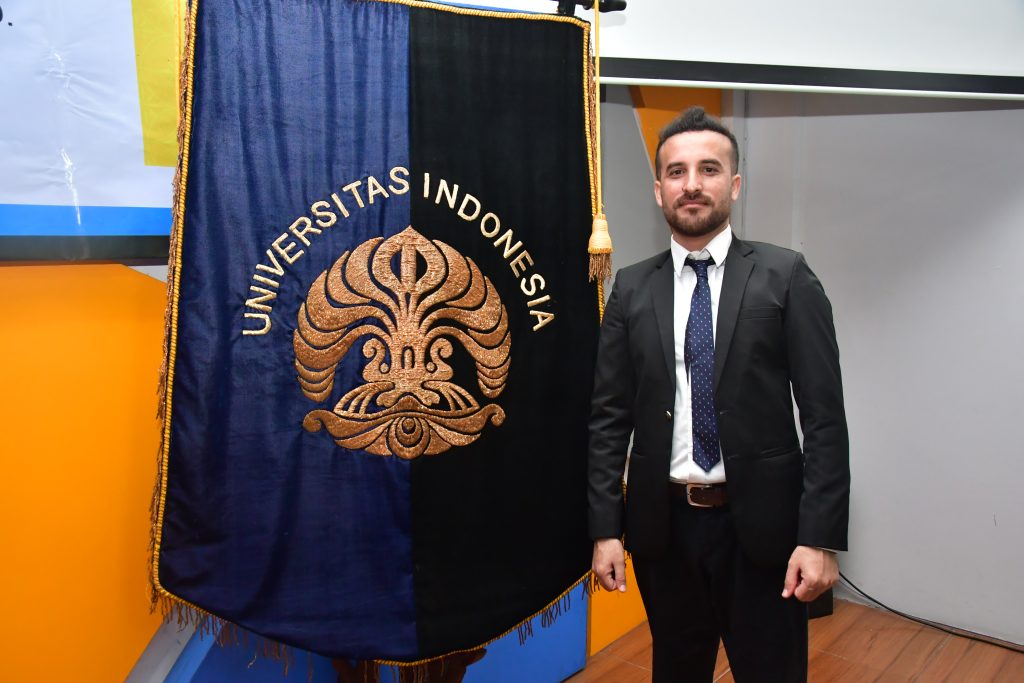
Abdul Basit, a Pakistani student pursuing his doctoral studies at the Faculty of Mathematics and Natural Sciences, University of Indonesia (FMIPA UI) through the Developing Countries Partnership Scholarship (KNB), officially received his Doctorate in Chemistry with Summa Cum Laude honors, the highest academic honor at UI. He also achieved a perfect GPA of 4.00.
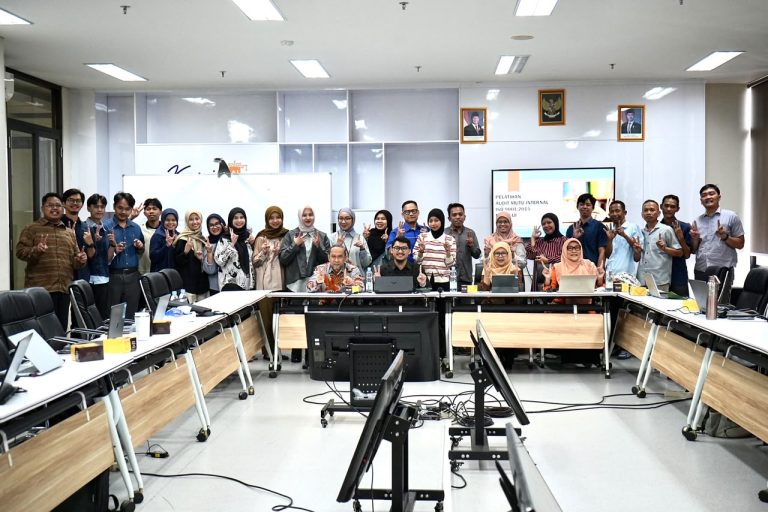
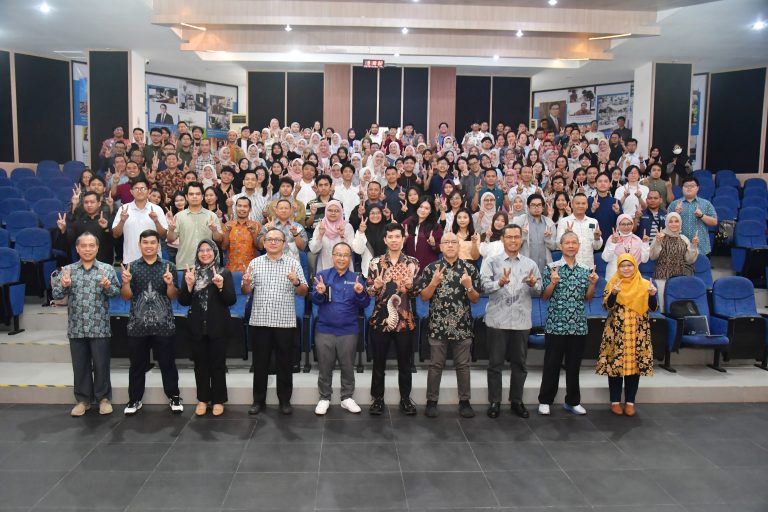
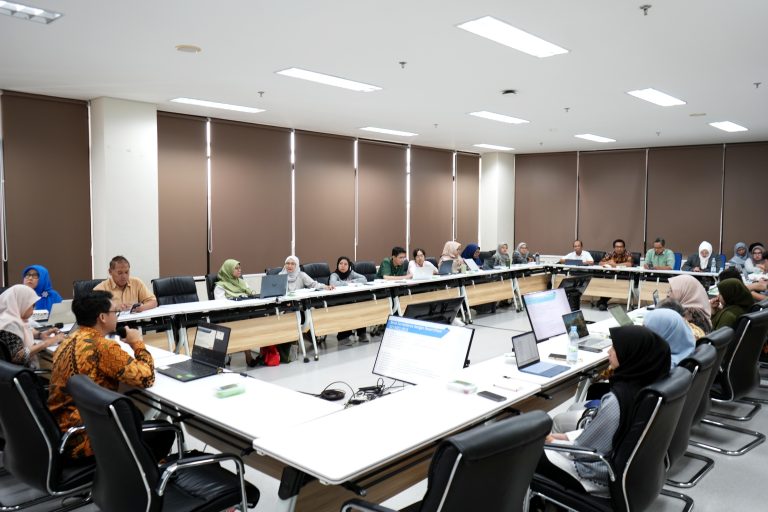
Abdul Basit’s open doctoral promotion defense was held on Tuesday, (1/7) at the Prof. Dr. G.A. Siwabessy Hall, FMIPA UI, Depok Campus. The defense was chaired by Prof. Dede Djuhana, M.Si., Ph.D., Dean of FMIPA UI, with Prof. Dr. Ivandini Tribidasari A., S.Si., M.Si. as promoter and Prof. Jarnuzi Gunlazuardi, Ph.D. as co-promoter.
In his dissertation entitled “Electrochemiluminescence of Luminol on Highly Ordered TiO₂ Nanotube Arrays and Commercial Screen-Printed Carbon Electrodes for Analytical Sensing”, Abdul Basit developed an electrochemiluminescence (ECL) based chemical sensor to detect hazardous substances such as hydrogen peroxide (H₂O₂) and the insecticide isoprocarb.

“This research is my small contribution to improving environmental and food security, especially in developing countries,” said Abdul Basit after the promotion hearing (delivered in English).
The developed sensor utilizes titanium dioxide (TiO₂) nanotechnology material shaped like microscopic tubes. These tubes have the extraordinary ability to conduct electricity and emit light when reacting with certain substances. This technology allows the sensor to detect chemicals more quickly, accurately, and sensitively than conventional methods.
To detect H₂O₂, the sensor produces light when the substance reacts on the electrode surface. The higher the H₂O₂ concentration, the brighter the light produced. This sensor has proven to perform very well in tap water testing, with high accuracy and excellent repeatability.
Meanwhile, to detect the insecticide isoprocarb, a hazardous chemical frequently used in agriculture, a printed carbon electrode (SPCE)-based sensor is used. The presence of isoprocarb reduces the intensity of the light produced, and this decrease can be measured to determine the pesticide levels in samples, such as coffee.
Abdul Basit’s research has contributed significantly to the development of sensor technology for environmental and food safety. His sensors can be used to monitor water quality, detect pesticide residues in food, and even be used in environmental and industrial research.

This technology is also user-friendly, fast, and cost-effective, giving it the potential for widespread adoption by both research laboratories and food and environmental regulatory agencies.
Prof. Ivandini as promoter expressed his appreciation for the hard work and outstanding achievements of his student. He said, “Abdul Basit demonstrated an extraordinary research spirit from the beginning. He not only focused on theoretical depth but also strived to make his research relevant and impactful.”
Abdul Basit’s success demonstrates that the KNB UI Scholarship Program not only opens access to higher education for students from developing countries but also produces international-quality research. Through this global collaboration, FMIPA UI demonstrates its active role in developing knowledge that has a real impact on the world.