Geographic National Society Summit (GNSS) held its second mini-webinar on Sunday, November 21, 2021, one day after the first. The Mini Webinar Climate Crisis 2.0 featured a similar topic to the first. The 13th Geography Days bringing the theme “Start Managing to Prevent Disasters”.
The webinar activity began with an opening and ice breaking by Bella Hena, as moderator. Followed by a presentation of the first material by the first speaker, Aldo Zulfahmi Putra, Head of Supply Chain in the Indonesian Refill Cycle
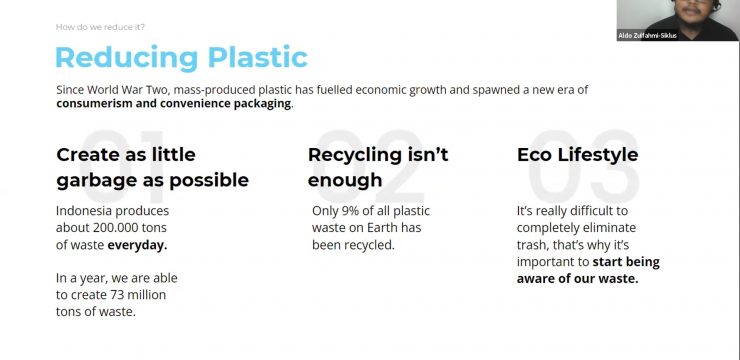
Presentation entitledPlastic Waste: How to Tackle it with The “Cycle” presents material related to the increase in plastic waste during the pandemic and how plastic waste in urban environments affects climate change.
The resource person emphasized that the negative impact of plastic waste will damage ecosystems and the community’s economy. According to data released by the Indonesian Institute of Sciences (LIPI), plastic waste is predicted to outnumber fish by 2050. Therefore, it is crucial to reduce plastic waste. One way is by using the Refill Cycle service to refill household products.
In contrast to the second source, Syaharani, Steering Committee At the Climate Break, he presented material on conditions that indicate signs of a climate emergency, the importance of a climate declaration, and gave advice to young people regarding the types of actions we can take.
“The climate crisis is a real phenomenon. Indonesia is currently experiencing a constant temperature rise of 0.3 degrees per year. We only have eight years left to stop this (the worsening climate crisis),” Syaharani stated firmly during her presentation.
Similar to the previous day’s webinar, a moderator-led Q&A session followed the speakers’ presentations. Participants’ enthusiasm for asking questions made the session more interactive. Before closing, the moderator also allowed the speakers to share their thoughts. closing statement-nya.
“Most of us only become aware of environmental issues after they’ve already happened. Never tire of being part of the solution to environmental problems. As the younger generation, it’s our duty to actively participate and not be apathetic,” said Aldo.
“We have the power to ward off the climate crisis. Take preventative measures to prevent it from worsening. There are many steps we can take to contribute. The easiest way is to speak out. The younger generation can encourage innovation and research that can offer solutions,” added Kak Rani.
The National Geographic Society Summit (GNSS) is part of the 13th Geography Days series. The event will be held online and will include two mini-webinars on the theme “Climate Crisis 1.0: Oceans Damaged, World Affected” and “Climate Crisis 2.0: Start Managing to Prevent Disasters” as well as the main webinar with the themeCollaborative Efforts and Innovation for Climate Crisis“. GNSS was attended by experts in their respective fields from various government and private institutions as a form of collaboration in addressing the climate crisis.