Indonesia is one of the countries that has great potential as a maritime country with a coastline of 95,181 KM. Unfortunately, the potential that Indonesia has in the maritime context must face various complex problems that have not been resolved until now. Problems such as lack of concern in maintaining marine ecosystems, population growth rates that are not balanced by economic growth, including the lack of capacity of local coastal communities to produce diversified marine products.
Overall, resolving maritime issues in Indonesia requires strong cross-sector collaboration between government, academics, civil society, industry, and the media. In addition, it requires a continued commitment to maintaining and managing marine resources wisely for the long-term welfare of the Indonesian nation.
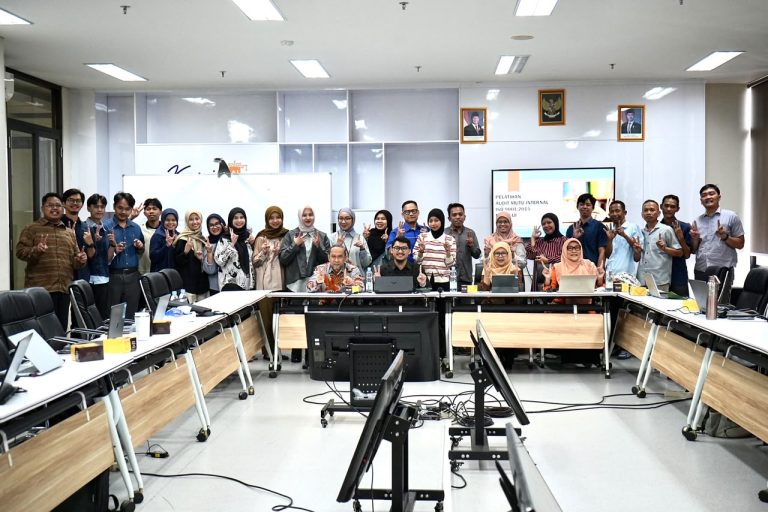
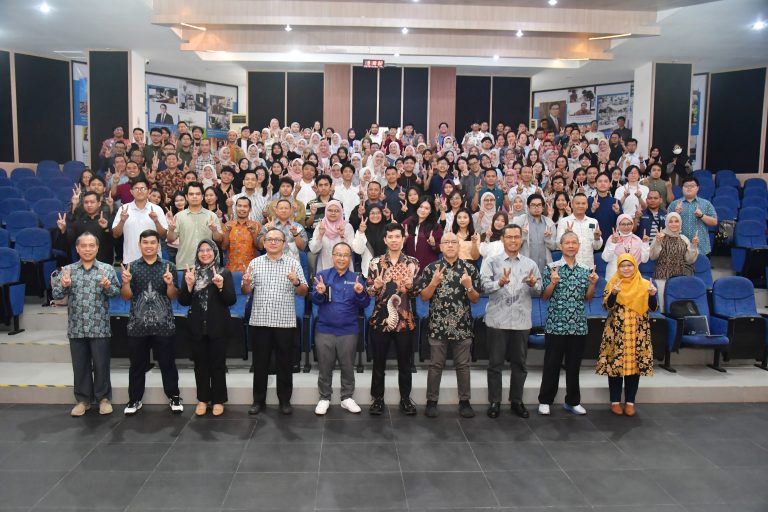
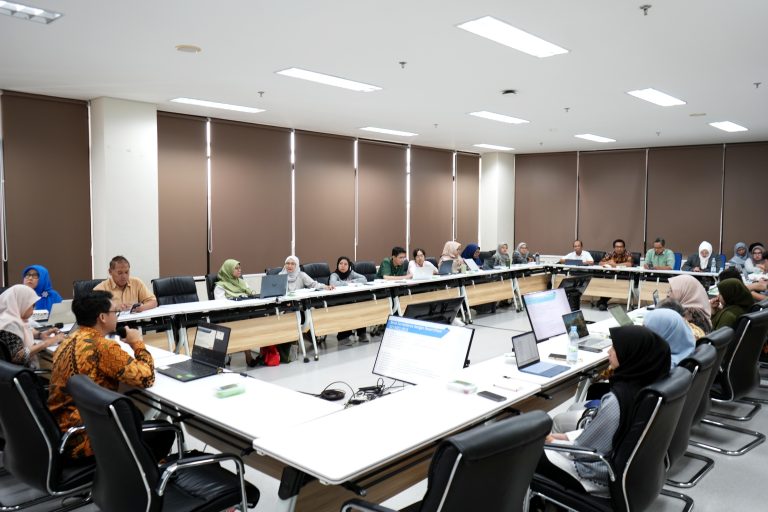
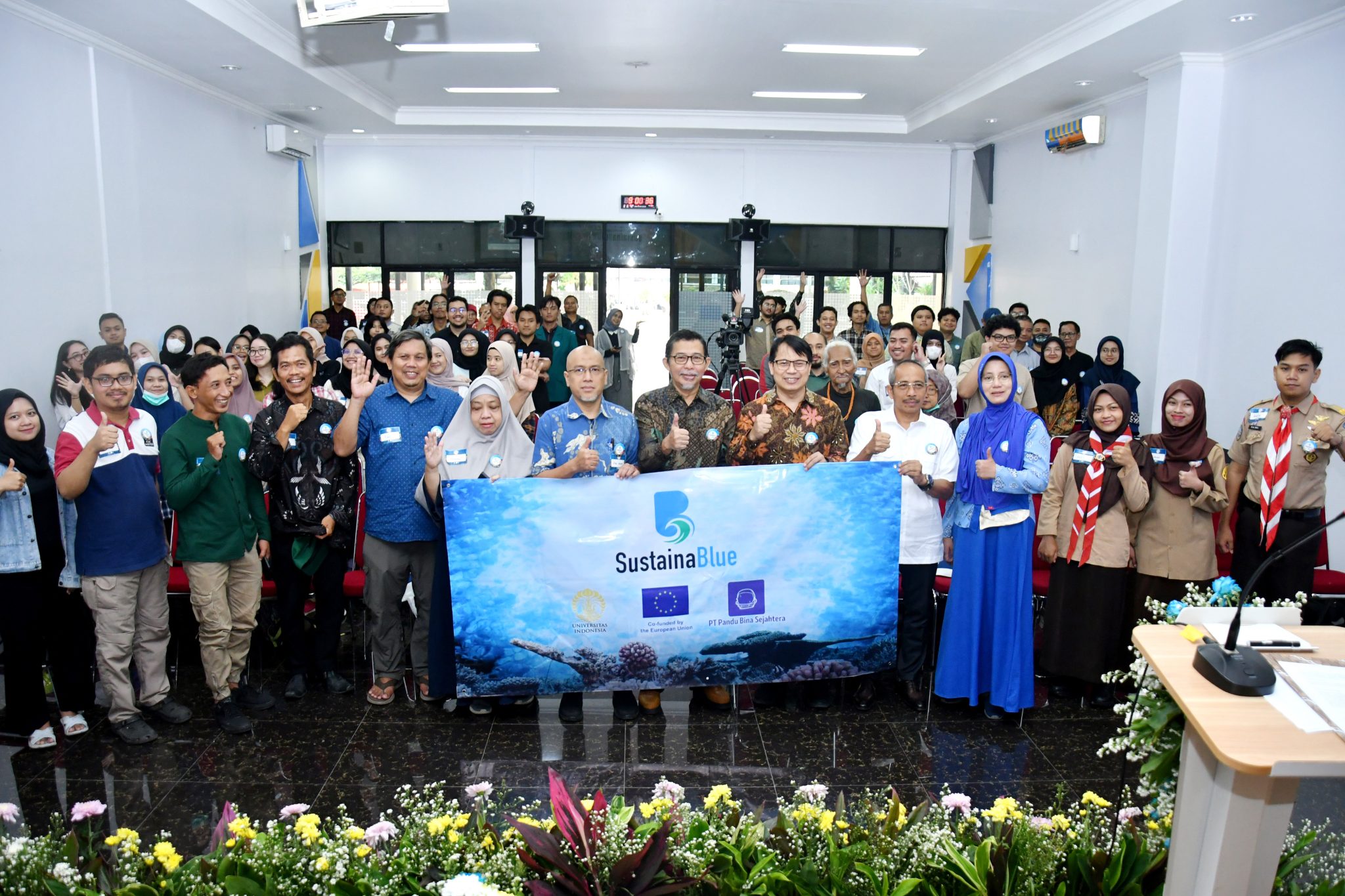
With this background, the Faculty of Mathematics and Natural Sciences, University of Indonesia (FMIPA UI) through the Department of Biology took a role to also promote long-term sustainability programs, one of which was by launching the SustainaBlue program, on Tuesday (11/6/2024), at the Prof. Dr. G.A. Siwabessy Hall, FMIPA UI, Depok.
SustainaBlue is a collaborative Indonesia-Malaysia program funded by The European Union, involving several universities in Indonesia and Malaysia, namely the University of Indonesia, Institut Teknologi Sepuluh November, Universiti Malaysia Terengganu, Universiti Sains Malaysia, University of the Aegean, and University of Cyprus, as well as institutions engaged in the field of environment, conservation, and socio-economic development, including Symplexis, AEGEANrebreath, University of Cyprus, CSI Center for Social Innovation Ltd., Malaysia Aquaculture Development Association, and PT. Pandu Bina Sejahtera.
The focus of the activity entitled “Urgency and Empowerment in a Maritime Country” is to increase the role of higher education institutions in Indonesia and Malaysia in supporting environmental sustainability.

Prof. Dede Djuhana, Ph.D. (Dean of FMIPA UI)
Dean of FMIPA UI Prof. Dede Djuhana, Ph.D. officially launched the SustainaBlue program. In his speech, the Dean said that the collaboration established in the SustainaBlue program must be able to accelerate the increase in innovation in the fields of blue economy and green transition, while also addressing the gap in knowledge in the world of education, research, industry, and no less important is the impact on the development of community service activities.
“We invite all academicians, stakeholders, industries and communities to actively participate in making the Sustainablue activities a success, so that it is expected to contribute to the penta helix collaboration network, in order to accelerate efforts to develop the blue economy and green transition which are part of the government’s program,” said Prof. Dede.
The blue economy and the green transition themselves are two concepts that are closely related to sustainability. These two concepts complement each other in an effort to achieve global sustainable development goals. The blue economy aims to harness the economic potential of marine resources in a sustainable way, while the green transition focuses on transforming the entire economy towards a more environmentally friendly and sustainable use of resources in general.

Prof. Anom Bowolaksono, Ph.D. (Head of the Department of Biology, FMIPA UI)
The blue economy and the green transition themselves are two concepts that are closely related to sustainability. These two concepts complement each other in an effort to achieve global sustainable development goals. The blue economy aims to harness the economic potential of marine resources in a sustainable way, while the green transition focuses on transforming the entire economy towards a more environmentally friendly and sustainable use of resources in general.
Prof. Anom assessed that this insight should be utilized optimally by the entire community, especially by the Faculty of Mathematics and Natural Sciences, University of Indonesia’s Department of Biology.
“Today, we should be able to make the best use of this knowledge. The Department of Biology, in particular, needs to broaden its horizons towards the rapid development of science, including the great potential of our seas,” said Prof. Anom.
Collaboration with European institutions such as Erasmus, according to him, can open up opportunities to build regional networks in developing marine potential.

Dr. rer. nat. Mufti Petala Patria (Project Manager of SustainaBlue Center, University of Indonesia)
Meanwhile, Project Manager of SustainaBlue Center Universitas Indonesia, Dr. rer. nat. Mufti Petala Patria, M.Sc. said, SustainaBlue carries the principle of sustainability, which means not only paying attention to economic growth but also maintaining the sustainability of long-term marine ecosystems. This effort includes sustainable management of marine resources, capacity building of coastal communities to increase the added value of marine products, development of relevant curriculum, community service activities, and increasing public awareness of the importance of maintaining marine ecosystems.1
“Hopefully, this SustainaBlue program can be beneficial for all of us and coastal communities, so that we can further empower and improve the standard of living of fishermen, coastal communities, and develop the knowledge we gain at FMIPA UI,” said Dr. Mufti.
In order to maximize its role in supporting the sustainability of the blue economy and green transition, SustainaBlue is currently being prepared by the Department of Biology to be developed into a study center under the auspices of the FMIPA UI Special Work Unit. Later, SustainaBlue as a study center will run various activity programs in the form of Research and Development, Community Service, Education and Training, Advocacy and Awareness, Collaboration and Networking, and Innovation Development.
The hybrid event was attended by 163 participants from various professional backgrounds, ranging from academics, research institutions, local authorities, and business sectors engaged in the Blue Economy sector, media, and the Gunung Salak Art and Culture Lovers Community. The event was also enlivened by the Directorate General of Plantations of the Ministry of Agriculture of the Republic of Indonesia.