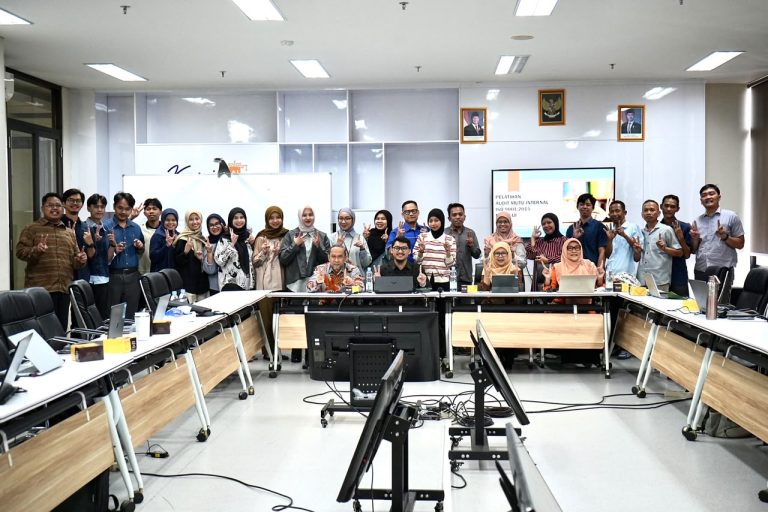
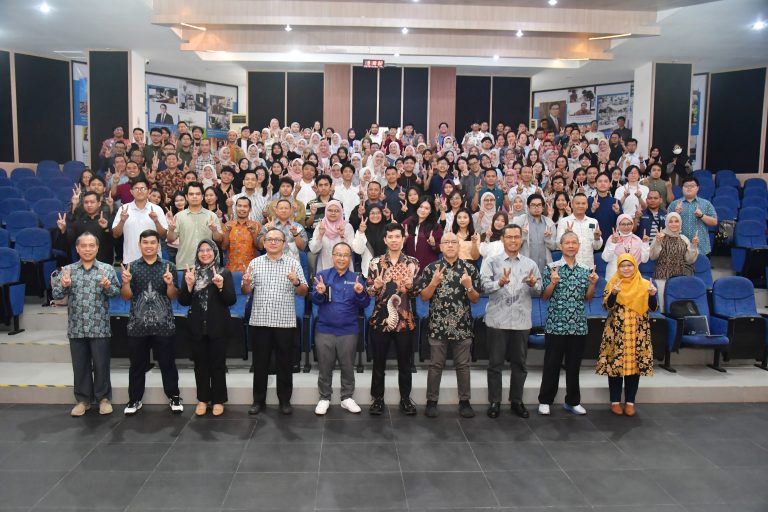
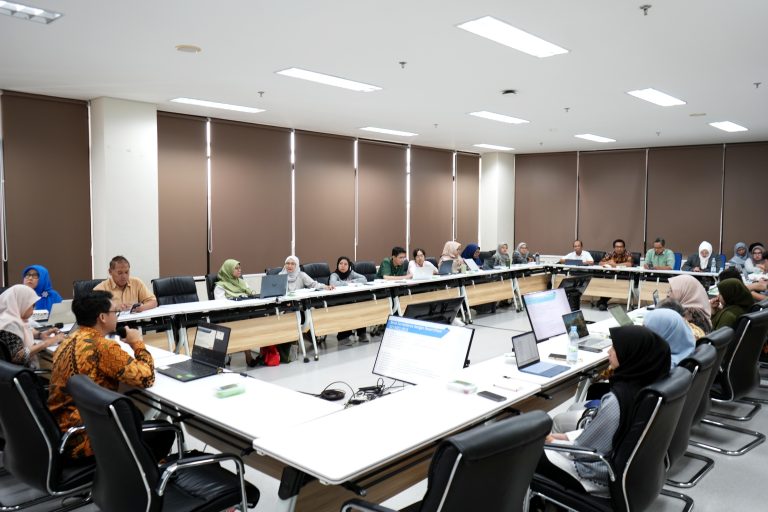
The Faculty of Mathematics and Natural Sciences, University of Indonesia (FMIPA UI), through the Department of Chemistry, implemented a Community Service (Pengmas) program in the form of mentoring activities for the recycling process of household organic waste, to increase the yield of natural plant fertilizers that are optimally effective, for residents who are driving the Guava Waste Bank, Rawa Badak Village, Cepedak Subdistrict, Jagakarsa District RT 003/02, South Jakarta.
The Head of the Chemistry Department of FMIPA UI, Dr. Asep Saefumillah, S.Si., M.Si., officially opened the community service activity which was also attended by a team of extension workers from the DKI Jakarta Environmental Service as companions.
“As an educational institution, we should be providing solutions to societal problems. This is what the Chemistry Department is currently pursuing through the 2023 FMIPA UI Community Service program. This assistance program, which provides organic waste recycling, is part of the Department’s effort to support sustainable local agricultural activities,” said Dr. Asep.
The activity took place on Saturday, November 11, 2023, in two locations: the Chemistry Department and the Parangtopo Laboratory, Faculty of Mathematics and Natural Sciences, University of Indonesia (FMIPA UI), Depok. The outreach and education activities on waste and its processing methods were delivered in the Chemistry Department by speakers who are lecturers and members of the community service team, namely, Rika Tri Yuniarti, M.Eng. Ph.D., and Dr. Antonius Herry Cahyana. The event then moved to the Parangtopo Laboratory for a demonstration of the application of the Liquid Organic Fertilizer (POC) trial results.

The head of the Chemistry Department’s community service team, Aminah M.Sc. Ph.D., explained that the initiative was motivated by complaints from the Guava Waste Bank community about the organic fertilizer they produce. According to the community, the fertilizer produces an unpleasant odor and is unsuitable for fertilization, which can cause the plants treated with it to die.
“Starting from this problem, our team, the Department of Chemistry’s community service team, was moved to find a solution. We sampled the POC product produced by the Young Guava Waste Bank and then analyzed its macro and micro nutrient content,” said Aminah, explaining the background of the activity.
The community service team conducted sample analysis one month before the outreach activities. This analysis was conducted to obtain accurate measurements of the levels of POC macronutrients—nitrogen, organic carbon, and phosphorus—and micronutrients such as potassium, magnesium, ferrous/iron, manganese, and molybdenum, thus determining the quality of the POC.
“Determining the levels of these nutrients has a major impact on the quality of the resulting organic liquid fertilizer,” Aminah told the participants.
The results of the analysis were then socialized to the participants, and furthermore, for optimal application of POC, the results of these measurements were tested at the Parangtopo Laboratory, which is located not far from the Department of Chemistry, FMIPA UI.
At the Parangtopo Laboratory, the community service team conducted research and application of POC products from the Waste Bank by diluting the POC using water in various ratios.
The POC in various dilutions was then applied to chili and tomato seedlings for 15 days. Observations concluded that a 1:50 POC dilution produced optimal growth.

Chili plants given POC in various ratios
“Meanwhile, to eliminate the unpleasant odor from POC products, our solution is to provide a new, experimental method: replacing the bioactivator and modifying the previously used composter tub. We have socialized all the proposed solutions through outreach programs, and we have also provided module pamphlets for participants to study later,” he said.
At this second location, participants also had the opportunity to watch a demonstration of fertilizer processing into methane gas, solid fertilizer, and liquid organic fertilizer (POC), and to see experimental plants. Participants were enthusiastic about the engaging presentations from the speakers. fun game The team provided entertainment to break up the activity. Furthermore, the team also provided shopping vouchers for participants.
For your information, Parangtopo Laboratory is a laboratory Waste to Energy FMIPA UI, which also serves as a pilot laboratory in the application of organic waste recycling technology in the UI environment.
One of the activities carried out in the Parangtopo laboratory is the processing of leaf waste and organic waste through a biodigester tube into methane gas energy (CH4) sources of electrical energy and processing organic waste into liquid organic fertilizer and compost.
“I am very pleased to be invited to the UI campus and receive counseling and solutions to our residents’ problems. Going forward, I am more confident in sharing the knowledge gained from this activity with other residents so that more people can participate,” said Misan, head of the Jambu Muda Waste Bank initiative team in RT 003/02 Cepedak, Jagakarsa.
At the end of the activity, the team distributed compost, composter kits, and materials for making liquid organic fertilizer (POC) to participants. The community service team from the Chemistry Department, Faculty of Mathematics and Natural Sciences, University of Indonesia (FMIPA UI), hopes that this mentoring program will be sustainable. The team believes that in addition to benefiting local agriculture, the use of liquid organic fertilizer also has a positive impact on the local ecosystem.