A new breakthrough in natural gas-to-methanol conversion technology has been successfully developed by Irena Khatrin through her research focusing on the modification of specially porous catalyst materials. The catalyst she designed is capable of efficiently converting methane, the main component of natural gas, into methanol, achieving a conversion rate of 86% in just two hours at a low temperature of 150 degrees Celsius. This marks a significant leap compared to conventional methods, which tend to be energy-intensive and yield low conversion rates.
The developed catalyst consists of three variants with different structures, ranging from small pores to thin sheets. Its main innovation lies in the porous structure that facilitates gas flow, along with the addition of highly reactive cobalt metal. This combination accelerates chemical reactions and reduces energy consumption, making the methane-to-methanol conversion process far more efficient.
This research is not only of academic value but also highly relevant to national goals, particularly in achieving energy independence and transitioning toward a greener and more sustainable chemical industry. Methane gas, which has long been wasted or flared, can be processed into methanol—an essential raw material in various industrial sectors, ranging from pharmaceuticals and plastics to renewable energy.
“Methane is an abundant energy source, but its reactivity is low, so it needs to be converted into other compounds that are easier to utilize, such as methanol,” explained Irena during her doctoral defense.
This research is presented in a dissertation titled “Modification of Porous Catalysts for Converting Methane Gas into Methanol: The Influence of Composition, Structure, and the Addition of Cobalt Oxide.” With its promising results, this innovation has the potential to promote the utilization of natural resources in a more optimal, efficient, and environmentally friendly manner, in line with the national agenda for strengthening the green economy and reducing carbon emissions.
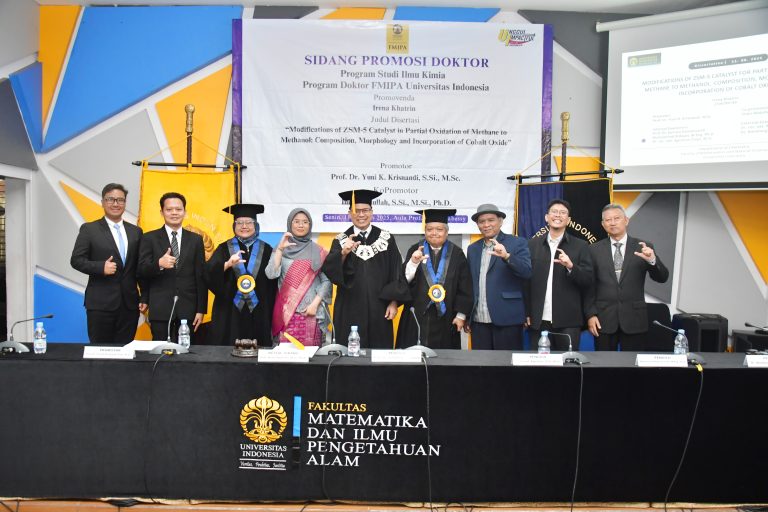
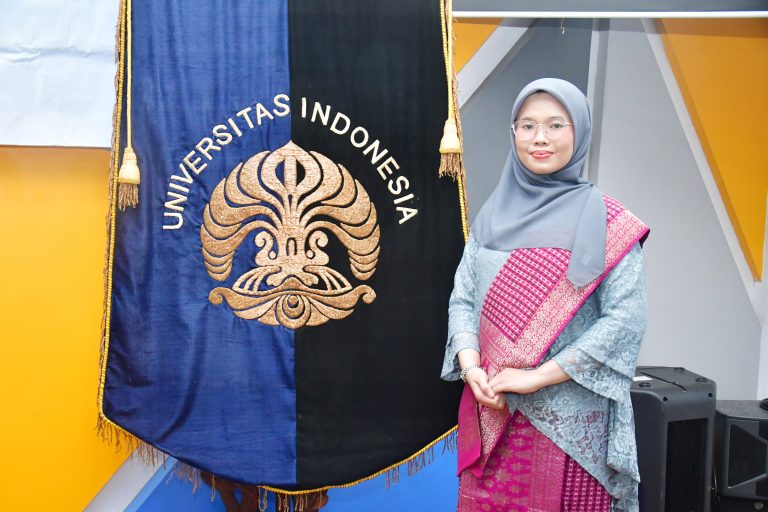
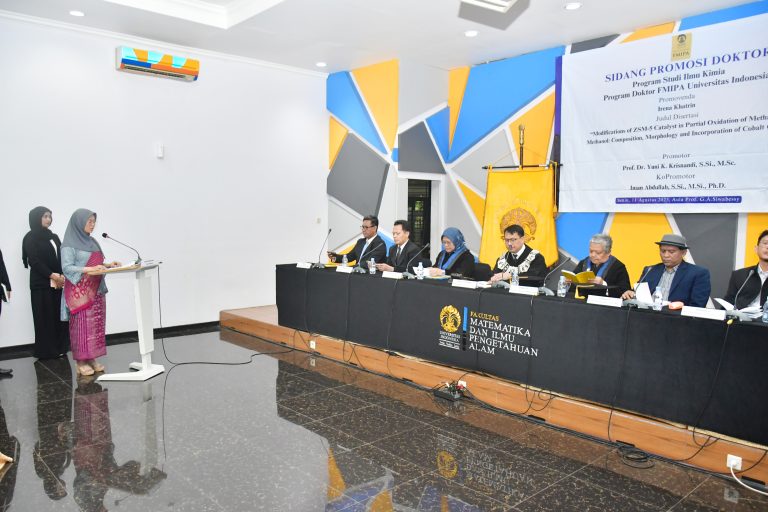
For her contribution, Irena earned a Doctorate in Chemistry from the Faculty of Mathematics and Natural Sciences, Universitas Indonesia (FMIPA UI), with cum laude distinction and a GPA of 3.83. The doctoral defense was held on Monday (August 11, 2025) at the Prof. Dr. G.A. Siwabessy Auditorium, UI Depok Campus, chaired directly by the Dean of FMIPA UI, Prof. Dede Djuhana, M.Si., Ph.D.
Promoter Prof. Dr. Yuni Krisyuningsih Krisnandi, S.Si., M.Sc., along with Co-Promoter Dr. Iman Abdullah, S.Si., M.Si., expressed their appreciation for Irena’s perseverance and academic contributions.
“Irena has demonstrated remarkable perseverance in designing highly specific catalysts. Her research opens up great opportunities for applications in a cleaner and more energy-efficient chemical industry,” said Prof. Yuni.
She added that this research is a concrete example of how basic scientific research can provide solutions to global energy and environmental challenges, while also strengthening the role of science in national development.