Indonesia is known as an agricultural country because the majority of its population works in the agricultural sector. Indonesia’s natural resources are abundant, one of which is found in Sembalun Village, an area with exceptionally fertile soil and a majority of whose residents are farmers. Located at the foot of Mount Rinjani, the village has long been known as a center for garlic production. The fertile land and its geographical location allow Sembalun farmers to cultivate various horticultural crops such as coffee, beans, chilies, strawberries, potatoes, and others, which are also starting to attract interest from farmers.
Fertilizer is a crucial component for farmers in land management to achieve high crop productivity. In 2019, the University of Indonesia’s Faculty of Mathematics and Natural Sciences Community Service Team introduced organic liquid fertilizer production to farmers in Sembalun Village.
However, some farmers still use chemical fertilizers to cultivate their land because they are readily available and readily available. However, the continued use of chemical fertilizers can be harmful to agricultural land, damaging the soil and disrupting its nutrient balance.
Another negative impact of chemical fertilizers is that they can kill microorganisms that play an important role in plant growth, and can inhibit the decomposition of organic compounds that plants need.
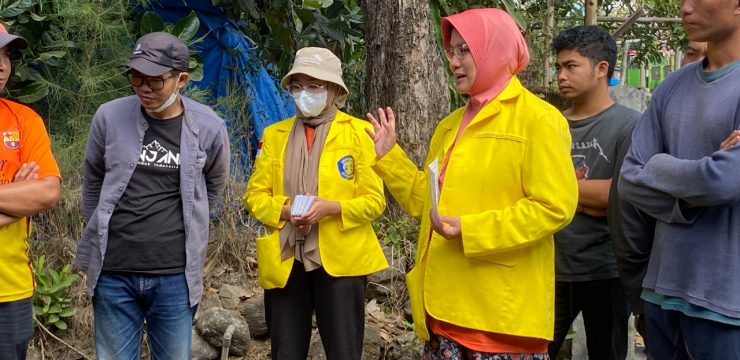
Understanding these facts, the Community Service (Pengmas) team of the Faculty of Mathematics and Natural Sciences, University of Indonesia (FMIPA UI), led by Dr. Retno Lestari, was present in person in Sembalun Village, Sembalun District, East Lombok Regency, West Nusa Tenggara, on August 5-9, 2022.
There, Dr. Retno and her team are working to provide a solution to facilitate farmers’ access to organic fertilizer through the Liquid Fertilizer Depot Program. This program is implemented in collaboration with the Pandu Cendekia Foundation and supported by the Directorate of Community Service and Empowerment (DPPM) of the University of Indonesia.
Through this program, a team consisting of a lecturer from the Department of Biology, Dr. Ratna Yuniati, and three students from the Faculty of Mathematics and Natural Sciences, UI, consisting of Windya Fajira, Bismi Yasinta Maharani, and Muhammad Aqmal Danish, invited the community to build a liquid fertilizer depot that could be managed by residents, making it easier for residents to obtain supplies of organic liquid fertilizer.
The existence of a liquid fertilizer depot to fulfill the supply of liquid organic fertilizer that is composed according to the needs of the plants of Sembalun Village farmers, is expected to be able to reduce the use of chemical fertilizers, so that land fertility in Sembalun Village can also be maintained.
Murtadi, a member of the Sembalun farming community, welcomed the program. “Liquid fertilizer depots are one of the solutions needed by farmers in Sembalun Village. I think these depots need to expand so farmers can experience the benefits of organic fertilizer,” said Murtadi.