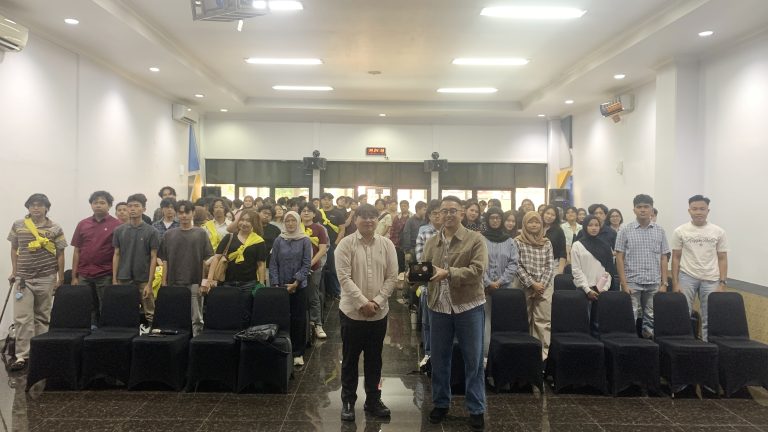
Depok, August 26, 2026 — To mark the start of the new semester for the 2026/2027 Academic Year, the Geology and Geophysics Study Programs at the Faculty of Mathematics and Natural Sciences, Universitas Indonesia (FMIPA UI), once again held the UI Geoscience Seminar x STARBORN Mengajar 2026 at the Prof. Dr. G.A. Siwabessy Hall, FMIPA UI, Depok, on Monday (August 24). Under the theme “Mines Do Not Stop When the Ore Runs Out,” the seminar highlighted the importance of applying Environmental, Social, and Governance (ESG) principles to promote sustainable mining practices.
The seminar featured Dr. Dicky Nugroho, S.Si., M.B.A., M.S., Head of Sustainability & Corporate Communication Group (Asia Pacific Region) at Dynapack Asia, Pte. Ltd., as the speaker. In his presentation, he encouraged students to understand that the success of mining operations is determined not only by the ability to discover and process mineral resources, but also by a commitment to comprehensively addressing environmental, safety, community, and governance aspects, from the planning stage through mine closure.
“Mining will continue to be needed by future generations. The question is no longer whether we need mining, but how we can conduct mining in a more sustainable manner,” said Dr. Dicky.
According to him, many mining projects can come to a halt despite having already consumed significant amounts of time and financial resources. Gaps between expectations and conditions on the ground, financial burdens, permitting issues, and social acceptance among surrounding communities are among the factors that can affect the sustainability of a project.
Dr. Dicky also highlighted challenges facing the mining industry in Indonesia, particularly those related to safety and the environment. His presentation addressed fatalities in the nickel processing industry and deforestation issues in the mining areas of Halmahera. The presence of unreclaimed coal mine pits was also identified as a concern, as they pose potential risks to local communities, including children.
These conditions demonstrate that the impacts of mining activities can persist long after production has ended. Therefore, the implementation of ESG principles needs to be integrated into the entire mining life cycle, rather than treated merely as an additional measure after production is underway.
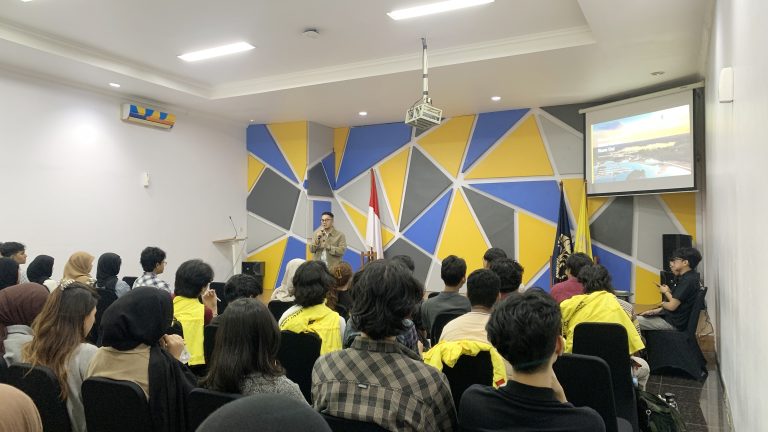
According to Dr. Dicky, sustainable mining practices can be implemented through measures such as restoring water quality to conditions close to those before mining, managing waste to prevent the formation of acid mine drainage, rehabilitating the environment surrounding mining areas, strengthening safety measures to minimize fatalities, and allocating funds for restoration and mine closure activities.
“When the ore is exhausted, our responsibility does not end. We must continue to ensure that the water, environment, community, and the entire mining area are left in a responsible condition,” he said.
This message is particularly relevant for Geology and Geophysics students who will eventually enter the industry. In addition to mastering technical competencies, students need to develop a broader perspective on the social and environmental consequences of every decision made in managing natural resources.
An understanding of ESG also equips students to contribute across various areas, ranging from exploration, mine planning and operations, environmental management, and reclamation to mine closure. With these competencies, geoscience graduates are expected not only to meet industry needs but also to help promote safer and more responsible mining practices.
Following the presentation, moderator Twin Hosea W. K., S.T., M.T., delivered a summary and opened the question-and-answer session. The discussion covered several issues related to mining sustainability, including how individuals concerned about environmental issues can still pursue careers in the mining industry.
The discussion demonstrated that sustainability challenges do not always have to be addressed by distancing oneself from the industry, but can also be tackled by bringing in professionals with environmental awareness and technical expertise who can drive change from within.
Through the UI Geoscience Seminar x STARBORN Mengajar 2026, FMIPA UI students were encouraged to view mining from a more comprehensive perspective—not only in terms of resource utilization, but also the responsibilities that come with it. This is increasingly important amid the growth of Indonesia’s mineral industry and downstreaming agenda, which requires a balance between economic growth, occupational safety, environmental protection, community interests, and long-term sustainability.