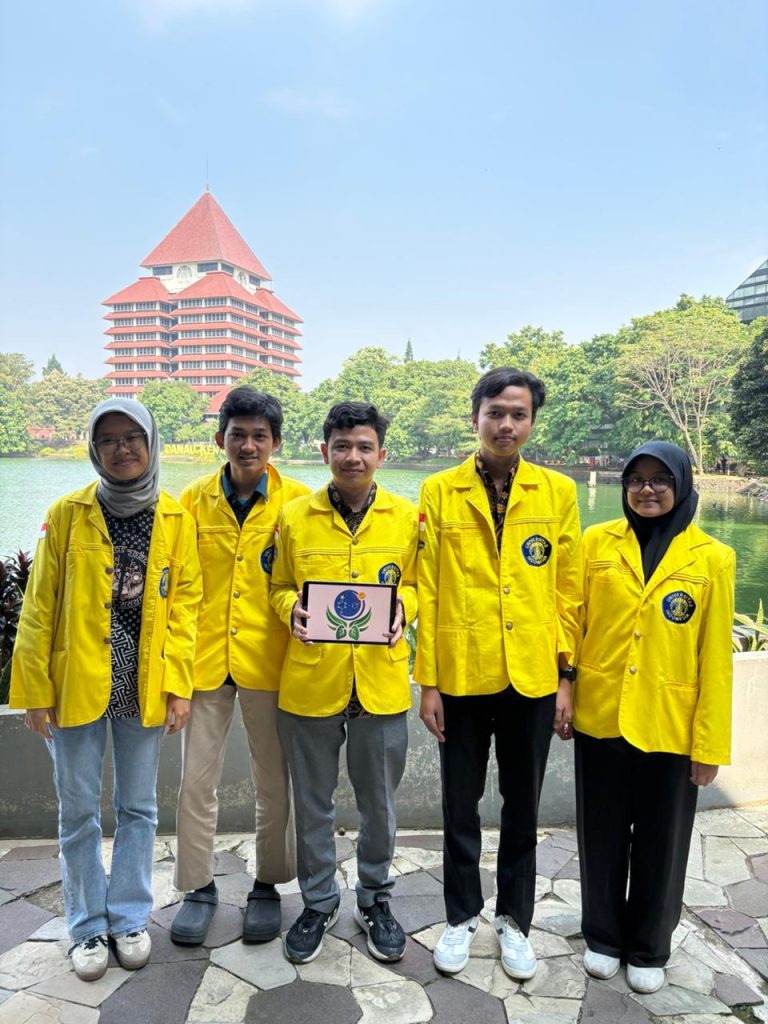
The community service team of the Faculty of Mathematics and Natural Sciences, University of Indonesia (FMIPA UI) led by Rika Tri Yunarti, M.Eng, Ph.D (lecturer in the Chemistry Department, FMIPA UI) ran a community service program to introduce the world of applied science to elementary school children. Rika involved 12 students from the Chemistry Department, FMIPA UI to demonstrate chemical experiments through fun methods using materials that are easily found in the environment. A total of 35 elementary school students and six orphanage managers attended the activity which took place on August 8-9, 2020 at the Berkah Sejahtera Foundation, Cilangkap Village, Tapos District, Depok, by implementing the COVID-19 prevention health protocol.
“Chemicals are often understood as very dangerous materials that must be avoided by children. In fact, many things in human life are closely related to chemistry. So through this interactive learning activity, children can be stimulated to be curious and interested in the world of science, especially chemistry,” said Rika.
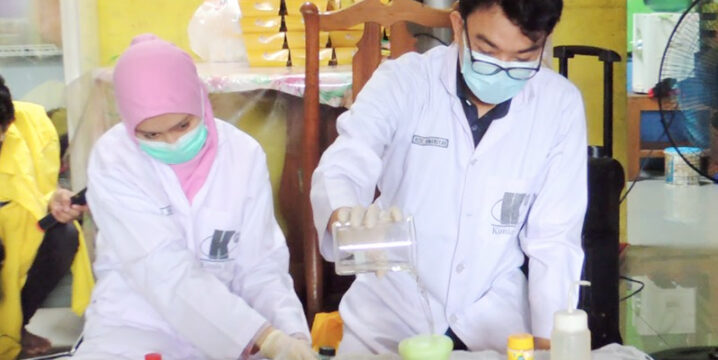
On the first day of the activity, the team presented two types of applied experimental methods. The first method is Fun Science by making Foaming Volcano, Hypnotic Tissue, and Non-Newtonian Fluid that utilize safe and easily found materials in the surrounding environment. The second method is Fun Experiment. In this activity, participants conducted simple chemical experiments and observations by filtering polluted water using charcoal to produce clear water. Another experiment is Do It Yourself Soap, which is the practice of making soap as an effective step in protecting yourself from exposure to COVID-19.
Rika said that the participants were most enthusiastic about the Foaming Volcano experiment, which involved reacting baking soda with vinegar to release carbon dioxide gas that resembled a volcanic eruption.
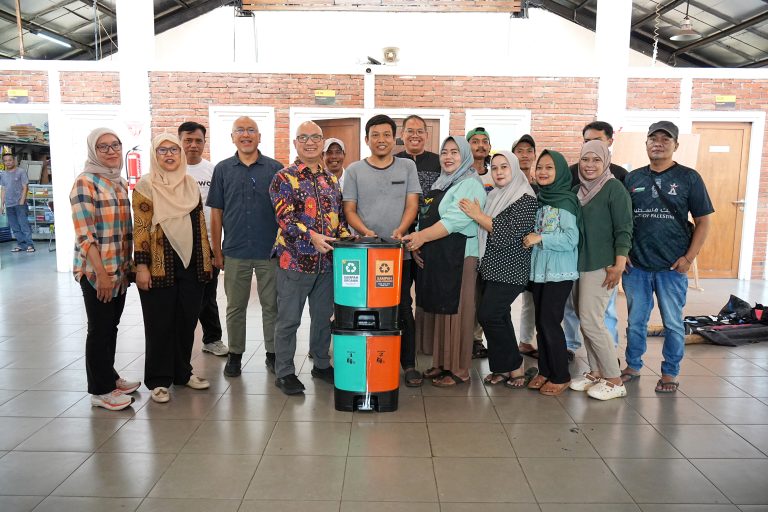
Still in the series of community service, Rika and the team also declared the Depok City Movement towards Zero Waste City. The declaration was made on the environmental seminar agenda which aims to encourage participants to manage waste starting from themselves and from the smallest scope, namely households.
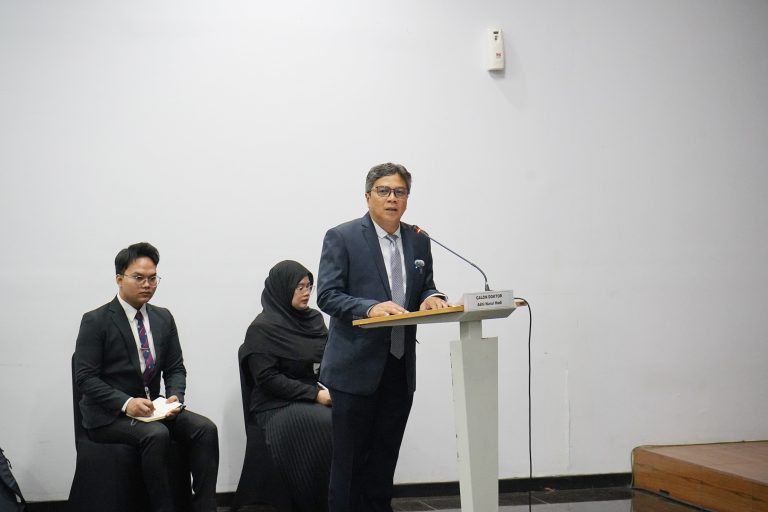
“We delivered the material in two sessions, namely easy steps to manage household waste, and the Reduce, Reuse, Recycle (3R) steps, sorting organic and inorganic waste, Hazardous and Toxic Materials (B3) waste, and waste recycling centers around the house. The presentation of the material was complemented by video screenings. In addition, we also held a Focus Group Discussion session with the topic “Why should we throw garbage in its place?,” said Rika.
He hopes that his series of community service activities can also instill awareness in elementary school students from an early age about the importance of efforts to maintain environmental cleanliness, as well as improve participants’ abilities in processing household waste that can still be used to achieve Zero Waste.