Depok, May 21, 2025. Researchers from the Faculty of Mathematics and Natural Sciences (FMIPA) at the University of Indonesia (UI), through the Applied Science Laboratory Special Work Unit (UKK LST), conducted a study on the role of bottle seal caps in maintaining the hygiene of packaged drinking water (AMDK) against potential contamination from the surrounding environment.
According to the Head of the Chemistry Laboratory at FMIPA UI, Dr. rer. nat. Agustino, S.Si., M.Sc., although the production process of packaged drinking water (AMDK) follows strict sanitation standards, the risk of cross-contamination still exists during distribution and storage, especially when exposed in open spaces.
“Some microorganisms such as Staphylococcus aureus and Aspergillus niger are known to survive on the surface of inanimate objects for quite a long time. Staphylococcus aureus, for example, can survive up to four days on the surface of stainless steel. This shows the potential risk that can also occur on the surface of plastic bottles,” Agustino explained.
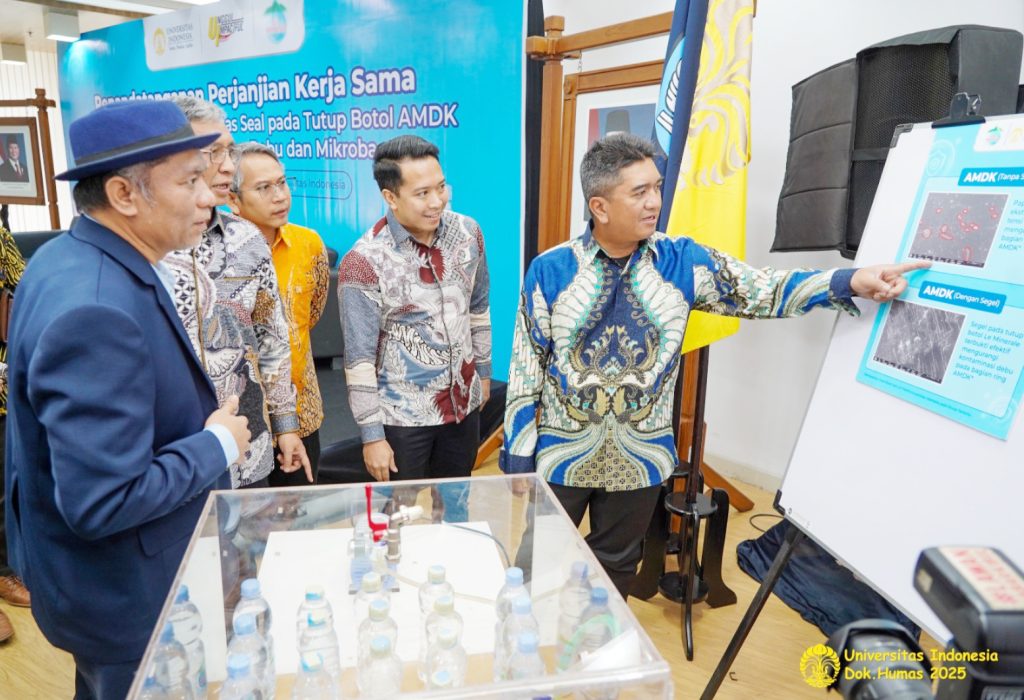
In this study, the team used a simulation approach that represents real-world conditions such as grocery stores, terminals, and convenience stores, as well as extreme laboratory tests. Water bottles with and without protective seals were tested after being exposed to dust and microorganisms for 1 to 6 hours. The main focus of the tests was on the accumulation of dust particles, bacterial colonies, and mold on the cap and neck areas of the bottles.
The test results indicate that the presence of bottle seal caps significantly reduces contamination levels. Under extreme laboratory conditions, the seals demonstrated high effectiveness in preventing the entry of dust and microorganisms. These findings underscore the importance of innovation in packaged drinking water (AMDK) design to ensure product safety until it reaches consumers.
This study is also a real example of the application of scientific research in the industrial and public health sectors. Vice Chancellor for Research and Innovation UI, Prof. Dr. Hamdi Muluk, M.Sc., said that this kind of research shows UI’s scientific contribution that has a direct impact. “This research shows how a scientific approach can provide practical solutions to challenges in society, in line with UI’s mission as an excellent and impactful institution,” he said.
FMIPA UI is committed to continuously developing applied research that addresses real-world problems and provides direct benefits to the wider community, especially in the fields of food safety and environmental health.