DEPOK– The potential for hydrometeorological disasters and the urgency of climate change are almost universally recognized. Indonesia and countries in Southeast Asia and the Pacific are considered to frequently experience hydrometeorological natural disasters such as floods, landslides, abrasion, high tides, hurricanes, droughts, storms, and forest fires.
This has attracted the attention of the Natural Environment Research Council (NERC), a British research institution, to develop a joint research program with Indonesia to improve understanding and the impact of hydrometeorological disasters in the Southeast Asia region.
This collaborative research is being conducted through theNewton FundGrants scheme , which provides £1.5 million in funding from the UK government over a three-year period. This funding will support three to four research projects.
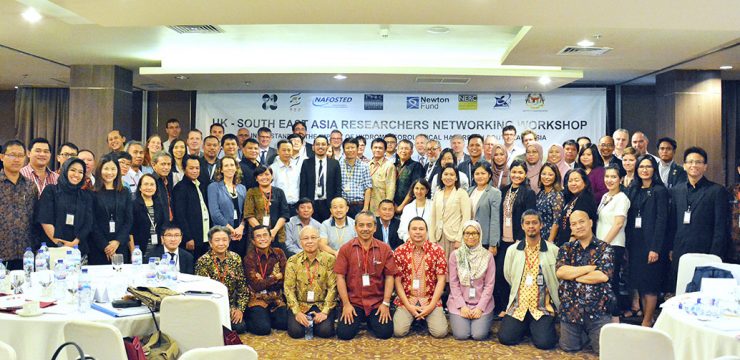
Indonesia, through the Ministry of Research, Technology, and Higher Education, in collaboration with the Faculty of Mathematics and Natural Sciences, University of Indonesia (UI), and NERC, held an event to discuss these research opportunities. The UK-South East Asia Researchers Networking Workshop, titled “Understanding the Impacts of Hydrometeorological Hazards in Southeast Asia,” was held today, Tuesday (10/10) at the Santika Hotel, Depok.

The event was attended by 75 participants from various educational and research institutions, including the Ministry of Research, Technology, and Higher Education, the Indonesian Institute of Sciences (LIPI), the Agency for the Assessment and Application of Technology (BPPT), the University of Indonesia, the British Embassy, and other international research funding organizations.
Participants discussed the focus of this program, namely characterizing and predicting environmental variables that influence the occurrence, impact, and duration of hydrometeorological disasters and the research challenges that may include:
- Understanding the vulnerability of several river basins (DAS) to hydrometeorological disasters.
- Exploring various environmental variables interacting and combining these parameters to determine the potential for hydrometeorological disasters.
- Exploring how changes in water resource management can mitigate potential hydrometeorological disasters.
This project is expected to be carried out as close as possible to the end-users to ensure the application of the results of this research by the central government, local governments, businesses, and local communities to make decisions or policies regarding the management and mitigation of hydrometeorological disasters.