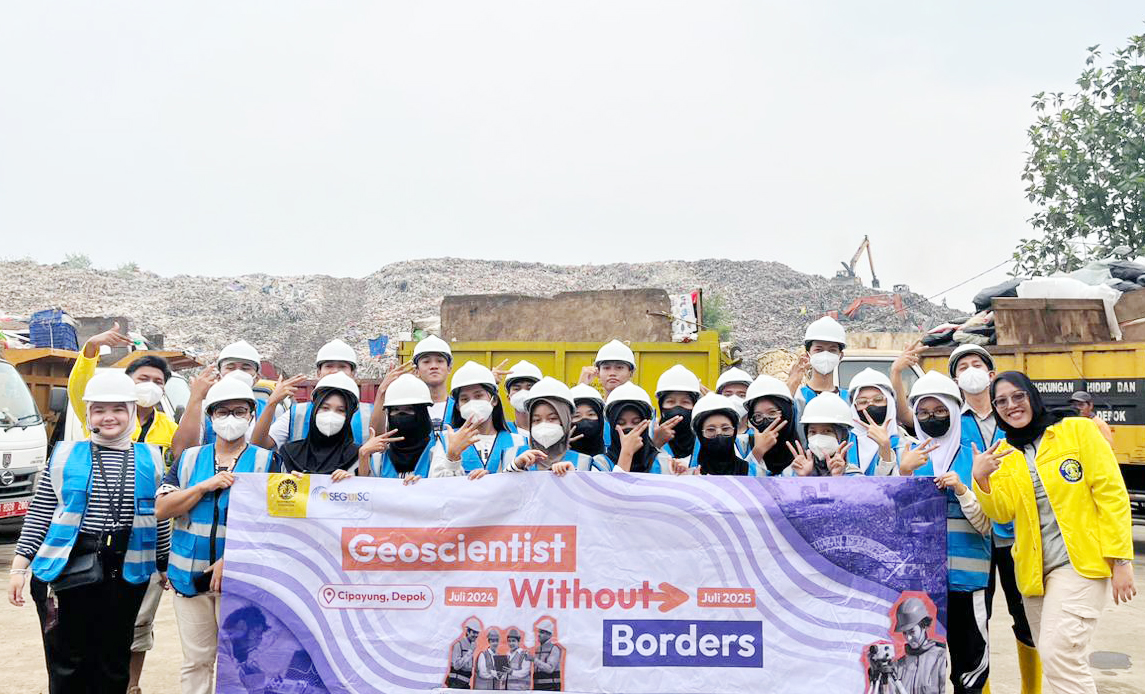
Amid the growing demand for clean water sources and increasing environmental pressure caused by suboptimal waste management, a group of students from the Faculty of Mathematics and Natural Sciences, Universitas Indonesia (FMIPA UI), through the SEG UI Student Chapter, initiated efforts to address groundwater quality issues in Cipayung District, Depok. With funding support from Geoscientists Without Borders (GWB) of the SEG Foundation, they carried out Project Aquinas, an integrated study that combines geophysical and geochemical methods to map aquifer contamination around the Cipayung Final Waste Disposal Site (TPA Cipayung).
Project Aquinas is led by Anne Meylani Magdalena Sirait, Ph.D., from the Geophysics Study Program of FMIPA UI, with student implementation coordination by Indah Cahya Fitria (Geophysics 2021). This initiative not only aims to develop students’ academic competencies but also to direct geophysical sciences toward providing real solutions for the community.
As a global organization with more than 20,000 members across 128 countries, the Society of Exploration Geophysicists (SEG), through the GWB program, promotes geoscience-based actions to address humanitarian challenges. Project Aquinas is one of the implementations of this program in Indonesia.
Cipayung District, located in the southern part of Depok City, covers an area of approximately 12 km² and is home to more than 9,400 households. It is in this area that the 20-hectare Cipayung Final Waste Disposal Site (TPA Cipayung) operates using an open-dumping method. The accumulation of waste—reaching heights of up to 20 meters—has long caused various environmental impacts, including strong odors, potential disease risks, and a decline in groundwater quality.
This situation highlights the need for scientific analysis to map the extent to which contamination from the landfill affects the availability of clean water for residents.
The student team applied two main methods: resistivity and Ground Penetrating Radar (GPR). These techniques were used to detect the presence and migration of contaminants beneath the ground surface.
The mapping results indicated signs of contamination at depths of 6 to 25 meters, showing a pattern of pollutant movement from the landfill area toward residential zones.

These findings were reinforced by geochemical analyses of 20 groundwater samples taken from residents’ homes. Based on water quality standards set in PERMENKES No. 02 of 2023 and Government Regulation (PP) No. 22 of 2021, 13 out of the 20 samples were declared unfit for consumption.
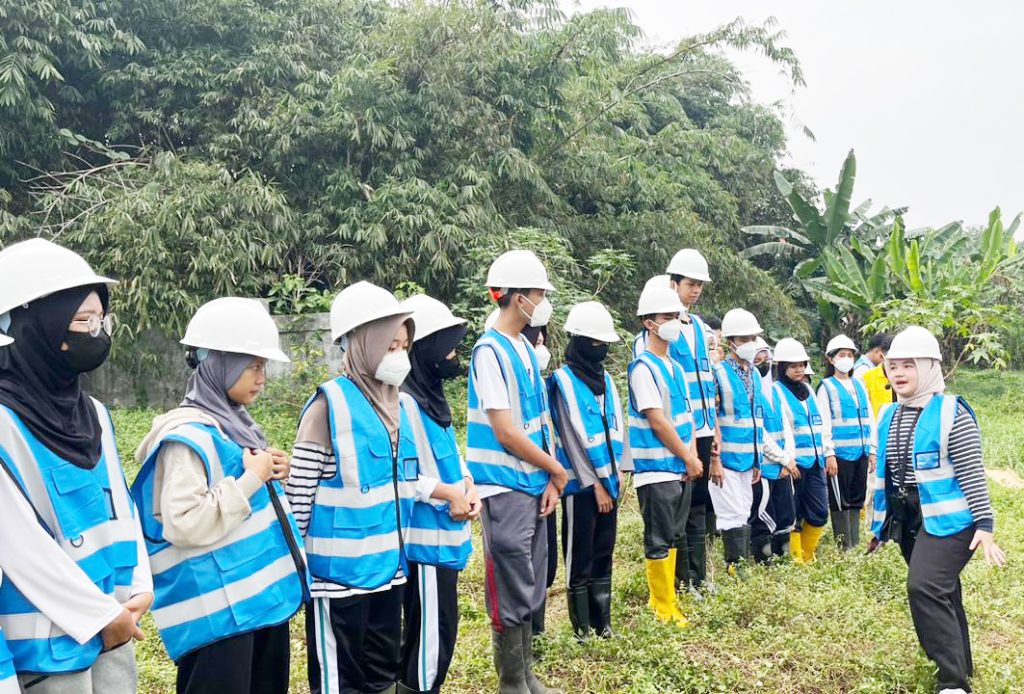
As a follow-up action, Project Aquinas installed water filters in affected households as an initial solution to reduce health risks. In addition, the team organized an educational activity in the form of a Charity Event at SMAN 12 Depok, aimed at introducing geoscience methods and raising students’ awareness of water quality issues and the impacts of waste management.
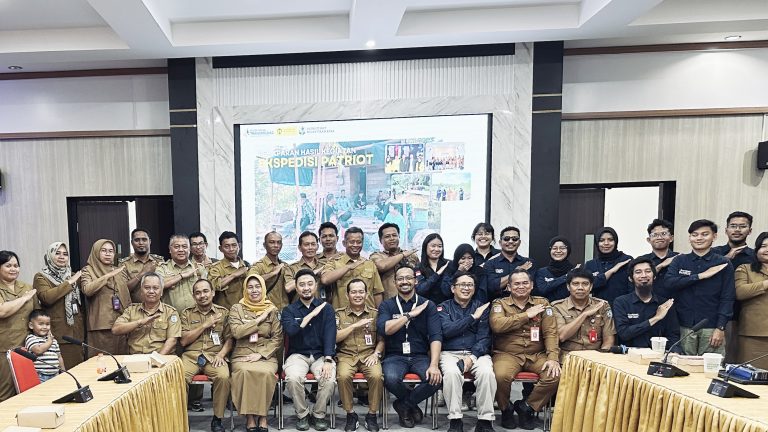
The research results and intervention process were then presented to residents around the Cipayung landfill in an open discussion forum. The community responded positively, with some expressing hope that the benefits of the GWB program would continue to be felt in the coming years.
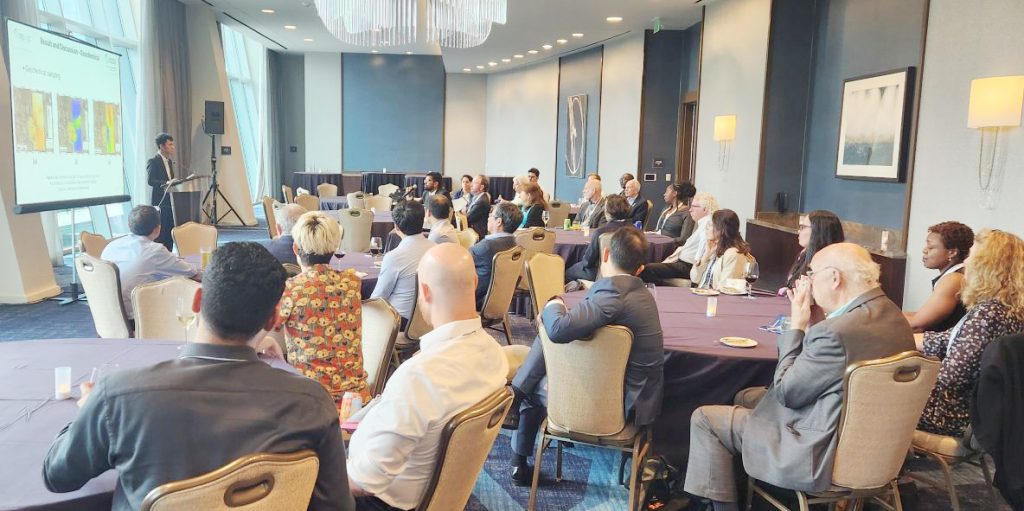
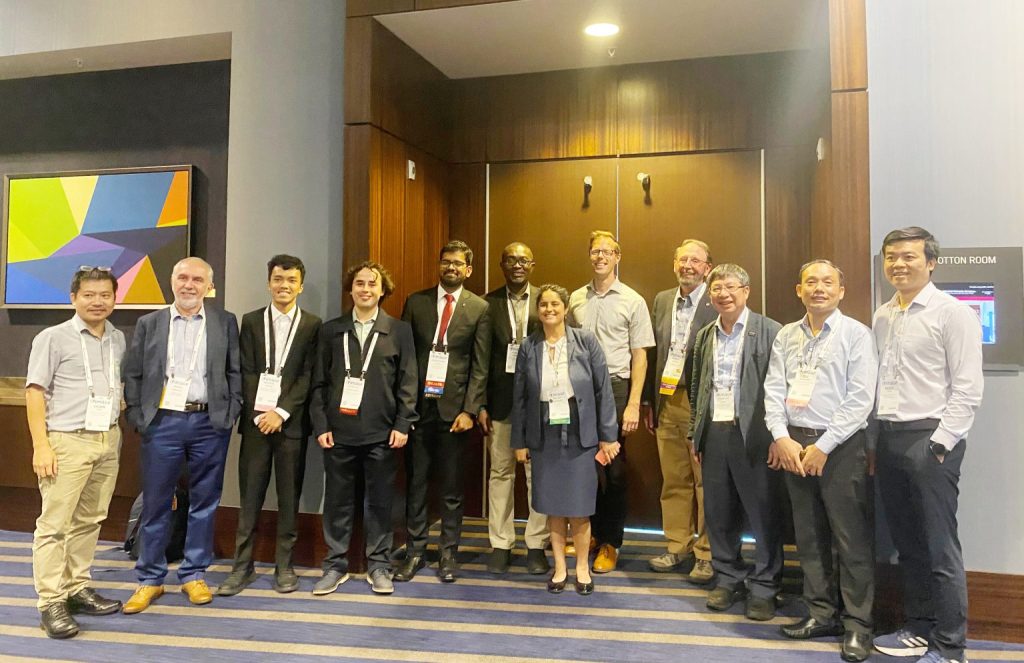
The overall results of Project Aquinas were later presented at the International Meeting for Applied Geoscience & Energy (IMAGE) 2025 in Houston, Texas, on August 26, 2025. The presentation was delivered by Michael Partogi (Geophysics 2022), Vice President of SEG UI SC 2025 and a member of the project’s Steering Committee, marking the contribution of Indonesian students in an international scientific forum.
Through a structured scientific approach and measured social interventions, Project Aquinas demonstrates how geophysics can serve as an important tool for addressing community issues. Amid the challenges of urban environmental quality, this project exemplifies how synergy between academics, students, and residents can produce relevant and sustainable solutions.