The Geoscience Team Holds Social Action at the University of Indonesia (GEOSGAS UI), consisting of 10 students from the geoscience study program, held a community service program with the theme “Disaster Mitigation Education with Pop-Up Books and Attractive Models for Children in Orphanages.”
The activity, chaired by Adnan Xavier (Geology 2020), was held for two weeks, every Saturday, in two different locations: on November 20, 2021, at the An-Nur Orphanage Foundation in Pancoran Mas District, Depok, and on November 27, 2021, at the Dompet Yatim and Dhuafa (DOMYADHU) Orphanage in Tanah Baru, Pancoran Mas District, Depok. This was done to expand the reach and benefits of the activity.
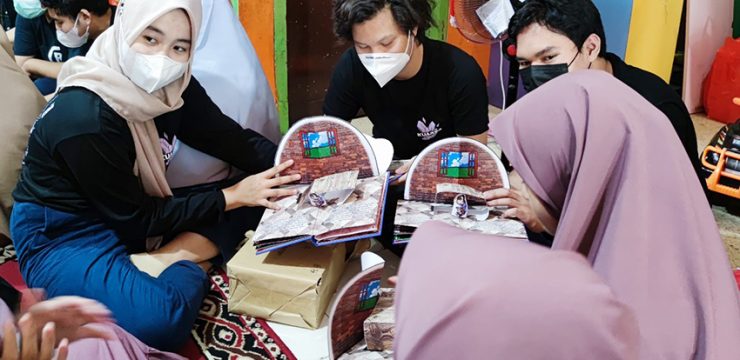
Under the guidance of Rezky Aditiyo S.T., M.T., a lecturer in the geology study program, Adnan and his team strive to educate the public, especially those related to disaster mitigation through innovative and interesting methods, namely by using Pop Up books and disaster simulation models.
“This activity also serves as a platform for children to channel their sense of caring and sharing with the community. Furthermore, GEOSGAS UI aims to provide education by presenting several disaster-focused materials, packaged in a highly engaging manner to ensure the message is conveyed effectively,” Adnan told the FMIPA UI public relations team.
This program was successfully implemented thanks to the collaboration of the team with the ‘CERIAA’ team, the innovator of the Pop Up book “Smartly Facing Natural Disasters”.
Furthermore, Adnan emphasized the importance of understanding disaster mitigation at an early age to improve disaster response skills and awareness among communities living in disaster-prone areas. This will ensure that every individual understands how to deal with and prevent a disaster, as well as appropriate self-rescue measures.
“With the Pop-Up book and disaster simulation mock-ups we’ve provided, we hope participants will easily understand the material on disaster mitigation,” Adnan added.
At the location, the team conducted outreach and education on disaster response efforts, such as floods and volcanic eruptions, for participants. The team also simulated these disasters using models.
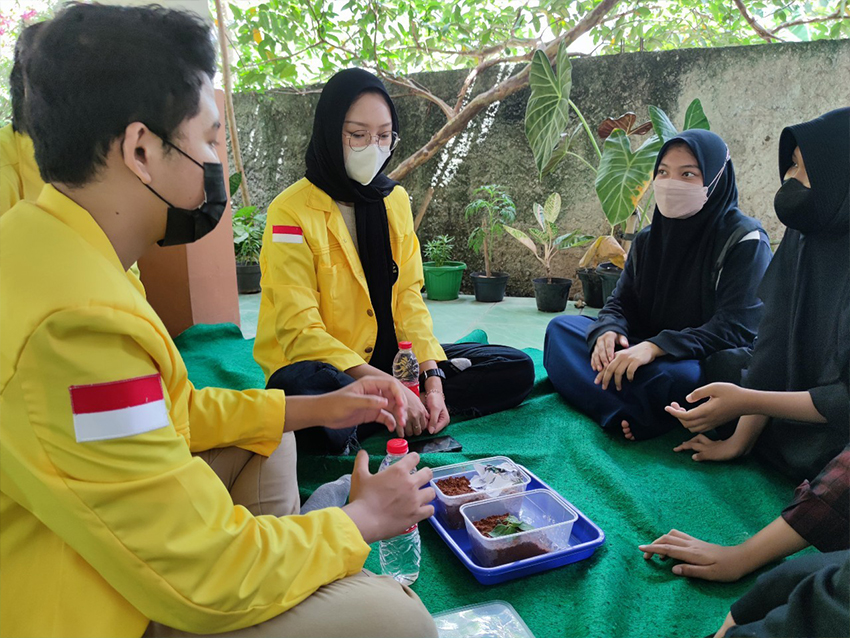
Not only providing education on disaster mitigation, the team also provided additional training to the participants.
Before running the program on site, the GEOSGAS UI team offered additional training by conducting a survey to the participants through the Foundation chairman to choose training according to the participants’ needs.
“Because the community service we provide also brings education to the outside community, our team conducted a direct survey of the orphanages we visited. The survey included questions about educational content that the children in the orphanages really needed, so the program we implemented was truly on target and suited to their needs,” Adnan said.
The head of the An-Nur Orphanage, Suroso, chose training public speaking for his foster children.
He revealed that currently the children at his orphanage, who are elementary school (SD) and junior high school (SMP) students, do not yet have the confidence to appear and speak in public, and tend to withdraw.
Seeing this trend, he believes that efforts are needed to improve the communication skills and self-confidence of the children he fosters.
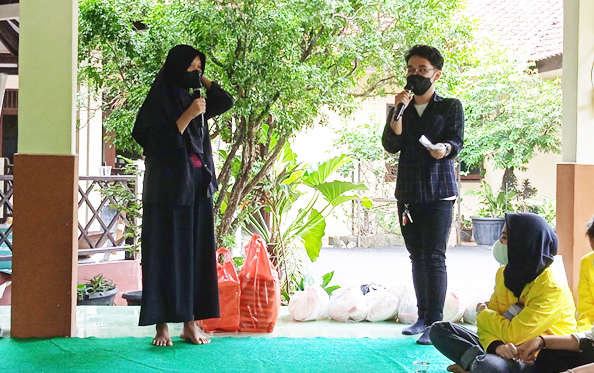
“Many children are still reluctant to speak in front of a large audience, either because they lack confidence or have never tried. I’m not very good at teaching them. Therefore, providing education on public speaking would be very helpful for the children at the An-Nur Orphanage,” said the Head of the An-Nur Orphanage.
By holding this disaster mitigation education program and additional training, the Team hopes that this activity will be able to become an effort to encourage the achievement of Sustainable Development Goals (Sustainable Development Goals) point 4 (quality education), can also motivate the wider community to participate in helping other communities who still have minimal insight into disaster mitigation.