


As recently announced by the Quacquarelli Symonds World University Ranking (QS WUR) by Subject for 2020, 12 fields of study at the University of Indonesia (UI) across four broad subject areas have successfully entered the international rankings.
One of these is Geography. This study program, under the auspices of the Faculty of Mathematics and Natural Sciences, is ranked 151-200 in the Natural Sciences group.
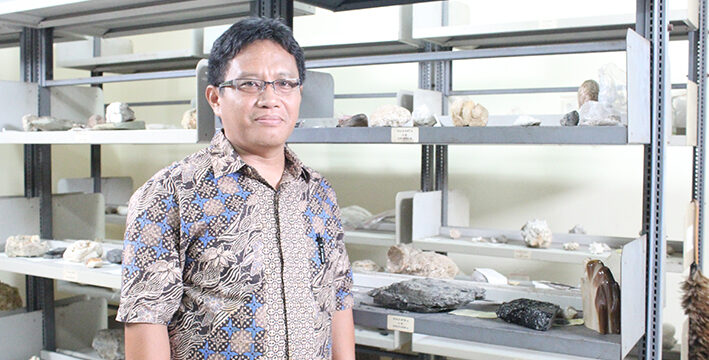
Head of the Geography Department, Dr. Supriatna, M.T., attributes this impressive achievement to the hard work and support of many parties, especially the teaching staff, researchers, and students.
He also explained that to achieve this ranking, the Geography Department of the Faculty of Mathematics and Natural Sciences, University of Indonesia (UI), has implemented numerous programs that serve as quality standards for the 2020 QS WUR. These include the reputation of its Human Resources (HR), the Citation H-Index (a measure of the productivity and impact of a scientist’s published work), the quality of its academic work, and its academic reputation.
Starting in 2018, young Geography lecturers at the Faculty of Mathematics and Natural Sciences, University of Indonesia, were encouraged to support their senior lecturers by participating in national and international research grants.
Through this research, coupled with the productivity of its lecturers and researchers in scientific journals, by 2019, Geography Department of the Faculty of Mathematics and Natural Sciences, University of Indonesia, had produced up to 30 publications per year.
Geography Department of the Faculty of Mathematics and Natural Sciences, University of Indonesia, also opened doors to collaboration, both in research collaborations and academic and student activity programs, with several universities, both domestic and international.
The Geography Department of the Faculty of Mathematics and Natural Sciences, University of Indonesia (UI), collaborates with several renowned universities, including Bandung Institute of Technology (ITB), Gadjah Mada University (UGM), Bogor Agricultural University (IPB), and Brawijaya University (UNBRAW). Meanwhile, research collaborations with international universities include the University of Leiden, the University of Birmingham, Lund University, Sweden, and NUFFIC NESO.
Dr. Supriatna, M.T., stated that several faculty members from the Geography Department of the Faculty of Mathematics and Natural Sciences, University of Indonesia, are directly involved in completing research projects conducted by foreign researchers in Indonesia. They assist with this, among other things, conducting surveys.
“Many colleagues from abroad are conducting research in Indonesia. They request assistance and cooperation from our staff to participate in collaborative research writing surveys, which is why the names of the Geography Department of the Faculty of Mathematics and Natural Sciences, University of Indonesia, appear in the research papers,” Supriatna explained to the FMIPA UI Public Relations team.
In addition to research collaborations, the Geography Department of the Faculty of Mathematics and Natural Sciences, University of Indonesia, also pursues academic and student activities with foreign universities. These include student mobility, student exchanges, and joint field schools with Sydney University, the University of Malaya, and University Putra Malaysia.
Regarding the quality of academic work and academic reputation, journals produced by Geography lecturers and researchers at the Faculty of Mathematics and Natural Sciences, University of UI, are written and published in English, with editors from various countries such as Japan, Australia, the UK, and even Africa.
Furthermore, since 2017, Geography has held an international conference annually. This international conference aims to produce international journals, with the additional criterion of being indexed by the reputable international database Scopus, and invites speakers from various continents, including Europe, Asia, and Australia.
This activity also aims to improve the citation H-Index of lecturers and researchers, as well as the students’ ability to produce publications.


