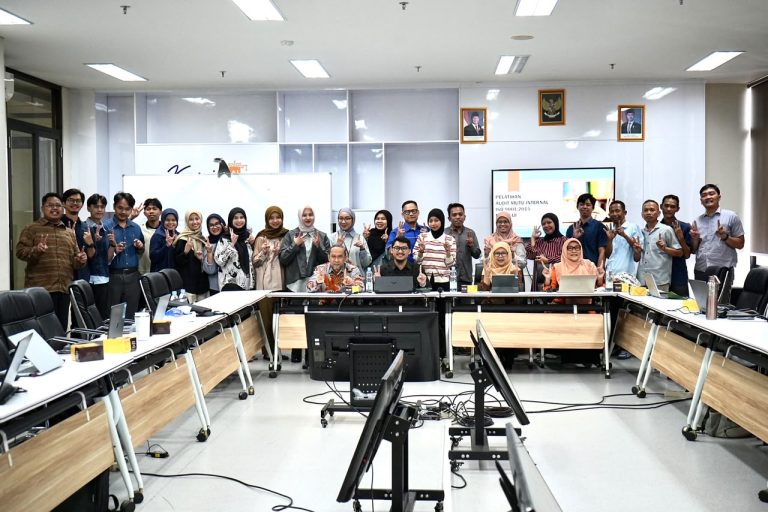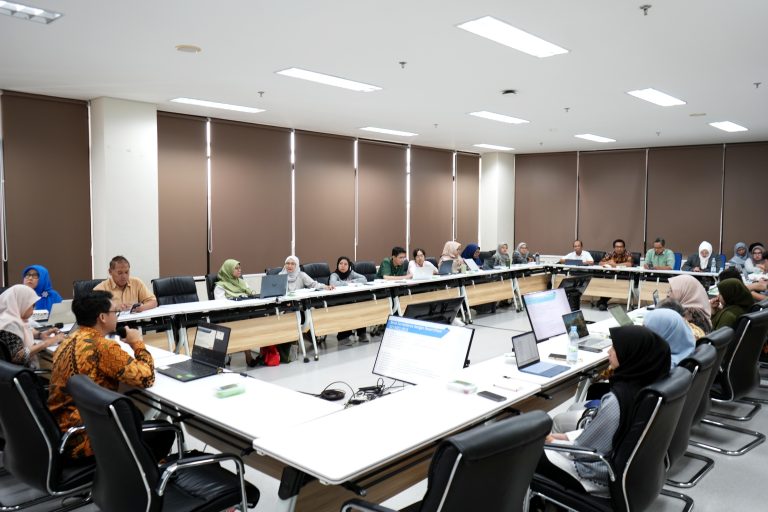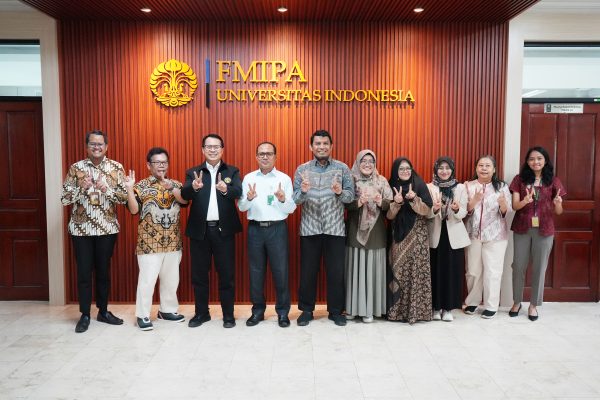
The Faculty of Mathematics and Natural Sciences, University of Indonesia (FMIPA UI) received a visit from a delegation from FMIPA Syiah Kuala University (Unsyiah) on Thursday, July 17, 2025. This visit took place in the Main Meeting Room, FMIPA UI Administration Center, UI Depok Campus.
The Dean of FMIPA UI, Prof. Dede Djuhana, Ph.D., along with the faculty leadership directly welcomed the delegation from FMIPA Unsyiah led by Dr. Nasrullah Zaini, S.Si., M.Si., M.Sc., as the Deputy Dean for Academic Affairs.
This visit is part of the benchmarking agenda carried out by FMIPA Unsyiah, as a follow-up to the recommendations of the assessor team from the Independent Accreditation Institute for Natural Sciences and Formal Sciences (LAMSAMA), in preparation for international accreditation by Akkreditierungsagentur für Studiengänge der Ingenieurwissenschaften, der Informatik, der Naturwissenschaften und der Mathematik (ASIIN), which in the near future will be followed by several study programs at FMIPA Unsyiah.

In his remarks, Prof. Dede said that FMIPA UI is open to collaboration and knowledge exchange between universities in order to improve the quality of higher education in Indonesia.
“We welcome this visit as a form of synergy between institutions. International accreditation processes like ASIIN are not just about fulfilling documentation, but also reflect an institution’s commitment to sustainable quality, a strong academic culture, and readiness to compete globally,” said Prof. Dede.

Meanwhile, Dr. Nasrullah in his remarks said, “As part of the benchmarking process, the Unsyiah delegation wants to gain a deep understanding of the strategies and stages that FMIPA UI has implemented in preparing for and facing the ASIIN accreditation process.”
He added that this understanding includes the quality documentation system used, the involvement of lecturers, students and alumni in the accreditation process, the preparation of Self Assessment Reports (SAR) based on learning outcomes (outcome-based education), as well as various efforts made to meet international standards in the fields of science and mathematics.
“We hope that this kind of information can serve as a reference in building a competitive and globally standardized internal quality assurance system within the Unsyiah Faculty of Mathematics and Natural Sciences,” added Dr. Nasrullah.

In the discussion session, the Head of the Academic Quality Assurance Unit (UPMA) of FMIPA UI explained several strategic steps that have been implemented to prepare for the international accreditation process. First, FMIPA UI ensures that the curriculum of all Study Programs is OBE-based, creates standards derived from university standards for all Special Courses, especially for research-track Master’s and Doctoral programs, at FMIPA UI, and provides quality assurance tools for the implementation of learning at FMIPA UI.
“The establishment of derivative standards for faculties allows us to manage quality assurance better, transparently, and applies to all study programs at FMIPA UI,” said Dr. Denny.
He continued, this standardization is very helpful because international accreditation is usually carried out in one cluster consisting of several study programs from several different departments.
Furthermore, FMIPA UI also involved a task force consisting of faculty and study program teams, who had to collaborate and coordinate regularly to compile the joint Self-Assessment report and its supporting documents. This was quite challenging, as it required aligning the perceptions and understanding of team members from various study programs. Furthermore, finding a schedule for regular meetings was difficult due to the varying schedules and busy schedules of the task force members from each study program.
“FMIPA UI also consistently carries out internal quality assurance and peer-review cycles to maintain quality and continuous quality improvement, as well as establishing international collaborations as a form of support for global benchmarking,” he added.
The visit concluded with a question-and-answer session and intensive information exchange between the two parties, which is expected to strengthen synergy and collaboration in developing a higher education quality assurance system based on international standards.