SAMSUNG CSC
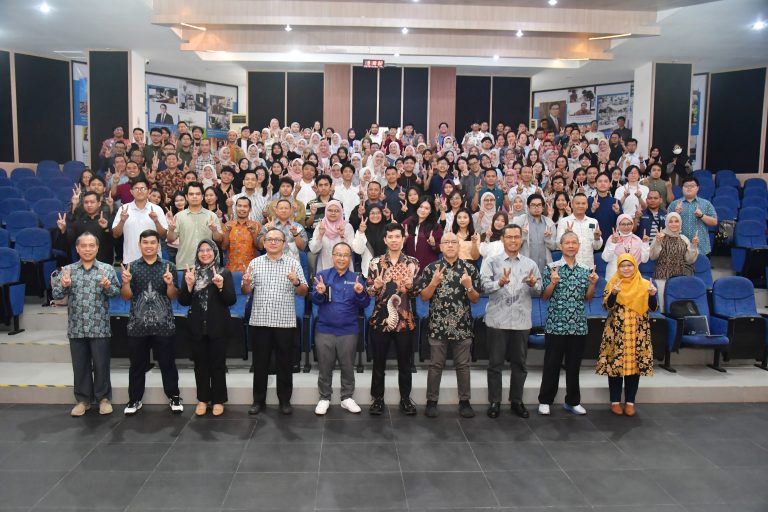
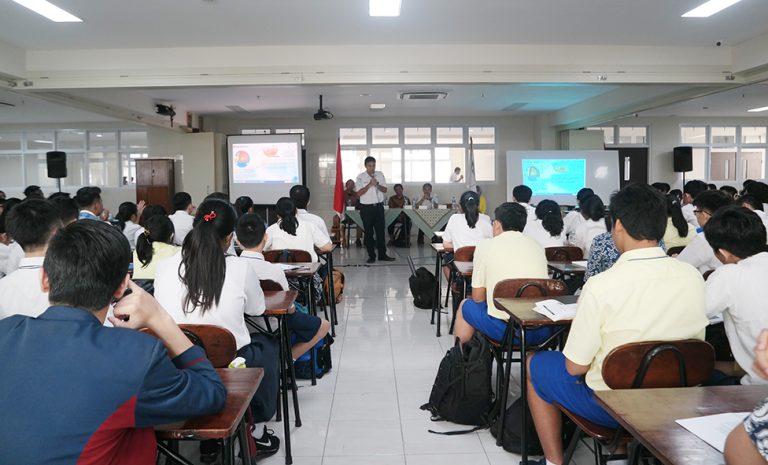
Jakarta is not a subduction zone that will cause earthquakes, but it will be one that is impacted by them. This was stated by Admiral Musa Julius, S.Tr., an observer from the Meteorology, Climatology, and Geophysics Agency (BMKG), who spoke at the ““Socialization of the potential for an 8.7 magnitude earthquake in Jakarta”, which was held by FMIPA UI through the Geology and Geophysics Study Program on Tuesday (17/7) at SMA Vons Vitae 1 Central Jakarta.
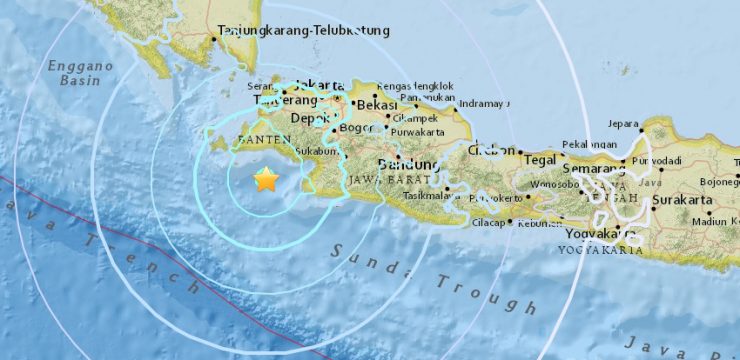
This socialization focused on the topic of earthquakes that had been widely discussed in Indonesia, especially on the island of Java, namely the issue of an earthquake with a magnitude of 8.7 on the Richter Scale (SR) in the southern region of Java Island, especially in the southern part of West Java and Banten.
Musa also explained the potential for disasters in Bandung to 160 students at Vons Vitae 1 High School. “If you were standing above Bandung, you would be standing at the epicenter of an earthquake because the Lembang fault stretches across the entire area,” he said.
As explained in the press release on the BMKG website regarding the results of the Lembang Fault study which has the potential to trigger an earthquake with a magnitude of M = 6.8, in the Bandung City area there is a Lembang Fault structure with a fault line length of up to 30 km.
The study results indicate that the Lembang Fault’s displacement rate reaches 5.0 mm/year, while BMKG monitoring also indicates some minor seismic activity.
In addition to Admiral Musa Julius, S.Tr., FMIPA UI also invited Muhammad Harvan, S.T., also an observer from BMKG. In his presentation, Muhammad Harvan, S.T., explained what to do when facing an earthquake and tsunami.
“Long before a disaster occurs, families living in disaster-prone areas must pay attention to how to organize their belongings to avoid harm during a disaster,” he explained.
Furthermore, Harvan continued, if someone is on an upper floor when an earthquake occurs, it is recommended to hide under a table or move closer to a pillar in the corner of the room, as these pillars are the main foundation of a house or building.
He also explained that earthquakes can cause various types of secondary damage, such as fires.
Reza Syahputra, M.Si. as a lecturer in the Geology Study Program at the Faculty of Mathematics and Natural Sciences, University of Indonesia (FMIPA UI), stated that his study program will conduct a disaster mitigation simulation as a follow-up to this outreach activity. He also hopes that this outreach will make the community better prepared when a disaster actually occurs, thus minimizing casualties.
“It’s important to understand the potential and dangers. So, the public must know what to do in the event of an earthquake,” said Reza.