


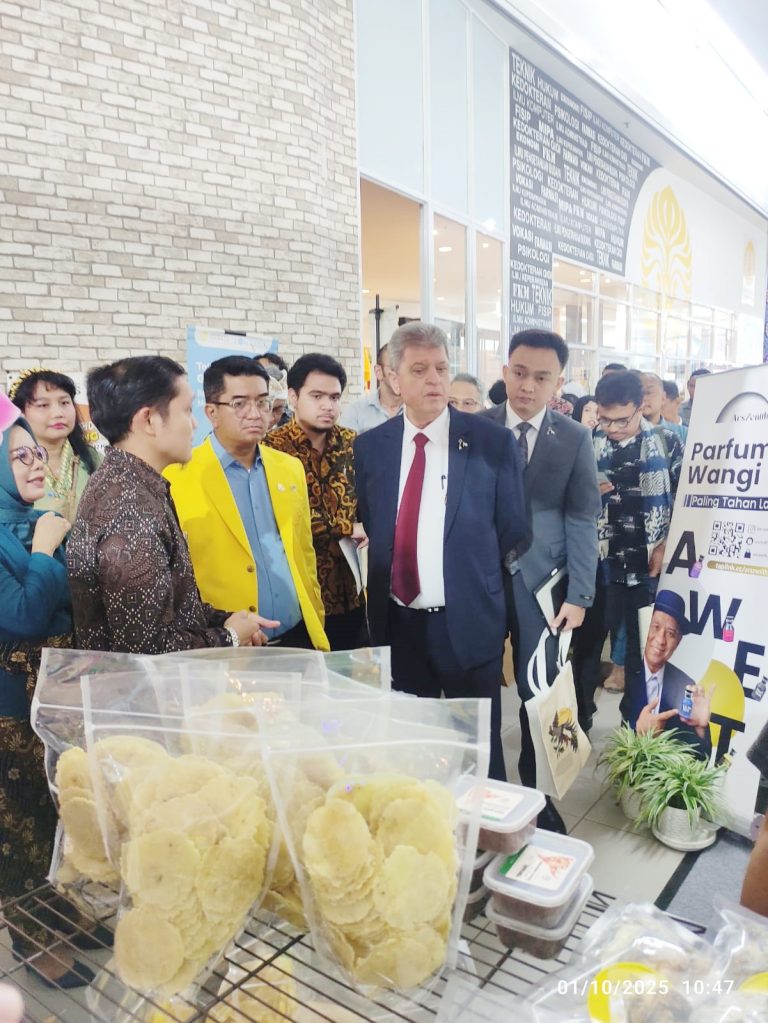
The Faculty of Mathematics and Natural Sciences, Universitas Indonesia (FMIPA UI), through its Community Engagement and Empowerment Unit (PPM), took part in the UI Community Engagement and Empowerment Festival 2025, which carried the theme “Active, Responsive, and Collaborative Spirit of Service for Indonesia.” The event was held over three days, from Wednesday to Friday, October 1–3, 2025, at the UI Library, Depok Campus.
In this festival, FMIPA UI showcased a variety of outstanding innovative products created by its academic community—both lecturers and students—that have been developed over the past three years. These products reflect the close collaboration between science and the real needs of society and represent FMIPA UI’s concrete efforts to implement the Tri Dharma of Higher Education, particularly in the aspect of community service.
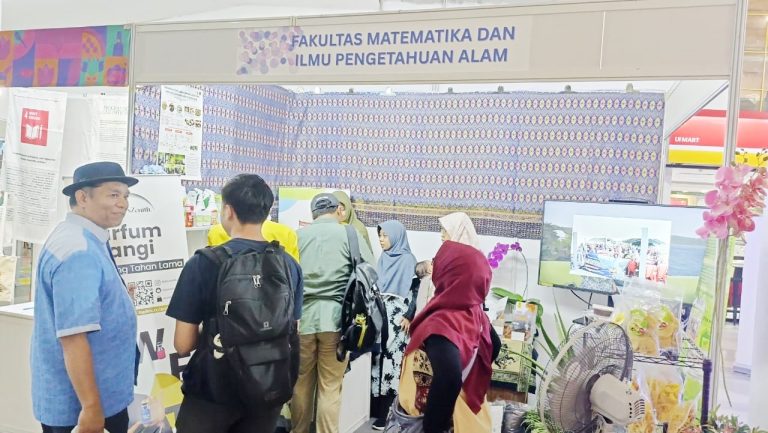
Some of the featured products on display included organic liquid nutrients and eco-friendly compost produced from waste processed through FMIPA UI’s Parangtopo Laboratory biodigester; household health products (PKRT) such as bar soap made from used cooking oil and long-lasting perfume; MSME-assisted and community empowerment products such as banana chips, emping (melinjo crackers), shrimp paste, salted fish; and Chitadyne, a natural antiseptic effective in treating wounds, itching, and skin disorders caused by bacterial infections.
The Dean of FMIPA UI, Prof. Dede Djuhana, Ph.D., stated that amid increasingly complex development challenges, FMIPA UI serves not only as an academic and research institution but also as an agent of change that contributes concrete solutions to society.
“Through a scientific and collaborative approach, FMIPA UI is committed to delivering practical and impactful innovations. We believe that science is not only meant for the laboratory but must also be present within society—addressing needs, improving well-being, and fostering empowerment,” said Prof. Dede.
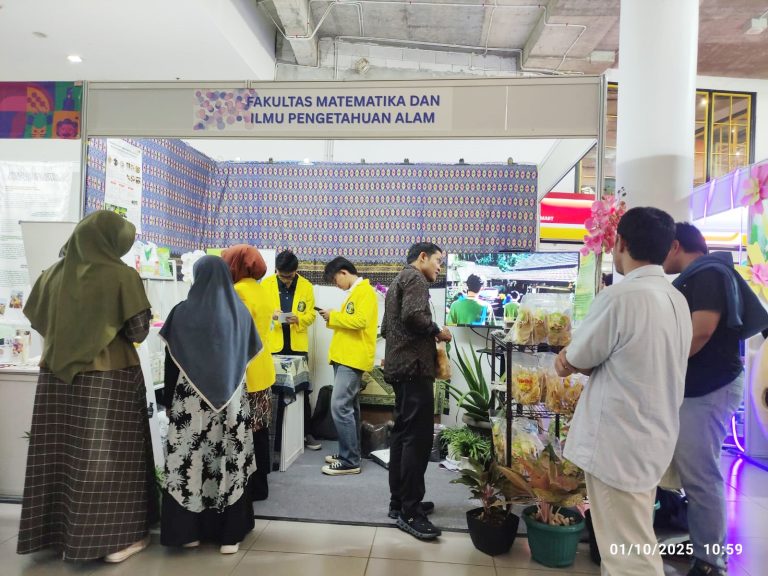
Meanwhile, the Manager of Research and Community Engagement (PPM) at FMIPA UI, Dr. Dipo Aldila, M.Si., revealed that throughout 2025, FMIPA UI has implemented 23 community engagement and empowerment programs, supported by the Directorate of Community Engagement and Social Innovation (DPIS) UI and the 2025 FMIPA UI Community Engagement Grant.
“Each program is designed to deliver science-based practical solutions and to encourage active community involvement in the innovation process. We hope this event opens up broader opportunities for collaboration with the government, industry, community organizations, and the private sector,” explained Dr. Dipo.
Dr. Dipo added that cross-sectoral collaboration is crucial to expanding the social impact of the community engagement programs that have been implemented.
The festival, organized by the Directorate of Community Engagement and Social Innovation (DPIS) UI, was enlivened by a variety of engaging and educational activities. Among them were several parallel talk show sessions held over three days, featuring three FMIPA lecturers as keynote speakers. Dr. Tjiong Giok Pin, S.Si., M.Si. presented a session titled “Appropriate Technology: From Campus to Village”; Prof. Dr.techn. Djoko Triyono, M.Si. delivered a talk in the session “Sustainability in Action: Strengthening UI’s Community Engagement Programs through Partnerships”; and Dr. rer. nat. Agustino Zulys, M.Sc. spoke in the session “Global Service, Local Impact: Strengthening UI’s Role on the International Stage.”
In addition to the talk shows, the festival was also enlivened by various other activities such as a bazaar featuring MSME partner products, thematic competitions and workshops, art and cultural performances, as well as free basic health check-ups and dental consultations.
This festival serves as a platform to showcase the outcomes of community engagement programs carried out by the Universitas Indonesia academic community during the 2021–2025 period. At the same time, it also acts as a forum for establishing strategic partnerships to promote the sustainability and expansion of the benefits derived from the implementation of the Tri Dharma of Higher Education.


