


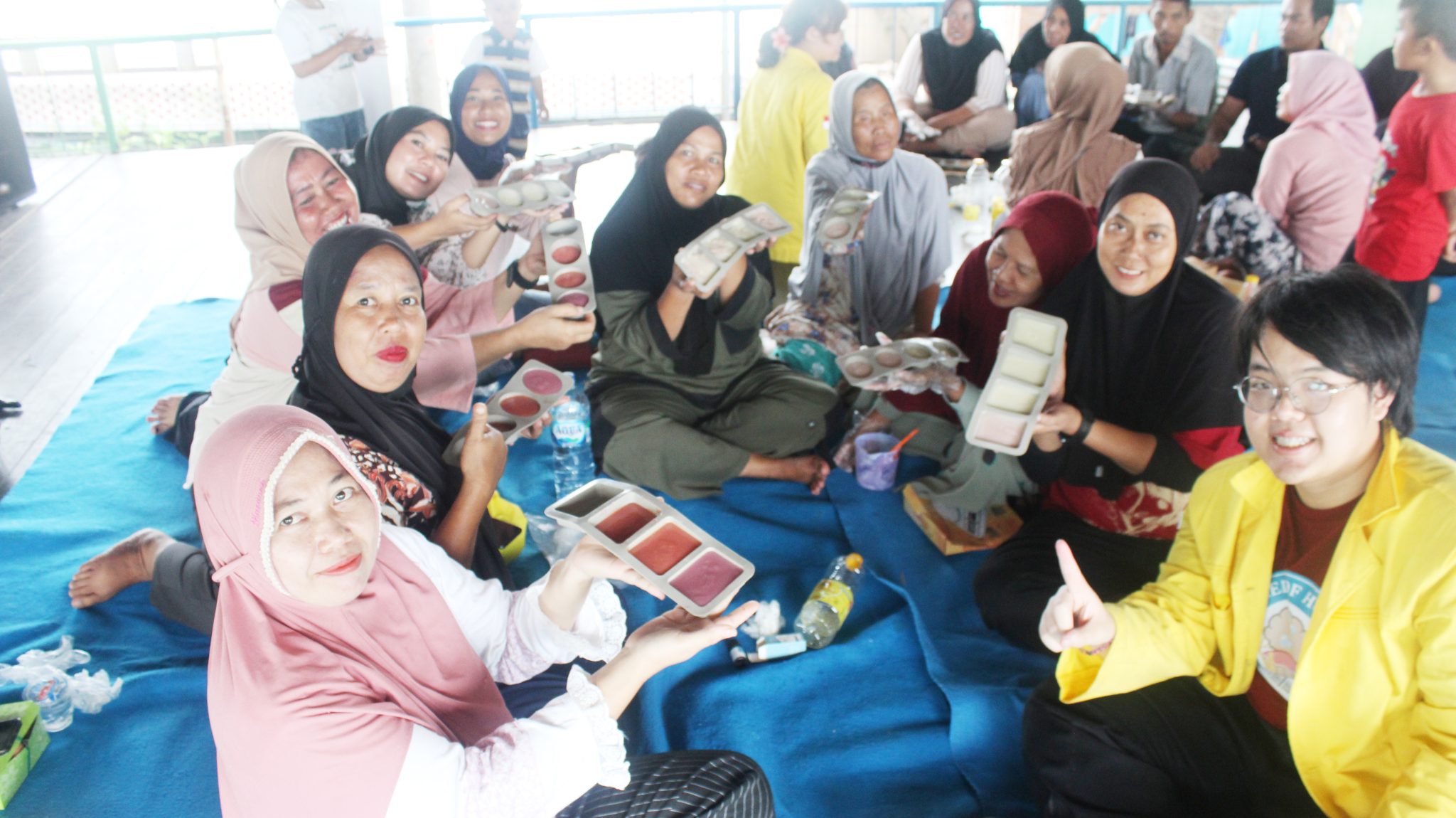
Shell waste, which has long been considered worthless, is now being utilized as a functional and eco-friendly product. The community service team from the Department of Biology, Faculty of Mathematics and Natural Sciences, Universitas Indonesia (FMIPA UI), trained residents of Pulau Harapan, Thousand Islands, to process this waste into natural soap with both practical and economic value.
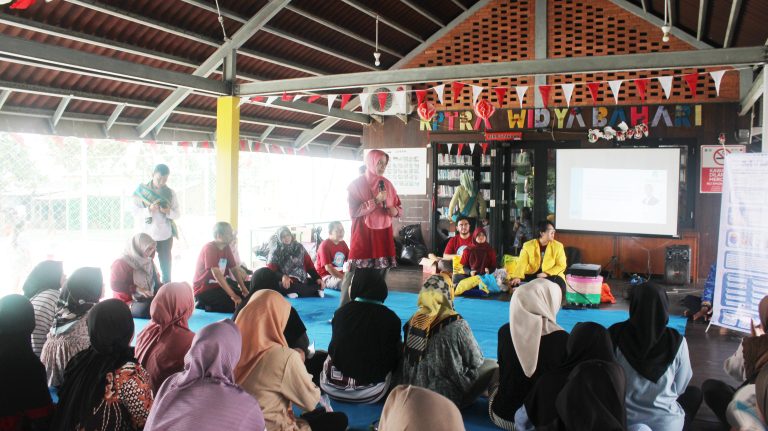
The training took place on Friday, September 19, 2025, at RPTRA Widya Bahari, Pulau Harapan. The program, titled Shell of Hope, is a collaboration between FMIPA UI, SustainaBlue UI, and Abang None of the Thousand Islands, supported by the Directorate of Community Engagement and Social Innovation (DPIS UI), the Pandu Cendekia Foundation, and the Thousand Islands Regency Government.
According to the implementation team, the local community produces around 7 kilograms of shell waste each month. In a single training session, 3 kilograms of waste were successfully processed into ready-to-use soap.
The processed soap is named OceanGlow. This product contains natural minerals from shell waste and is safe to use as both hand soap and dishwashing soap. In addition to being eco-friendly, OceanGlow is also expected to become a local flagship product with the potential to be developed as a specialty souvenir for Pulau Harapan tourism.
“In the future, this soap could become an icon of Pulau Harapan and inspire other regions to utilize waste wisely,” said Dr. Retno Lestari, M.Si., a Biology lecturer at FMIPA UI and Deputy Manager of SustainaBlue UI.
The training was divided into two sessions. The first session featured Dr. rer. nat. Yasman, S.Si., M.Sc., who explained the potential of shell waste as a source of calcium. The second session was a hands-on soap-making practice, led by the event chair, Dr. Windri Handayani, S.Si., M.Si. A total of 42 participants, consisting of local mothers and youth from Karang Taruna, learned to process a mixture of shell powder, used cooking oil, caustic soda (NaOH), and natural coloring and fragrance ingredients into soap.
“This activity has significantly sparked the community’s enthusiasm. It highlights the importance of training that is relevant to the conditions of coastal communities,” said Dr. Windri.

Not stopping at the training, the FMIPA UI team also plans to establish a community communication forum as a platform for sharing experiences, discussing challenges, and developing further product innovations.
Active community participation has become an indicator of the program’s success. “Activities like this provide new insights, especially for the youth of Karang Taruna, showing that waste can be turned into marketable products,” said Aryadi, one of the training participants.
In addition to the lecturers, the activity also involved FMIPA UI students who supported the program’s implementation, namely Samuel Young Hadi, Shally Helena Hotmauli, Yolanda Rosida Butarbutar, Gracia Adelia Nababan, Najwa Cahya Meiliza, Jingga Malda Fitri, and Frisya Farellia.
With a spirit of cross-generational collaboration, FMIPA UI demonstrates the active role of higher education in providing impactful and sustainable environmental solutions. From previously discarded waste, new hope now grows on Pulau Harapan.


