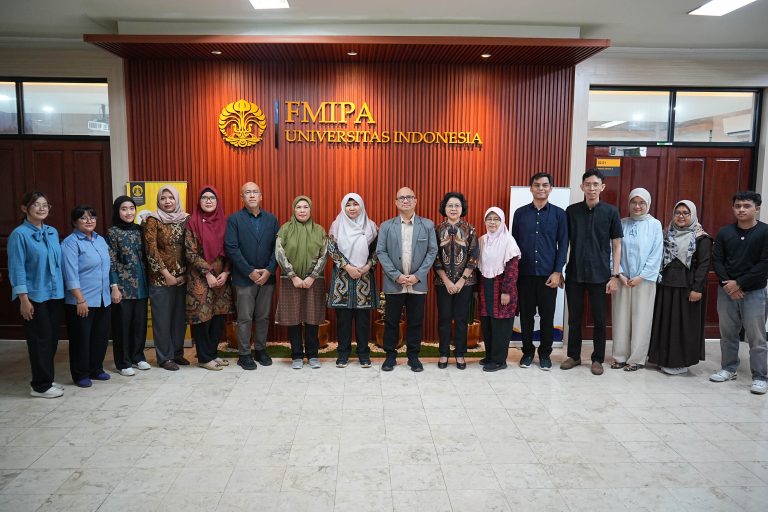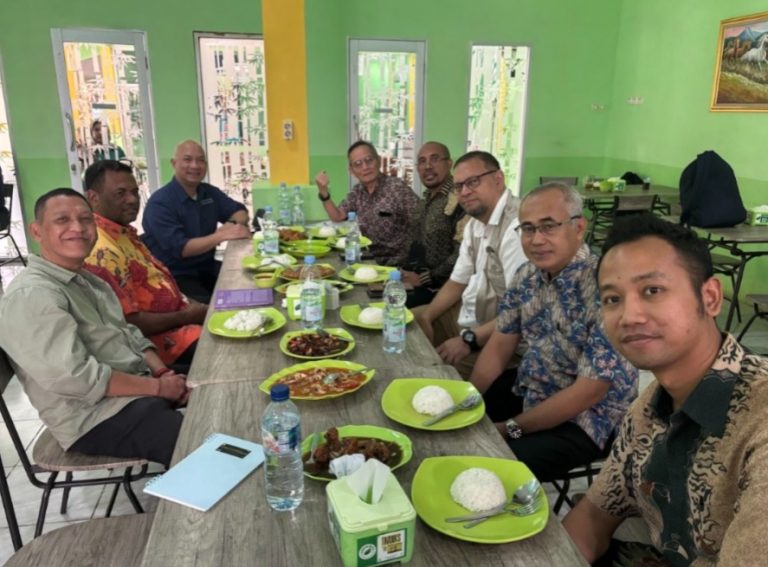
The Faculty of Mathematics and Natural Sciences (FMIPA) at the Universitas Indonesia (UI) has initiated exploratory discussions for collaboration with the Government of Kabupaten Mappi, Papua Selatan, as part of efforts to strengthen adaptive and sustainable regional development. The meeting was held at the FMIPA UI campus on Tuesday (10/2/2026), attended by Prof. Dr. Tito Latif Indra, S.Si., M.Si., Dean of FMIPA UI, along with Kristosimus Yohanes Agawemu, Regent of Mappi, and Octria Adi Prasojo, B.Sc., M.Sc., Ph.D., Assistant Manager for Partnership Development, Asset Commercialization, and Integrated Areas.
Kabupaten Mappi, whose capital is Kepi, has unique geographical characteristics consisting of lowlands, vast swamps, and an extensive river network that serves as the lifeline of the community. These conditions make river transportation the primary mode of mobility for residents and the distribution of goods. The region is also rich in natural resources, including sago forests, river fisheries, and wetland areas that play a crucial role in environmental balance and carbon storage. The social structure of the Mappi community remains strong, with local culture closely connected to nature and a subsistence way of life.
During the meeting, both parties discussed several strategic challenges faced by Kabupaten Mappi. These include limited land infrastructure due to the dominance of swamp areas; unequal access to education and healthcare services in remote villages; high logistics costs resulting from reliance on river and air transportation; vulnerability to climate change, particularly the risks of flooding and wetland ecosystem degradation; as well as limited local economic capacity, which is still dominated by the primary sector with minimal downstream development of leading commodities such as sago and fisheries.
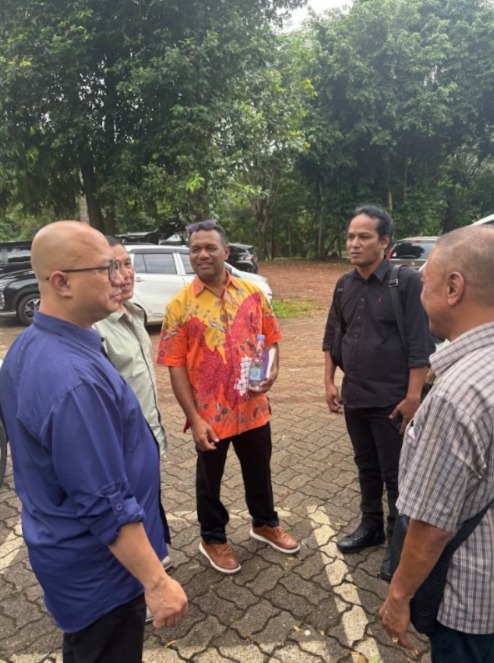
The Faculty of Mathematics and Natural Sciences (FMIPA) at the Universitas Indonesia (UI) proposed collaboration in two main areas. First, development planning and research, including the preparation of a Regional and Human Development Masterplan for Kabupaten Mappi. This masterplan will involve various departments within FMIPA UI, such as Geography, Statistics, Mathematics, Biology, Physics, and Chemistry, to map natural resource potential, conduct spatial analysis, develop demographic projections, carry out environmental assessments, and formulate sustainable development scenarios. This strategic document is expected to serve as a foundation for medium- to long-term policy while also opening opportunities for cross-faculty collaboration within UI.
Second, strengthening human resources through education. The Faculty of Mathematics and Natural Sciences (FMIPA) at the Universitas Indonesia (UI) offers programs such as Kampus Mengajar, distance learning, and scholarship schemes for undergraduate, master’s, and doctoral levels. These programs aim to increase participation in higher education while preparing academically and professionally competent local students to return and contribute to the development of their region.
Prof. Tito Latif Indra emphasized, “We see extraordinary potential in Kabupaten Mappi, not only in terms of natural resources but also its people. Through this collaboration, the Faculty of Mathematics and Natural Sciences (FMIPA) at the Universitas Indonesia (UI) aims to ensure that every research and educational program strengthens local capacity, so that development here is not only physical, but also sustainable and inclusive.”
The Regent of Kabupaten Mappi, Kristosimus Yohanes Agawemu, added, “This collaboration marks an important milestone for us. With the support of the Faculty of Mathematics and Natural Sciences (FMIPA) at the Universitas Indonesia, we can develop the region based on data and research, expand access to higher education for the sons and daughters of Mappi, and formulate development strategies that are adaptive to our geographical and environmental conditions.”
This collaboration is expected to serve as a foundation for a more integrated and adaptive development transformation in Kabupaten Mappi, while also opening opportunities for research, innovation, and the advancement of higher education in Papua Selatan.