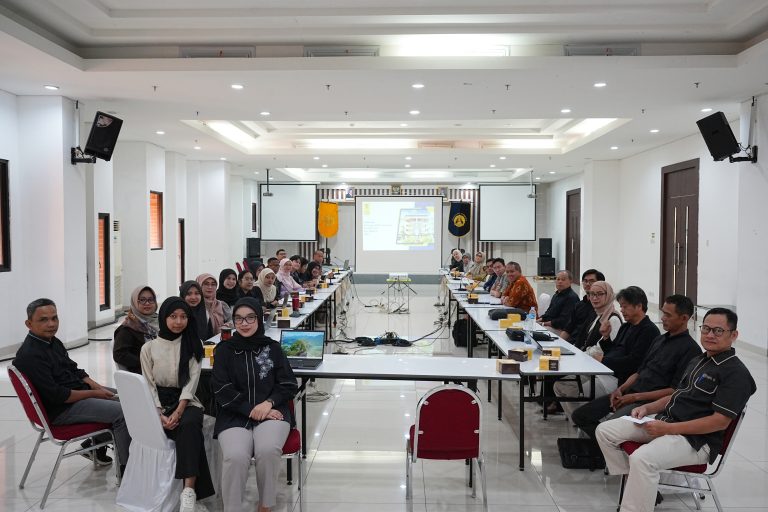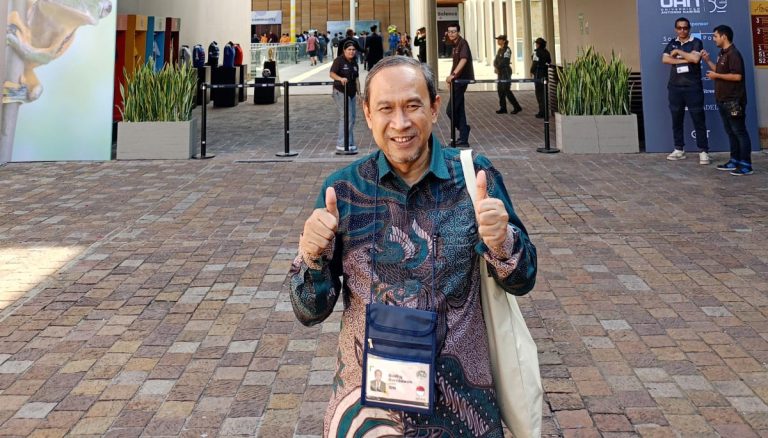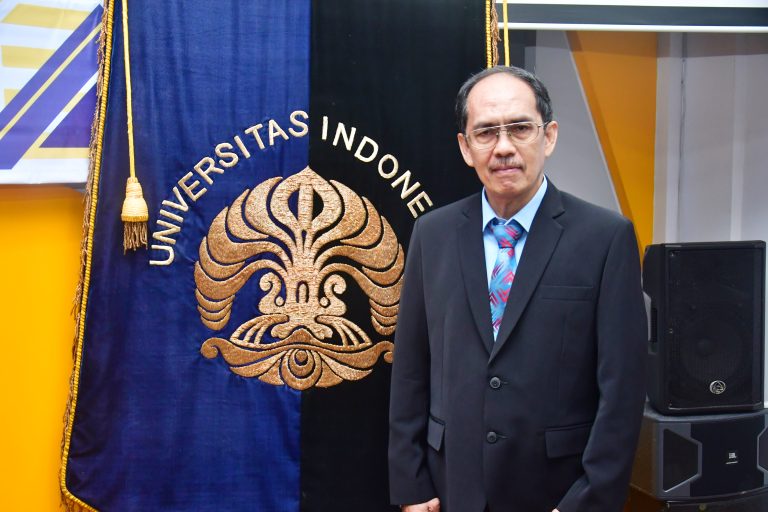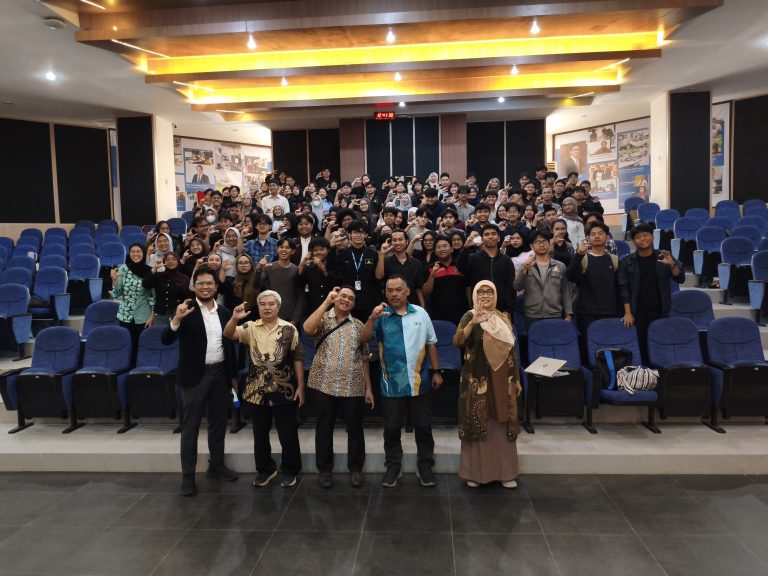
The Faculty of Mathematics and Natural Sciences (MIPA) successfully held the Guest Lecture MIPA Talk Series 2 at the Prof. Dr. Ir. Soemantri Brodjonegoro Auditorium, FMIPA UI, in Depok, on Wednesday (11/2/2026). The event featured Assoc. Prof. Dr. Mohd Hairy Ibrahim, SDGs Fellow at the Research Management & Innovation Centre, Universiti Pendidikan Sultan Idris (UPSI), Malaysia, as the keynote speaker.
On this occasion, Dr. Mohd Hairy presented a topic entitled “Geographic Perspective: Climate Action and Resilient Challenges,” emphasizing the importance of a geographical perspective in understanding climate change and resilience challenges at various scales. According to Dr. Mohd Hairy, a geographical perspective is a method of analyzing the world by examining spatial relationships, patterns, and connections between human and physical environments. This approach highlights the questions of “where” and “why” a phenomenon occurs, and links local, regional, and global scales to better understand complex issues such as climate change, urbanization, and cultural diffusion. A geographical perspective also encompasses spatial awareness, human–environment interactions, analysis of regional characteristics, and an understanding of how events at one scale can influence other scales—thereby providing deeper insights into social and environmental dynamics.
In the context of climate action, Dr. Mohd Hairy explained that geography offers a unique way of viewing the world through the lenses of place, space, and scale. Countries that contribute the most to climate change should take the lead in finding solutions. Among the main causes of climate change he highlighted were rapid industrialization, greenhouse gas emissions, severe pollution, and deforestation. Furthermore, he emphasized the importance of collective action grounded in spatial data to strengthen environmental resilience and to implement sustainability strategies that balance human needs with environmental preservation.
The event was attended by students, lecturers, and researchers, who then participated in an interactive discussion session on the challenges and solutions in climate action. The emphasis on a geographical perspective is expected to enrich participants’ insights in formulating sustainable policies and innovations, both at the local and global levels.