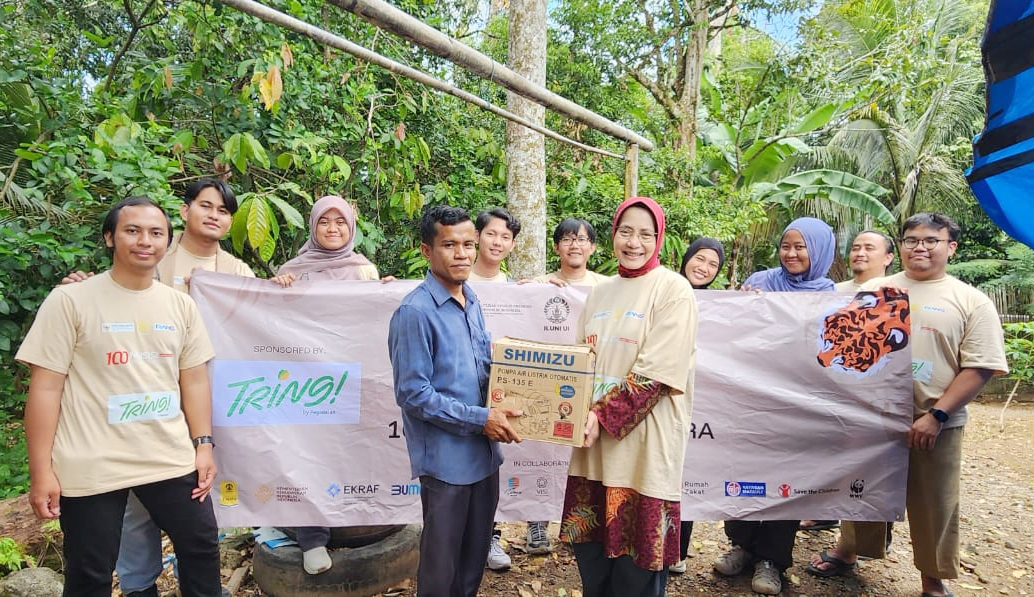
The Faculty of Mathematics and Natural Sciences, Universitas Indonesia (FMIPA UI), through the Universitas Indonesia Alumni Association (ILUNI UI) Team, demonstrated its strong commitment to humanitarian efforts by distributing donations and aid to disaster-affected areas in Agam Regency, West Sumatra, on Thursday (12/02). The team was led by a lecturer from the Department of Biology FMIPA UI, Dr. Retno Lestari, M.Si.
This humanitarian action reflects the concern of the extended FMIPA UI family for communities affected by the galodo disaster that occurred in November 2025. The assistance distributed was the result of collaboration through the charity concert of the “100 Musicians Heal Sumatra” solidarity movement, which successfully raised a total of Rp 17 billion. The concert brought together musicians across generations, communities, and support from various parties, including the Special Envoy of the President of the Republic of Indonesia for Youth Development and Arts Workers, the Ministry of State-Owned Enterprises (BUMN), RANS, Visi, TSpace Media, WAG Artis Swara, as well as the main sponsor TRING Pegadaian.
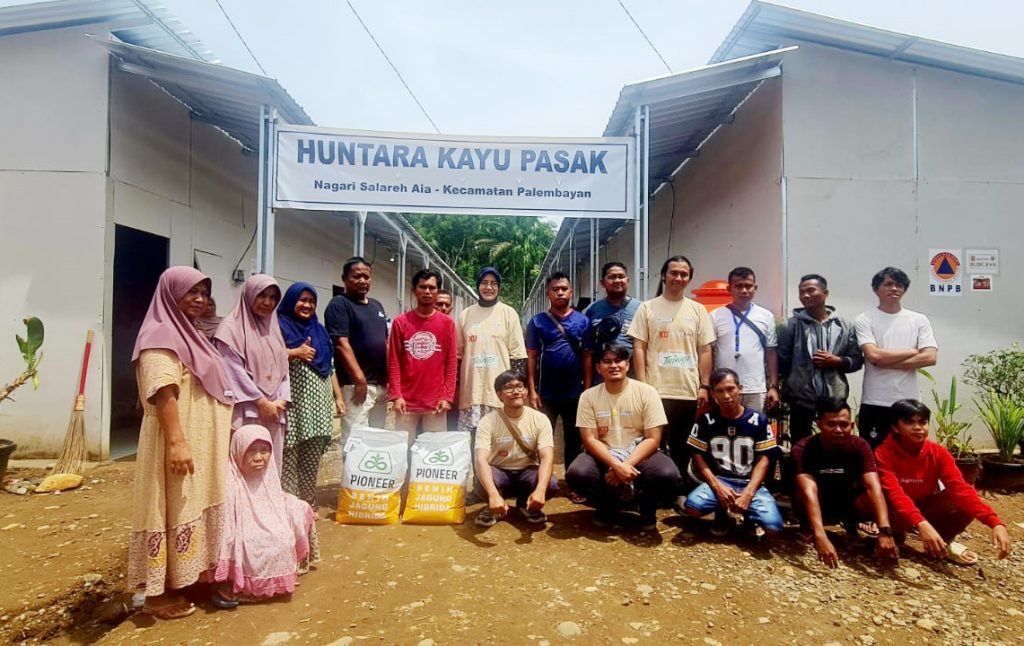
The FMIPA UI team distributed assistance in Kecamatan Palembayan, specifically in Nagari Salareh Aia and Salareh Aia Timur, Kabupaten Agam. Unlike typical emergency relief efforts, FMIPA UI chose to focus on long-term recovery programs designed to create sustainable and lasting impacts for the community.
The assistance provided included 5 kg of corn seeds (approximately 20,000 seedlings) and 10 grams of chili seeds (around 2,000 seedlings), as well as the excavation of two clean water wells. This initiative was taken to reactivate affected agricultural land and help the community resume farming activities as a source of livelihood. The assistance reached approximately 313 households in the affected areas. Each dug well is expected to serve around 70–100 households, with the excavation process taking approximately 10 days.
“As part of an academic and scientific institution, we want to be present not only during the emergency response phase, but also throughout the recovery process. We hope that the seed assistance and clean water wells can serve as initial capital for the community to recover and regain their independence,” said Dr. Retno Lestari.
The Head of Jorong, Nagari Salareh Aia, Mr. Agus Rinaldi, stated, “In the aftermath of the galodo disaster—a powerful flow carrying mud, rocks, sand, and logs from river and mountainous areas—hundreds of homes suffered severe damage. Many residents were forced to evacuate to shelters or relocate to relatives’ homes outside the area.”
Over time, several temporary housing units (Hunian Sementara or Huntara) have been built, and basic needs such as food supplies and clothing have gradually been fulfilled. In light of these conditions, FMIPA UI considered it important to implement further interventions aimed at restoring the community’s economic independence.
In addition to the agricultural sector, the FMIPA UI team also identified a clean water crisis at Puskesmas Koto Alam, Palembayan. Damage to the water storage tanks and distribution channels following the disaster has forced the health facility to rely on river water, whose quality declines during rainfall. Through the program to excavate two clean water wells—complete with pumps, piping installations, and water storage tanks—FMIPA UI hopes to help address the clean water crisis affecting both the community and healthcare facilities in the area.
In addition to distributing physical aid, the FMIPA UI team also conducted clean water quality testing, organized fun healing activities at elementary schools, and delivered assistance to temporary housing units in Kecamatan Palembayan, Maninjau, and Matur.
This initiative reaffirms the active role of FMIPA UI as part of Universitas Indonesia, demonstrating its commitment not only to education and research, but also to community service. Together with ILUNI UI, this collaboration is expected to continue in delivering tangible and sustainable solutions for communities affected by disasters.