Amid the growing global demand for energy and the increasing complexity of discovering new resources, geoscience—particularly in oil and gas exploration—has become ever more important. The exploration process requires not only scientific precision, but also the ability to minimize risk so that investments can yield optimal results. In this context, the concept of de-risking exploration has become one of the key approaches continuously being developed in the oil and gas industry.
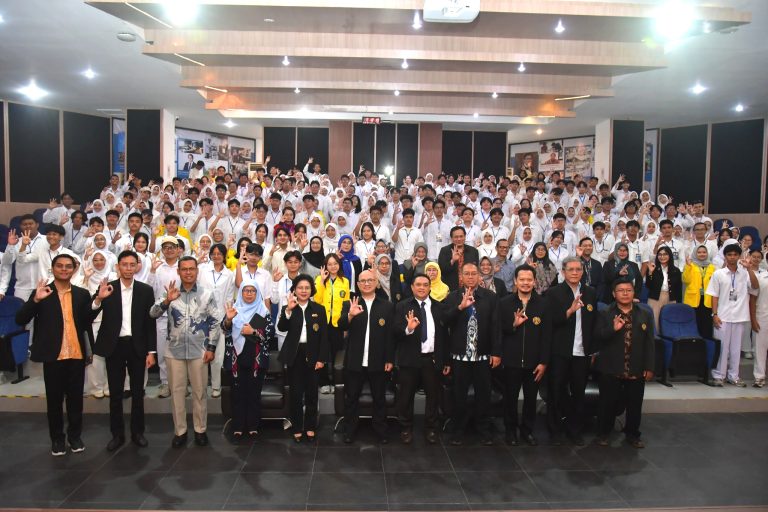
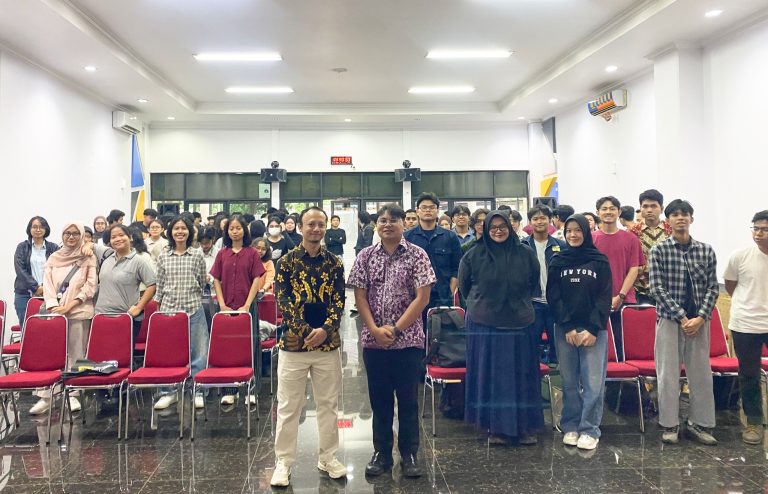
In response to these challenges, the Faculty of Mathematics and Natural Sciences at the University of Indonesia (FMIPA UI) held a weekly seminar titled UI Geoscience Seminar x STARBORN MENGAJAR 2026 with the theme “De-Risking Exploration: From Lead to Drillable Prospect.” The event, held on Monday, April 13, 2026, took place at the Prof. Dr. G.A. Siwabessy Auditorium, FMIPA UI, and was attended by students from the geology and geophysics study programs.
The seminar featured Achmad Andi Kaswandi, M.T., an Exploration Geophysicist from PT Saka Energi Indonesia, as the main speaker. In his presentation, he explained the stages of oil and gas exploration—from the regional scale to drill-ready prospects—including the concept of petroleum system dan tahapan exploration triangle such as basin, play, lead, and prospect.
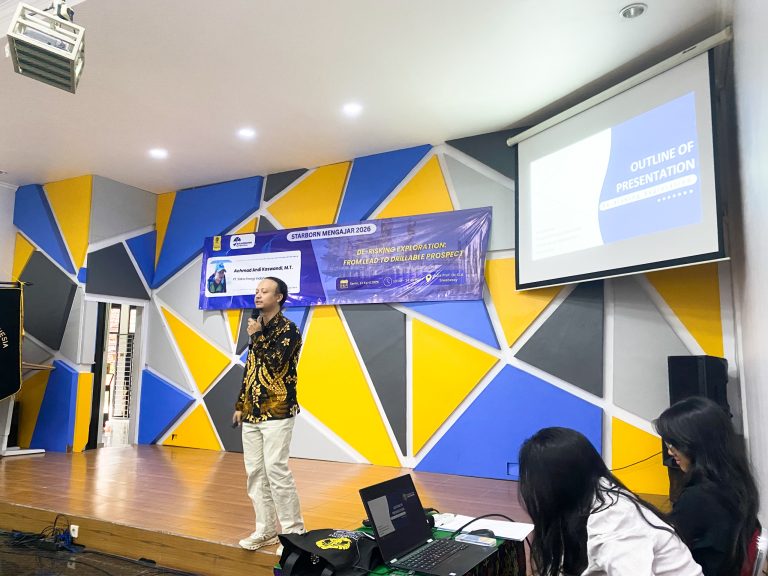
“De-risking exploration is essentially about how we reduce uncertainty at every stage of exploration, so that decisions can be made in a more measured, data-driven way,” said Achmad during his presentation.
He also emphasized the importance of integrating geological and geophysical data to improve the chances of successful exploration. According to him, combining these two approaches enables a more comprehensive interpretation of the subsurface.
To enhance participants’ understanding, the seminar session was interspersed with interactive quizzes that invited students to identify components in petroleum system based on seismic data. This activity was enthusiastically received by participants as it provided a more applied learning experience.
In the final part, Achmad presented the stage of drillable prospect, which includes well planning (well planning), economic evaluation such as EMV and MEFS, as well as investment decision-making or Final Investment Decision (FID). He also highlighted the challenges faced by the industry, ranging from data limitations to economic and environmental risks.
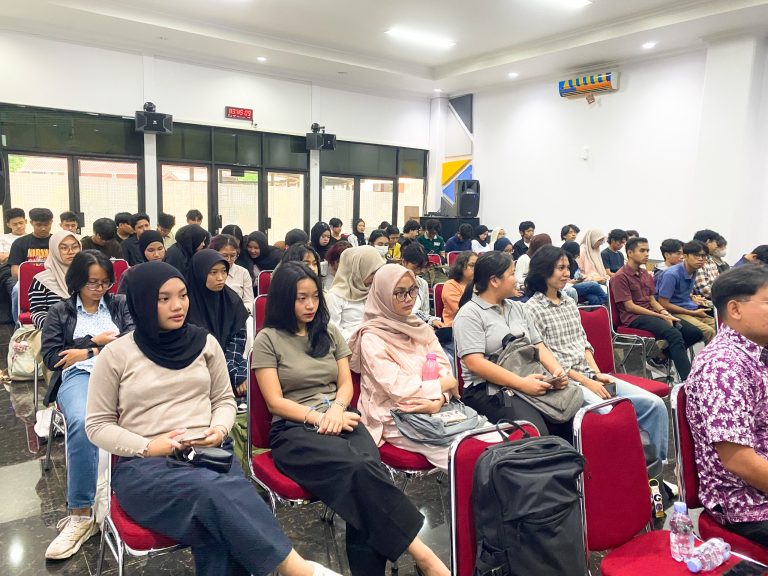
“Going forward, the use of technologies such as artificial intelligence and data integration will be key to improving efficiency while reducing exploration risk,” he added. He emphasized that this requires human resources to be ready to continuously adapt to technological advancements. “Therefore, we must begin equipping ourselves with data analysis skills, interdisciplinary understanding, and the ability to use digital technologies in order to compete and contribute in an increasingly complex exploration industry,” he said.
As a closing activity, students took part in an interactive quiz given by the speaker to assess their understanding of the material presented. The three participants with the highest scores received awards. This activity is expected to strengthen students’ understanding of oil and gas exploration practices while also enhancing their readiness to face the dynamics of the energy industry.