Depok, June 19, 2026 — Rapid technological disruption and increasingly complex global challenges are prompting universities to deliver learning experiences that extend beyond academic achievement, placing greater emphasis on character development and the cultivation of students’ critical thinking skills.
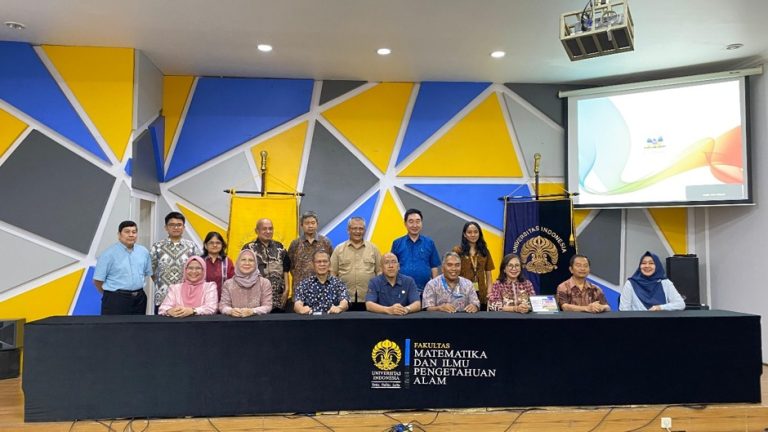
As part of its efforts to strengthen the quality of learning, the Faculty of Mathematics and Natural Sciences (FMIPA), Universitas Indonesia, organized an Evaluation of the Implementation of Integrated Personality Development Courses (MPKT) for the 2025/2026 Even Semester. The faculty also held a Socialization Session on Transformative Learning for FMIPA UI MPKT lecturers. The event took place on Thursday, June 4, 2026, at the Prof. Dr. G.A. Siwabessy Auditorium, FMIPA UI.
The event was opened by Prof. Anom Bowolaksono, Ph.D., Vice Dean for Education, Research, and Student Affairs of FMIPA UI. Also in attendance were Dr. Fevi Novkaniza, S.Si., M.Si., Manager of Education at FMIPA UI, as well as the lecturers responsible for teaching the Integrated Personality Development Course (MPKT) during the 2025/2026 Academic Year.
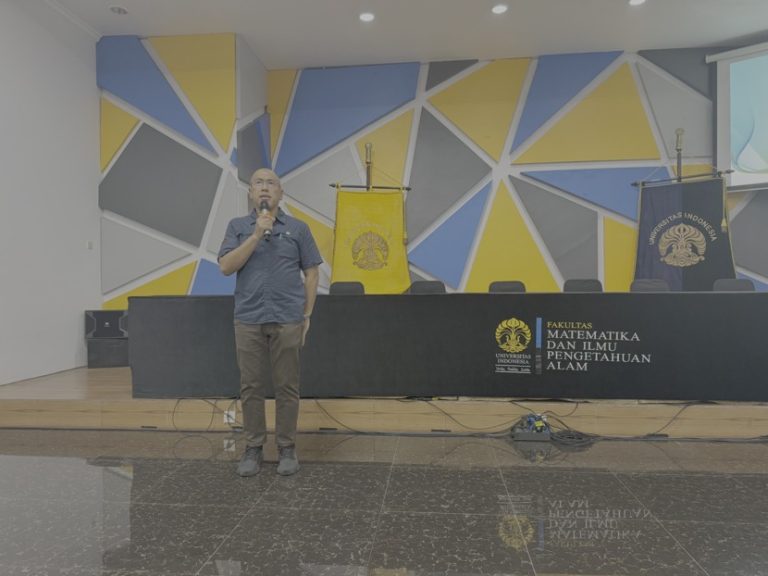
In his remarks, Prof. Anom emphasized that MPKT plays a strategic role within Universitas Indonesia’s educational system, as it provides a platform for students to develop their character, humanistic values, and critical as well as reflective thinking skills.
“MPKT holds a very important position in the educational process at Universitas Indonesia, as it serves as a space for students to develop their character, humanistic values, and critical as well as reflective thinking skills,” he said.
As a university-wide compulsory course carrying six academic credits, MPKT is designed to shape students’ character, mindset, and competencies. Through this course, students not only gain academic knowledge but also develop critical, reflective, and collaborative thinking skills, while strengthening the values of nationalism, humanity, and integrity that are essential for addressing increasingly complex global challenges.
During the socialization session, Prof. Dr. Dewi Susiloningtyas, S.Si., M.Si., Coordinator of MPKT at FMIPA UI, delivered a presentation entitled “Transformative Learning in Addressing Global Challenges and the Era of Technological Disruption.” The session aimed to enhance lecturers’ understanding of the concept of transformative learning and to encourage its implementation in the teaching and learning process.
In addition, the socialization program was designed to assist lecturers in developing Course Learning Outcomes (CLOs) and assessment methods based on transformative learning principles. It also encouraged the adoption of reflective, critical, and contextual teaching strategies, as well as the cultivation of a learning culture built upon the stages of trigger, reflection, action, and integration, supported by collaboration and a critical mindset.
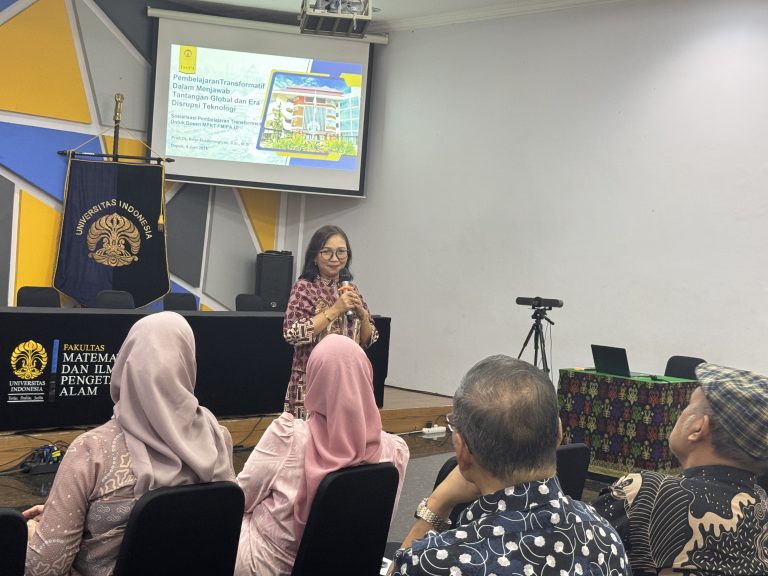
Prof. Dewi also explained that transformative learning is one of the most relevant strategies for addressing the evolving dynamics of higher education today.
“Transformative learning is one of the strategic approaches to addressing the evolving challenges of higher education. Lecturers are not merely providers of knowledge; they also serve as facilitators who encourage students to develop new understandings, values, and perspectives through meaningful learning experiences,” she explained.
Throughout the event, lecturers engaged in discussions on the implementation of innovative teaching methods, the design of learning activities that encourage active student participation, and assessment strategies that support the achievement of learning outcomes. The discussions were enriched by numerous questions and exchanges of experiences, reflecting the participants’ strong enthusiasm for advancing teaching and learning practices in the classroom.
Through this initiative, FMIPA UI hopes that the principles of transformative learning can be implemented more effectively in the delivery of MPKT courses. This effort aligns with the faculty’s commitment to continuously enhancing the quality of education through innovative, inclusive, and student-centered learning approaches in response to global challenges and the increasingly dynamic pace of technological advancement.