The current development of science and technology requires the integration of several fields of science, including statistics. Many phenomena require analytical skills to predict time-related events and calculate the risks of such events in both the short and long term.
For example, studies on the time it takes for patients with certain diseases to recover (or relapse) after receiving medical treatment, or studies on the time it takes for a device to malfunction, or studies on the time it takes for an insurance client to file a claim.
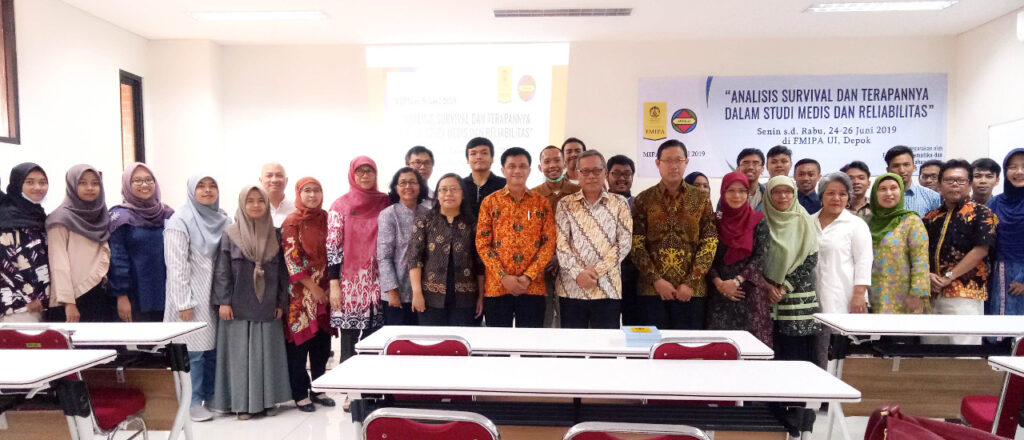
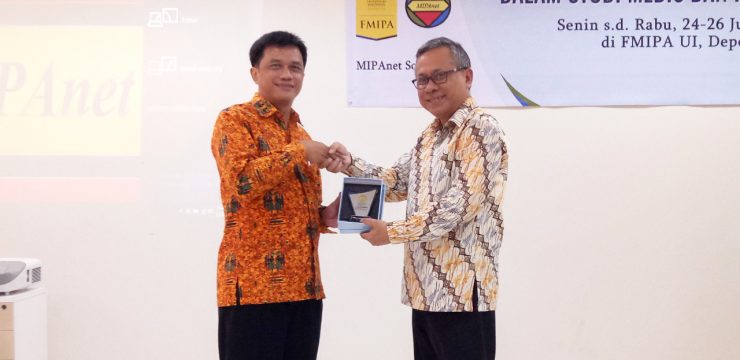
Against this backdrop, the Faculty of Mathematics and Natural Sciences (FMIPA) at the University of Indonesia (UI) collaborated with MIPAnet to organize the MIPAnet School event themed “Survival Analysis and Its Applications in Medical Studies and Reliability,” held on June 24-26, 2019, at the Multidisciplinary Research Laboratory Building of FMIPA UI – PT. Pertamina (Persero), UI Campus, Depok.
The event involved 50 participants, including UI students and non-UI students. The speakers were Dr. Sarini Abdullah (Department of Mathematics, FMIPA UI), Dr. Sri Astuti Thamrin (Faculty of Mathematics, Computing, and Data Science, ITS), and Dr. Santi W Purnami (Department of Statistics, Hasanuddin University, Makassar).
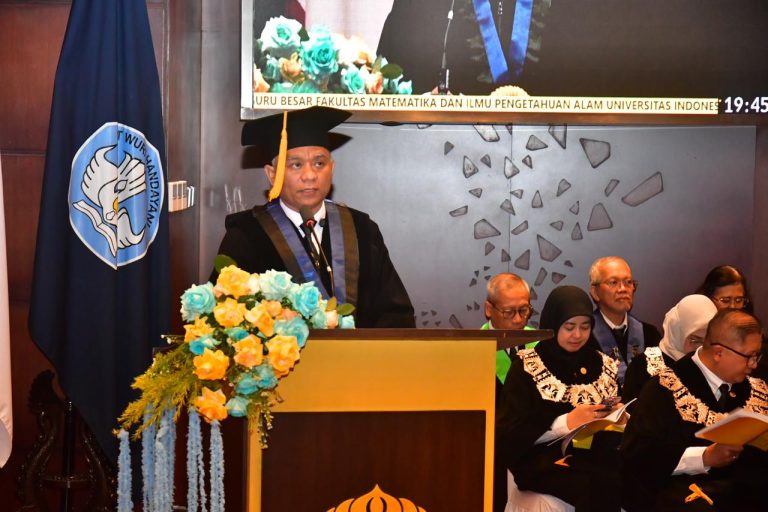
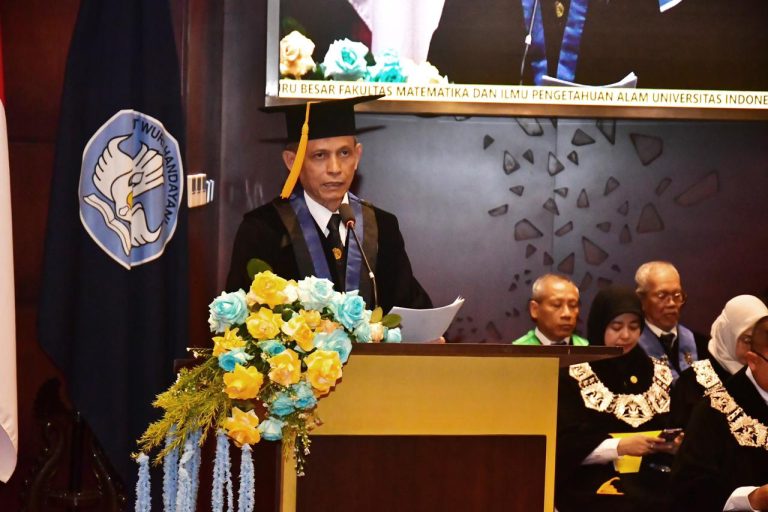
Dr.rer.nat. Abdul Haris, Dean of FMIPA UI, officially opened the event. In his speech, he said that mathematics and natural sciences are basic sciences that form the foundation for the development of science and technology.
Meanwhile, the Secretary General of MIPAnet, Prof. Edy Tri Baskoro, Ph.D., stated that the MIPAnet School program is designed to provide students in the field of MIPA with the opportunity to gain advanced learning experiences in specific topics/fields of study, as well as serve as a platform for exchanging the latest information related to science among MIPAnet members across Indonesia.
Dr. Denny R. Silaban, M.Kom., as the event chairperson, explained that the issues to be discussed over the next three days will focus on the fields of medicine and engineering. Examples of each approach from the three methods—non-parametric, semi-parametric, and parametric—will be provided.
The outcomes of this lecture, Denny added, are expected to enrich participants’ knowledge of statistical modeling in real-world problems and broaden their understanding of the integration of various fields of science.