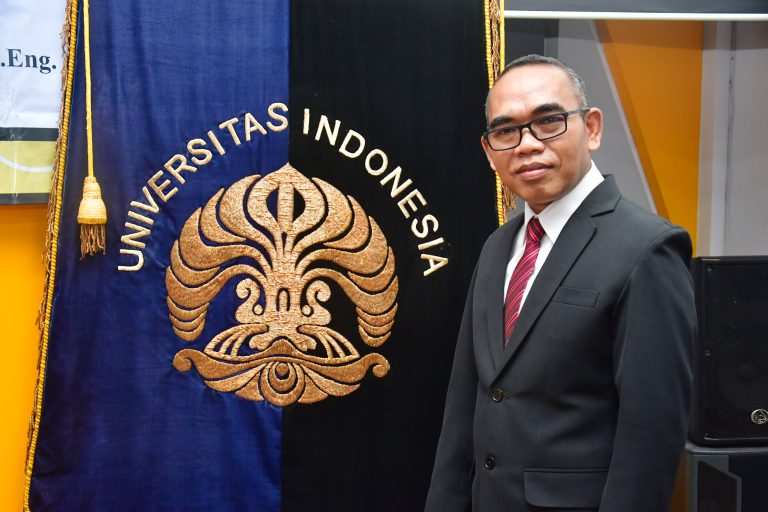
Depok, July 22, 2026 — Efforts to improve public safety against earthquake risks continue to advance through science- and technology-based innovations. One such advancement was demonstrated by Kadnan, a researcher from FMIPA Universitas Indonesia, who successfully developed an earthquake early warning system using a hybrid approach that combines artificial intelligence and seismic physics.
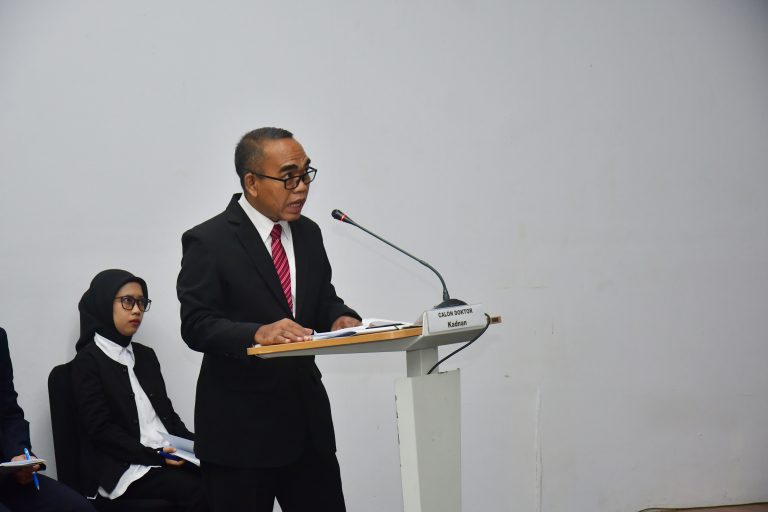
In his doctoral dissertation, entitled Design and Development of an On-Site Earthquake Early Warning System Using a Hybrid Approach Combining Machine Learning and Seismic Physics Analysis in West Java, Kadnan designed a system capable of “reading” the initial earthquake signal in just seconds. This system utilizes P-waves—the first waves to arrive—to predict how strong the shaking will be when the main wave arrives (S-wave). The dissertation was defended in an open Doctoral Promotion Session for the Physics Study Program, Faculty of Mathematics and Natural Sciences, University of Indonesia, which took place at the Prof. G.A. Siwabessy Hall, Faculty of Mathematics and Natural Sciences, University of Indonesia, Depok, Tuesday (7/7/2026).
In contrast to conventional approaches, this innovation integrates the strengths of machine learning in recognizing data patterns with the precision of earthquake physics analysis. The result is a system that is not only fast, but also accurate and scientifically sound.
The model was developed using thousands of earthquake records from western Java and demonstrated a high level of accuracy, reaching more than 92 percent. Testing on real cases, such as the 2009 Tasikmalaya earthquake and the 2022 Cianjur earthquake, showed that the system was able to provide predictions that closely matched actual field conditions.
Keunggulan lain dari penelitian ini adalah konsep on-site warning, where a monitoring station can independently generate alerts without having to wait for processing from the center. This approach is considered capable of reducing delays (latency) which has been a challenge in network-based systems.
Technically, this system also optimizes the initial wave arrival detection process using the method Initial Power of the P-wave (IPP) which has proven to be more stable in noisy data conditions. Accuracy in detecting this early phase is the main foundation for ensuring the overall reliability of the early warning system.
In addition, the developed prediction model utilizes key parameters of the P wave within a very short time window, namely the first three seconds after the event. This strategy allows the system to maintain an optimal balance between response speed (lead time) and the accuracy of the shock strength estimation (PGA).
“The main goal of this system is to save time—because in an earthquake, a few seconds can save many lives,” Kadnan said.
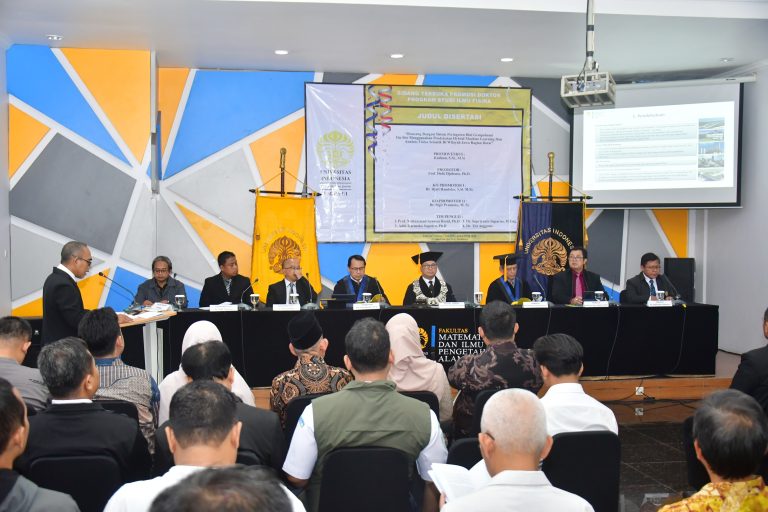
From an implementation perspective, this approach has significant potential for application in areas with uneven sensor coverage as well as in critical infrastructure requiring independent warning systems, such as power plants, high-speed rail networks, gas pipelines, hospitals, and other strategic public facilities in Bandung, Bogor, and Jakarta.
From an implementation perspective, this approach has significant potential for application in areas with uneven sensor coverage as well as in critical infrastructure requiring independent warning systems, such as power plants, high-speed rail networks, gas pipelines, hospitals, and other strategic public facilities in Bandung, Bogor, and Jakarta.
With western Java facing high seismic risks due to subduction activity, along with its high population density and concentration of vital infrastructure, this innovation is highly relevant. The integration of this hybrid approach is expected to strengthen the national earthquake early warning system, which currently remains largely dominated by centralized network-based approaches.
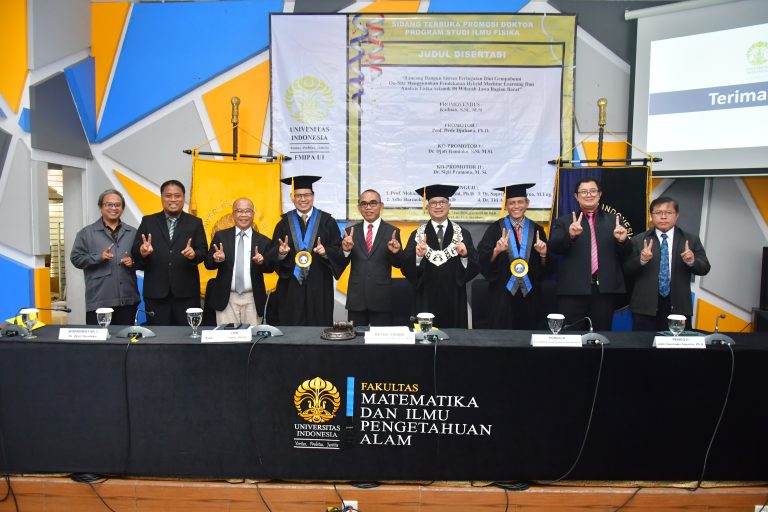
Furthermore, the findings of this research open opportunities for the development of next-generation earthquake early warning systems that are adaptive, scalable, and capable of being integrated with various technological platforms, including emergency communication systems and automated disaster response mechanisms.
“Going forward, this hybrid approach has the potential to become the foundation for developing a more adaptive, rapid, and reliable earthquake early warning system in Indonesia, while simultaneously strengthening science-based disaster mitigation efforts to more effectively protect the public,” he added.
Kadnan completed his doctoral studies in six semesters with a GPA of 3.94 and earned cum laude honors. The defense was chaired by Prof. Dr. Tito Latif Indra, M.Si., Dean of the Faculty of Mathematics and Natural Sciences, University of Indonesia, as Chair of the Doctoral Promotion Defense. This research was supervised by Promoter Prof. Dede Djuhana, Ph.D., and Co-Promoters Dr. Djati Handoko and Dr. Sigit Pramono from the Directorate of Engineering Seismology, Potential Geophysics, and Time Signs, Meteorology, Climatology, and Geophysics Agency (BMKG).