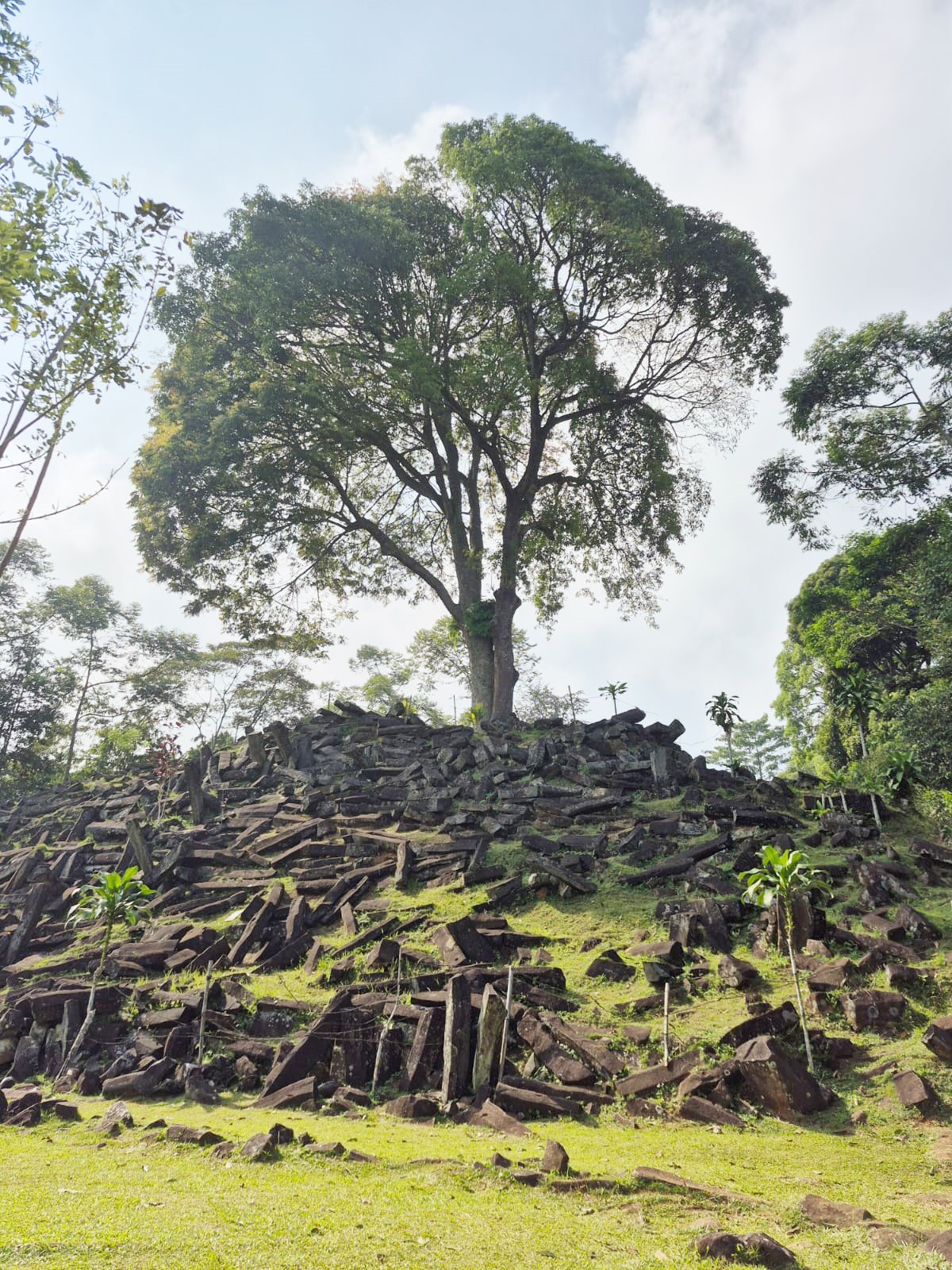
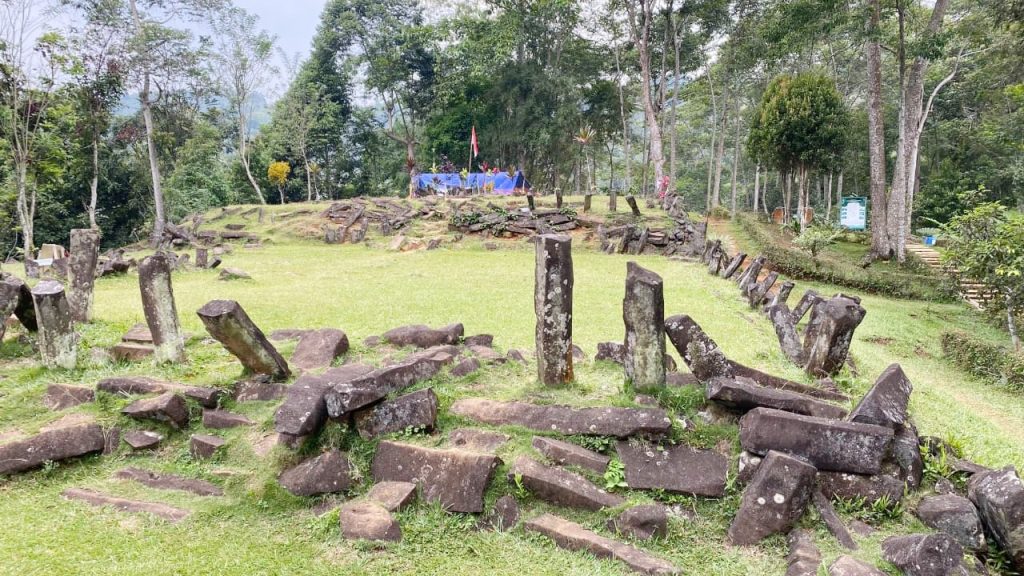
On the ridges of the hills of Cianjur, West Java, Gunung Padang stands in silence yet continues to provoke questions. This largest megalithic site in Southeast Asia seems to hold a story that has yet to be fully told. For more than a decade, Gunung Padang has become the longest-running scientific debate in the history of Indonesian archaeology—whether it is merely a natural formation, or the work of ancient humans possessing knowledge far beyond their time.
The debate has not only taken place within academic circles, but has also spilled into the public sphere—engaging researchers, government institutions, and public opinion alike. Bold claims about the age of Gunung Padang, said to surpass that of the Egyptian pyramids, have ignited controversy while simultaneously giving rise to demands for more rigorous and measurable scientific evidence.
Amid this vortex, a new approach was introduced. Rather than relying solely on visual interpretations or historical narratives, a group of researchers chose to read Gunung Padang through a language that is almost unheard: the magnetic properties of rocks.
Rocks That “Remember” the Past
Dr. Reza Syahputra, a researcher from the Department of Geology and Geophysics, Faculty of Mathematics and Natural Sciences, Universitas Indonesia (FMIPA UI), began his study with a fundamental question: are the stones that make up Gunung Padang still in their natural positions? This question is crucial, as the answer determines whether the stone arrangement is purely the result of geological processes, or whether it has undergone systematic intervention by ancient humans.
“The dominant rocks at Gunung Padang are columnar andesite—products of volcanic activity that cooled slowly. Under natural conditions, andesite columns have a consistent orientation and stand perpendicular to the direction of lava flow. When these columns are moved, rotated, or rearranged, their original orientation should change,” Dr. Reza explained, outlining the basic geological principle that underpins his research at Gunung Padang.
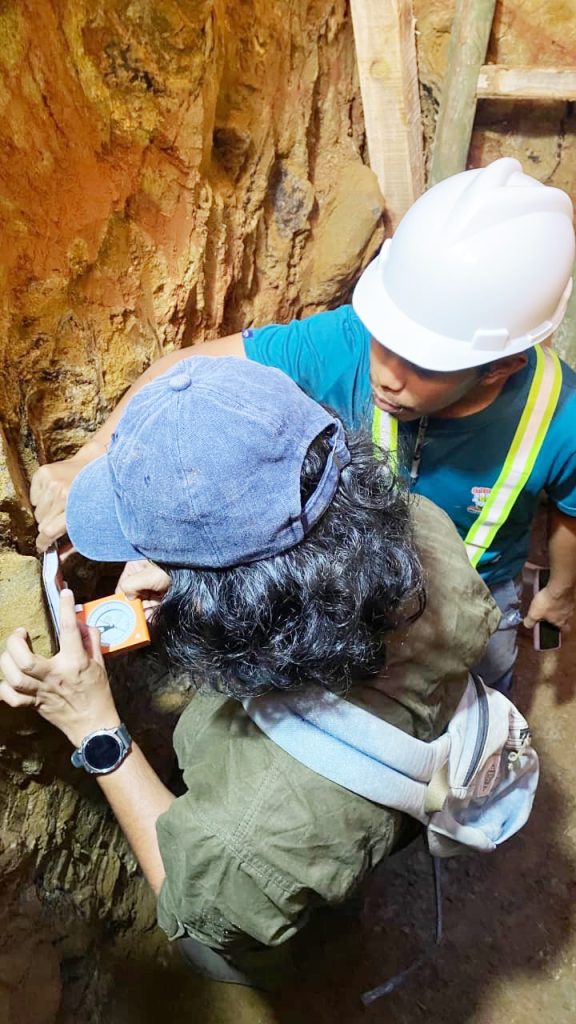
To address this question, Dr. Reza and his team employed magnetic susceptibility analysis—a method that reads the traces of magnetic minerals within rocks. These traces record the direction and intensity of Earth’s magnetic field at the time the rocks solidified. In other words, the rocks preserve a “memory” of their original positions.
“If the magnetic orientation is no longer aligned with the stones’ current positions, then there is a strong possibility that human intervention has occurred,” he stated.
This method is rarely used in studies of megalithic sites in Indonesia. Such a geophysical approach demands a high level of precision, as errors in interpretation can lead to misleading conclusions.
Bridging Disciplines Long Kept Apart
This magnetic study does not stand alone. It is part of an integrated technical investigation involving the Ministry of Culture, the Faculty of Humanities (FIB) at Universitas Indonesia, as well as researchers from BRIN and several universities in West Java. This collaboration marks a serious effort to put an end to the long-standing practice of partial studies, which have instead only widened the gap in the debate.
For years, Gunung Padang has often been interpreted in isolation: geologists speak of nature, archaeologists of culture, while grand claims emerge without adequate methodological dialogue. This integrated study seeks to bring those fragments together within a single scientific framework in which they can critically test one another.
Fieldwork and laboratory analyses were carried out from September to December 2025. Each sampling process followed strict procedures to ensure that the magnetic orientation remained undisturbed. The data were then analyzed in multiple layers—not only to address questions of origin, but also to map potential risks should restoration be undertaken without a proper understanding of the stone structure.
More Than Just an Academic Debate
The stakes are not merely a matter of academic reputation. Erroneous conclusions can have direct consequences for preservation policies. If the stone structures are found to have undergone human modification, then any restoration efforts must take into account highly specific cultural and technical contexts. Conversely, if the stones remain predominantly natural, the conservation approach would necessarily be different.
This is where the research assumes a crucial role: as a counterbalance between spectacular claims and extreme skepticism. A data-driven geological and geophysical approach offers a middle path—allowing the stones to “testify” without being forced to conform to any particular narrative.
Gunung Padang may not yet have fully revealed its secrets. However, one thing is becoming clear: understanding this site requires more than the courage to make grand claims. It demands scientific patience, cross-disciplinary collaboration, and the humility to let the data speak.
The stones of Gunung Padang do not speak in words. Yet the magnetic directions they preserve offer clues—about what was shaped by nature, and what may have been touched by human hands.