
We are currently in Indonesia, a disaster laboratory. These disasters are of two types: geological and hydro-meteorological. Geological disasters are those caused by geological processes, while hydro-meteorological disasters are those that can originate from climate.
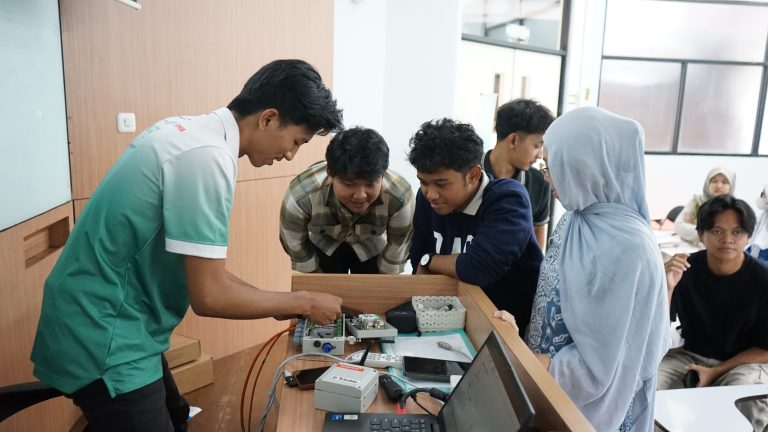
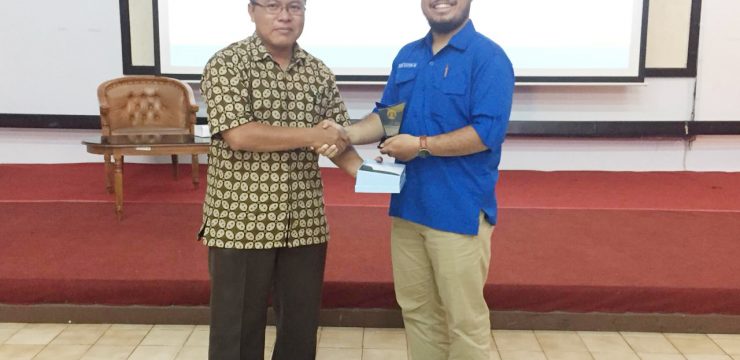
This was stated by Udi Catur Nugroho (Researcher at the Center for Remote Sensing Utilization, National Institute of Aeronautics and Space (LAPAN)) while speaking at the UI Geoscience Seminar, held by the Geoscience Study Program (Prodi) of the Faculty of Mathematics and Natural Sciences, University of Indonesia, on Tuesday (March 5) at Building B 101, Faculty of Mathematics and Natural Sciences, University of Indonesia, Depok.
In his presentation, entitled “Seeing Indonesia as a Disaster Laboratory from Space,” he explained that a disaster is an event or series of events that threaten and disrupt the lives and livelihoods of people, caused by natural and/or non-natural factors, as well as human factors, resulting in human casualties, environmental damage, property losses, and psychological impacts (Law No. 24 of 2007).
“Therefore, not all incidents, such as landslides, are considered disasters, as they depend on the impact,” he added.
Udi said that disasters have a significant impact on communities due to Indonesia’s geographical location.
He also said that disaster management is needed to respond to disasters that occur, namely prevention mitigation actions in the form of identifying the type of disaster, preparedness tindakan berupa kesiapan sebelum bencana, response action in the form of a phase when a disaster occurs and recovery namely post-disaster actions.
Udi further explained that the challenge for Indonesia is the vast area with an area of 1,913,578.68 km2, and the large number of islands, namely 17,504. Therefore, remote sensing is used to cover Indonesia’s vast territory.
Remote sensing is the science and art of obtaining information about an object, area, or phenomenon through the analysis of data obtained with a tool without direct contact with the object, area, or phenomenon being studied (Lillesand and Kiefer, 1979). Remote sensing data is collected from top to bottom so that it covers the entire earth.