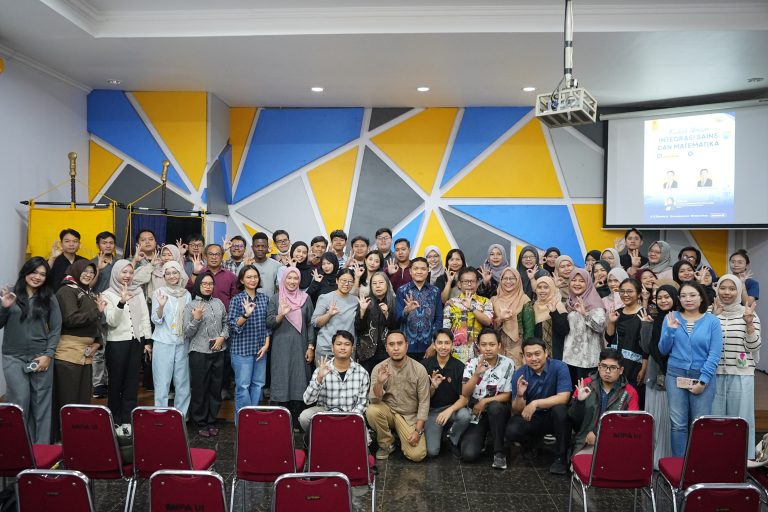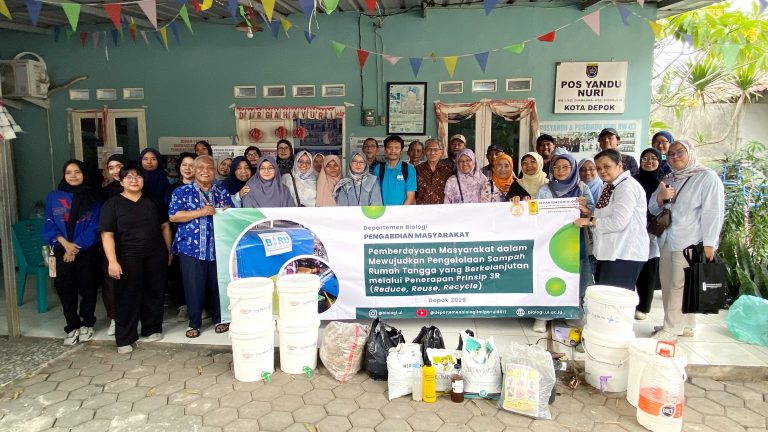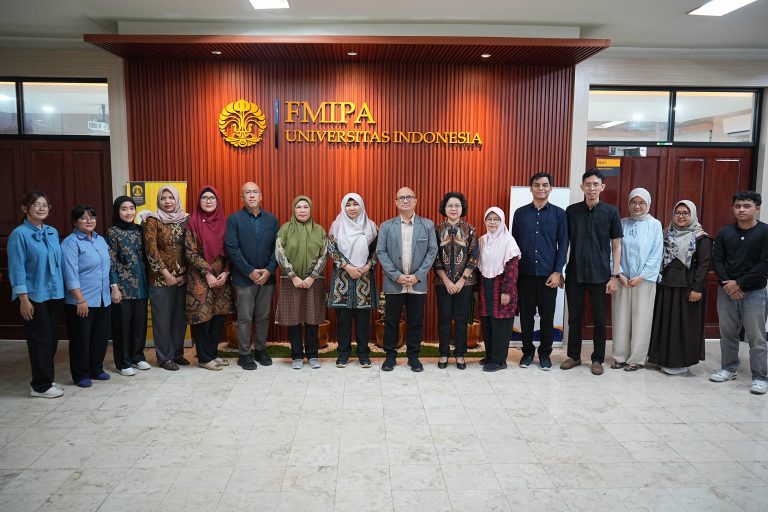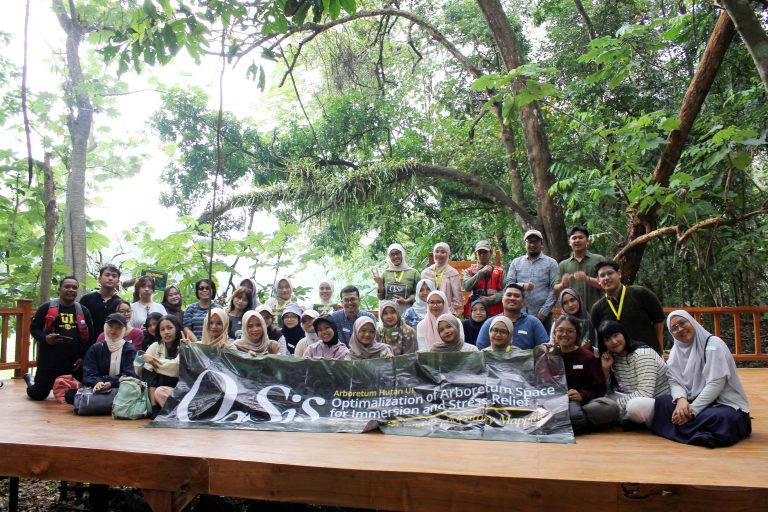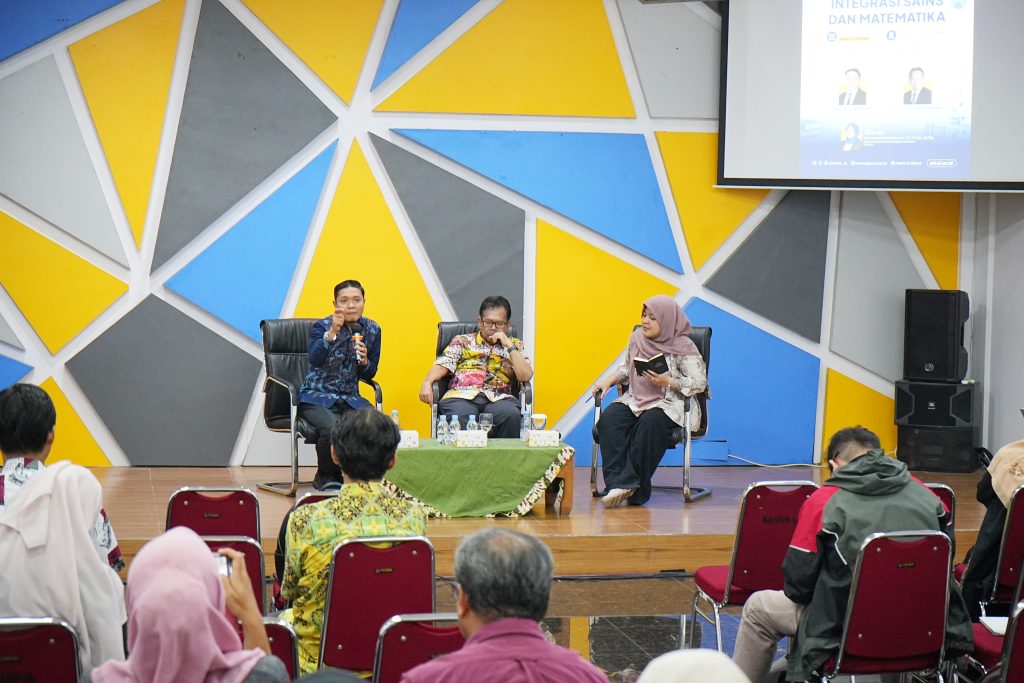
Depok, September 4, 2026 — The integration of mathematics and science is essential for translating research findings into practical solutions that address needs in healthcare, industry, and public policy. This topic was discussed during the public lecture “Integration of Science and Mathematics” organized by the Faculty of Mathematics and Natural Sciences, Universitas Indonesia (FMIPA UI), on Wednesday, September 2, 2026.
Held at the Prof. Dr. G.A. Siwabessy Hall, FMIPA UI, the public lecture featured Professor Dipo Aldila, Professor at the Department of Mathematics, FMIPA UI, and Professor Budiawan, Professor at the Department of Chemistry, FMIPA UI. The event was moderated by Asri Oktavioni Indraswari, S.T., M.Sc., D.Phil., a lecturer in the Geology Study Program at FMIPA UI.
Prof. Dipo discussed mathematical epidemiology as an approach to understanding and predicting disease transmission dynamics. Through mathematical modeling, various intervention scenarios can be analyzed, including those involving COVID-19, dengue fever (DHF), and HIV and Mpox coinfections.
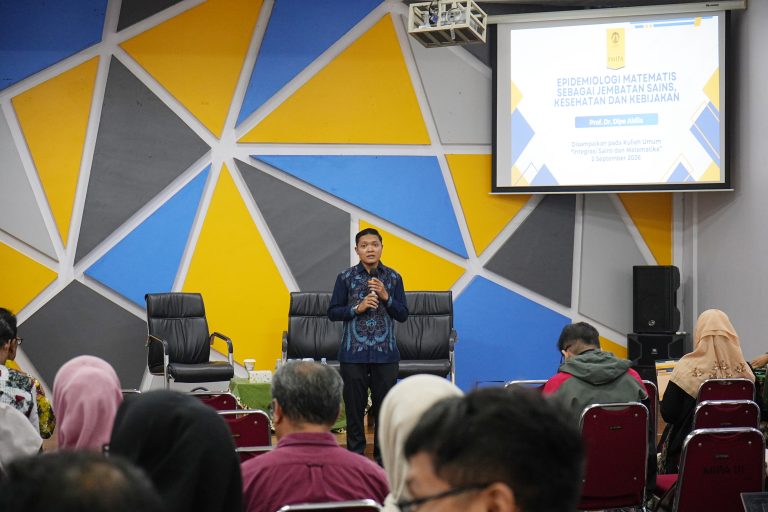
“Mathematics provides a framework for understanding how diseases spread and how different interventions can affect these dynamics. Through this approach, analytical findings can serve as one of the foundations for designing more effective health policies,” said Prof. Dipo.
According to him, mathematical modeling can be used to identify patterns and estimate the impacts of various intervention options. This approach is one example of how fundamental sciences can be applied to address public health challenges.
Meanwhile, Prof. Budiawan discussed high-impact STEM integration as an effort to bridge the gap between research outcomes and industrial applications. The case study presented focused on the downstreaming of Indonesia’s palm oil resources.
He explained that bringing research outcomes from the laboratory to industry involves several challenges, including increasing the Technology Readiness Level (TRL) from levels 1–4 to levels 7–9. This gap in the process is known as the “valley of death.”
“We need to build a bridge from laboratory research to practical application. This is where STEM integration becomes important, because the process does not stop at scientific proof but also involves technology readiness, scaling up, industrial needs, as well as economic and regulatory aspects,” said Prof. Budiawan.
The gap between research and industrial application can be influenced by various factors, including technology readiness, funding, scaling up, regulations, and industrial readiness. Therefore, research outcomes require a multidisciplinary approach to be further developed into technologies that are ready for implementation.
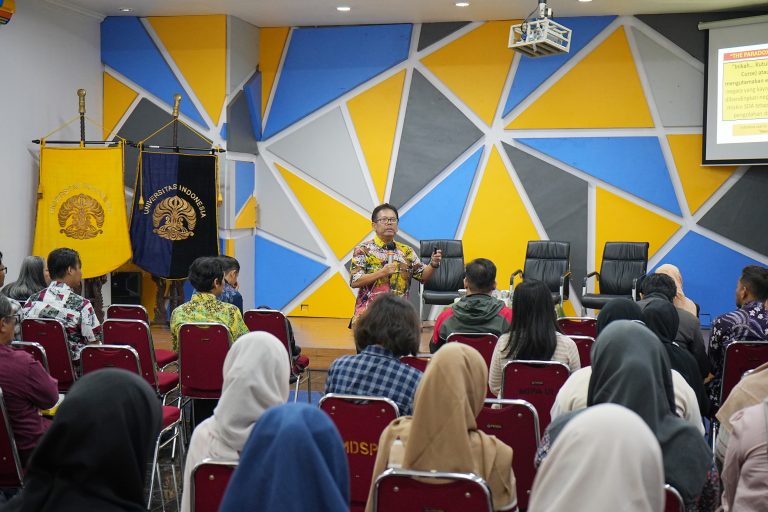
In addition to the presentations, the public lecture continued with a discussion session involving FMIPA UI postgraduate students. The topics discussed included strategies for identifying research gaps, limitations and sources of error in mathematical modeling, as well as challenges in translating research findings into public policy.
The discussion also highlighted funding and institutional factors that can influence the process of applying research findings. The discussion demonstrated that the strength of research is determined not only by the novelty of its findings but also by the ability to connect research outcomes with users’ needs.
Through the public lecture, FMIPA UI postgraduate students gained insights into the application of interdisciplinary approaches in research. Mathematics can be used to develop models and conduct quantitative analyses, while science plays a role in generating and advancing knowledge and technology.
The integration of these two fields represents one approach to strengthening the relevance of research, enabling its findings to be further developed to address challenges in healthcare, industry, and public policy.