Depok, September 1, 2026 — The Faculty of Mathematics and Natural Sciences, Universitas Indonesia (FMIPA UI), is encouraging Universitas Indonesia (UI) to follow up on its collaboration with five higher education institutions under the auspices of Nahdlatul Ulama (PTNU) through concrete academic programs. Faculty capacity building, further education, joint research, as well as science and technology development are among the areas of collaboration that could be explored.
FMIPA UI Dean Prof. Dr. Tito Latif Indra, S.Si., M.Si., said that inter-institutional agreements need to be translated into measurable programs that have a meaningful impact on improving the quality of higher education.
“What is important is how this agreement can be promptly followed up through concrete collaborations in education, research, and community service,” said Prof. Tito during the 35th Nahdlatul Ulama (NU) Congress at Pesantren Besar Tambakberas, Jombang, East Java, on Saturday (August 29, 2026).
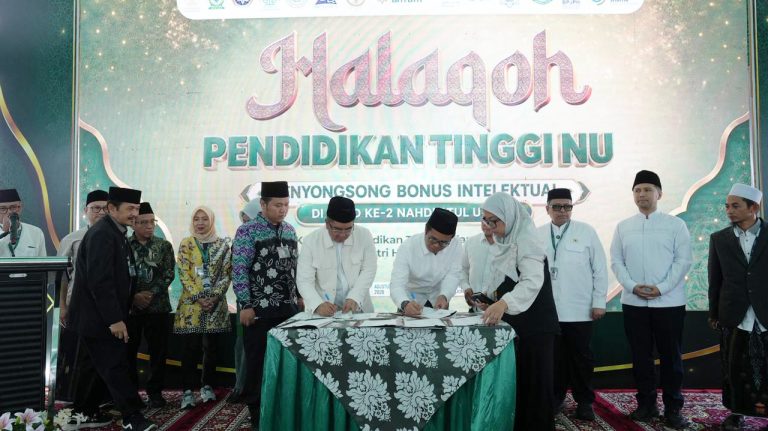
The MoU between UI and PTNU was signed by UI Rector Prof. Dr. Ir. Heri Hermansyah, S.T., M.Eng., IPU, together with UI leaders and the Executive Board of Nahdlatul Ulama (PBNU) on Friday (August 28, 2026). The collaboration involves Universitas KH A Wahab Hasbullah, Universitas Nurul Jadid Probolinggo, Sekolah Tinggi Khuliyatul Qur’an Al-Hikam Depok, Universitas KH. Abdul Chalim Mojokerto, and STAINU Assalafie Babakan Cirebon.
The signing ceremony took place at Pesantren Al Muhajirin 3, part of the Pesantren Besar Tambakberas complex, and was witnessed by East Java Deputy Governor Emil Elestianto Dardak.
On the occasion, Prof. Dr. Ir. Heri Hermansyah, S.T., M.Eng., IPU, highlighted the increasingly challenging access to higher education. Collaboration among institutions is considered essential to create broader opportunities for the development of the younger generation. NU-affiliated higher education institutions also have a distinct strength, as they have grown from the pesantren education tradition, which is deeply rooted in local communities.
Strengthening the Science Ecosystem
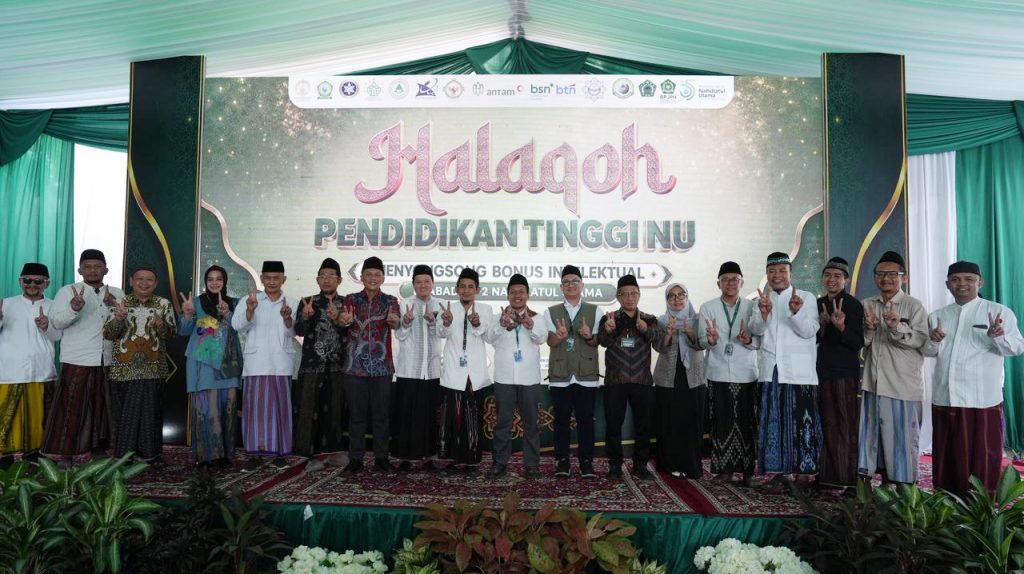
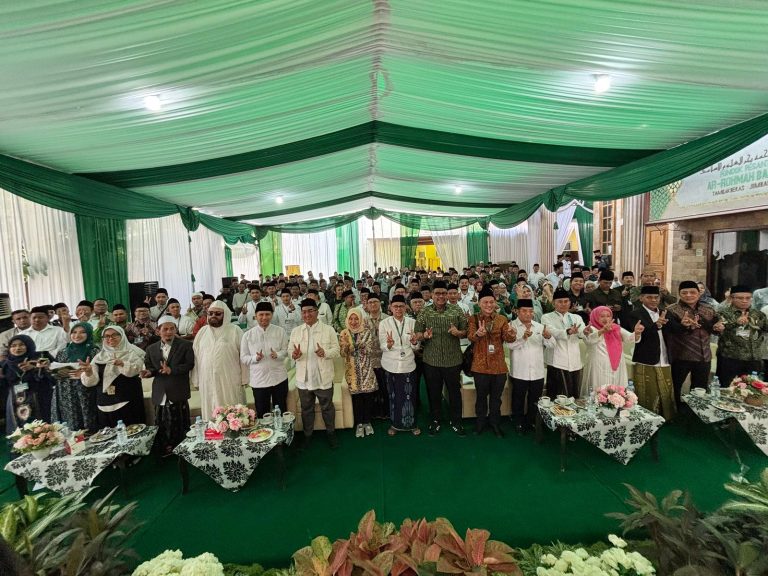
One day after the signing of the MoU, Prof. Tito served as a speaker at the NU Higher Education Halaqoh, titled “Looking Ahead to the Intellectual Bonus in Nahdlatul Ulama’s Second Century,” organized by the International PCINU Fellowship Forum at the same location.
In his presentation, titled “Shaping the Future of Higher Education in Indonesia,” Prof. Tito outlined three strategic challenges facing the national higher education sector: disparities in quality and capacity among higher education institutions, the lack of optimal alignment between research outcomes and societal needs, and the need to further strengthen the collaboration ecosystem and global connectivity.
These challenges align with Indonesia’s need to improve the quality of its human resources and strengthen its competitiveness through science and technology. In this context, higher education institutions play a role not only in producing graduates but also in developing research that addresses societal challenges.
With its expertise in mathematics and the sciences, FMIPA UI holds a strategic position in advancing interdisciplinary research and innovation. In 2025, FMIPA UI recorded 614 active collaborations with 27 international partners and 81 national partners, as well as a network of 161 partner universities across various regions.
This network provides a strong foundation for developing collaboration with PTNU through capacity building for faculty and administrative staff, impact-oriented research, and expanded global connectivity.
“This collaboration is necessary to expand access to knowledge, research networks, and the development of scientific talent in higher education institutions,” said Prof. Tito.
The collaboration also presents an opportunity for FMIPA UI to expand its science and technology ecosystem to higher education institutions that have developed within the pesantren community. Expanding this network is expected to strengthen access to knowledge, research, and talent development in the sciences.
Encouraging Further Education and Joint Research
One of the follow-up initiatives discussed was the development of a postgraduate double-degree program for PTNU faculty members who meet the requirements for collaboration with UI. The program could enhance faculty members’ academic qualifications while simultaneously strengthening the institutional capacity of their respective higher education institutions.
Opportunities for further education could also be developed for students of Islamic boarding schools (santri), while research collaboration could focus on developing academic fields and addressing issues relevant to societal needs.
“Further education and joint research can serve as concrete steps to improve faculty qualifications while strengthening the capacity of higher education institutions,” said Prof. Tito.
As part of the follow-up discussions, the Ministry of Religious Affairs also expressed its willingness to explore funding support for faculty and student scholarships as well as research programs. Rukman Basori, Head of the Center for Education Financing for Religious and Faith-Based Education at the Secretariat General of the Ministry of Religious Affairs, said that a tripartite collaboration model involving PTNU, UI, and the Ministry of Religious Affairs could be developed to support education funding, research, and scholarships.
Such support could include scholarships for PTNU faculty members pursuing further education at UI through Ministry of Religious Affairs scholarship schemes.
The subsequent discussions between UI and stakeholders at Tambakberas also directed the collaboration toward strengthening postgraduate education, improving faculty members’ academic qualifications, conducting joint research, developing academic programs and faculties, and advancing community service initiatives.
For FMIPA UI, this collaboration presents an opportunity to expand its contribution to science and technology while building academic networks with higher education institutions rooted in the pesantren tradition. This collaboration could ultimately develop into an education and research ecosystem that strengthens human resource quality and generates innovations with a meaningful impact on society.